Background: Small Cell Carcinoma of the Ovary, Hypercalcemic Type (SCCOHT) is an exceptionally rare and highly aggressive ovarian malignancy that predominantly affects adolescents and young women. It is exceedingly uncommon in children. Due to its rarity and nonspecific clinical and radiological features, diagnosis can be challenging. Hypercalcemia and associated metabolic abnormalities may provide an important diagnostic clue. Molecular alterations involving SMARCA4 are characteristic of SCCOHT and have an important role in diagnosis.
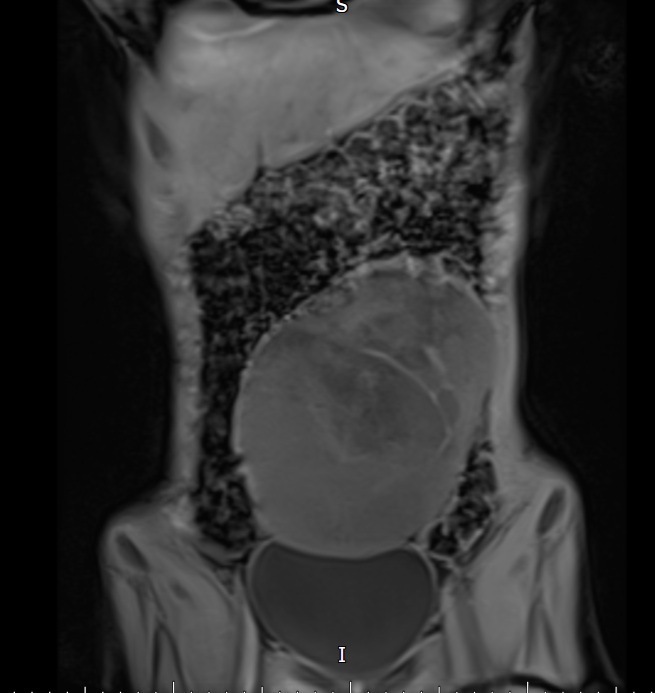
Case Presentation Summary: A 14-year-old girl presented with abdominal pain, recurrent vomiting, significant weight loss, and a palpable pelvic mass. Laboratory investigations revealed significant metabolic abnormalities involving serum calcium, magnesium, phosphate, urea, creatinine, and parathyroid hormone (PTH), raising suspicion of a paraneoplastic metabolic disturbance. Serum CA-125 was elevated, while AFP and β-hCG were within normal limits. Pelvic MRI demonstrated a large heterogeneous pelvic mass with mixed solid and cystic/fluid components, associated with bilateral hydronephrosis (Figure 1). Given the patient's age, clinical presentation, biochemical abnormalities, and imaging findings, an ovarian malignancy was suspected. Histopathological examination with immunohistochemical evaluation demonstrated positive SMARCA4 immunostaining, supporting the diagnosis of Small Cell Carcinoma of the Ovary, Hypercalcemic Type (SCCOHT).
Learning Points:
- SCCOHT, although rare, should be considered in the differential diagnosis of an ovarian/pelvic mass in adolescents.
- Hypercalcemia and unexplained metabolic abnormalities may provide an important clue to the diagnosis.
- Normal AFP and β-hCG can help distinguish SCCOHT from some common pediatric ovarian germ-cell tumors.
- Diagnosis requires careful correlation of clinical, biochemical, radiological, histopathological, and immunohistochemical findings.
- SMARCA4 is an important molecular and diagnostic marker in SCCOHT.
- Early recognition and a multidisciplinary approach are essential given the aggressive nature of the disease.
Discussion: SCCOHT is a rare ovarian malignancy with a strong predilection for adolescents and young women and an aggressive clinical course. In pediatric patients, diagnosis may be particularly difficult because the tumor can mimic other ovarian neoplasms clinically and radiologically. In this case, the combination of a pelvic mass, significant metabolic abnormalities, elevated CA-125, normal AFP and β-hCG, and supportive immunohistochemical findings led to the diagnosis of SCCOHT. The presence of hypercalcemia or other metabolic disturbances should prompt consideration of this rare entity in young patients with an ovarian mass. Accurate diagnosis relies on integration of imaging, histopathology, immunohistochemistry, and molecular findings. Recognition of SMARCA4-associated tumor biology has improved diagnostic confidence and may provide opportunities for future targeted therapeutic approaches. Given the aggressive nature of SCCOHT, early diagnosis and coordinated management involving pediatric oncology, gynecologic oncology/surgery, radiology, pathology, and supportive care teams are essential.