Background: The increasing availability of novel nicotine products, including heated tobacco products, electronic cigarettes and nicotine pouches, poses an emerging risk of both accidental and intentional nicotine exposure in children. The nicotine content of these products varies, and the extent and kinetics of nicotine absorption following ingestion of heated tobacco sticks remain poorly characterised, complicating toxicological risk assessment. Certain heated tobacco sticks also contain sharp metallic components that may cause mechanical injury to the gastrointestinal tract if ingested. We present two paediatric cases illustrating different patterns of exposure, clinical manifestations and management challenges associated with these products.
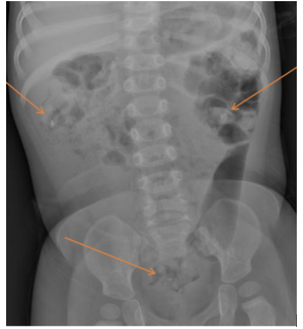
Case Presentation: Case 1: A previously healthy 13-month-old girl weighing 10 kg presented approximately three hours after suspected accidental ingestion of multiple heated tobacco sticks. She remained asymptomatic, with a heart rate of up to 140 beats/min during monitoring and otherwise unremarkable clinical findings. Abdominal radiography revealed three radiopaque foreign bodies measuring 1–4 mm in different intestinal segments, without evidence of obstruction (Figure 1). Following toxicological consultation, she was admitted for observation because of uncertainty regarding the absorbed nicotine dose and potential complications associated with the ingested metallic components. Laboratory findings were unremarkable, and no clinical complications developed.
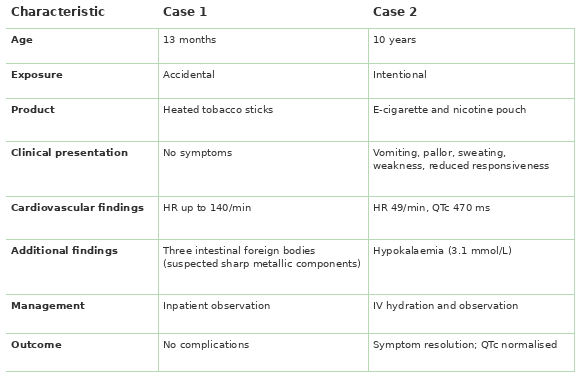
Case 2: A previously healthy 10-year-old boy presented following his first reported use of an electronic cigarette (2–3 inhalations) and a nicotine pouch placed in his mouth for approximately five minutes. Shortly afterwards, he developed nausea, vomiting, pallor, sweating, weakness and reduced responsiveness. Initial assessment revealed hypothermia, bradycardia and hypokalaemia (3.1 mmol/L). Electrocardiography demonstrated sinus bradycardia (49 beats/min) and a prolonged corrected QT interval (QTc) of 470 ms. Following intravenous hydration and overnight observation, his symptoms resolved, serum potassium normalised and QTc decreased to 425 ms. Mild bradycardia persisted but had also been documented during previous medical assessments.
Learning Points: These cases illustrate two distinct clinical challenges associated with novel nicotine products: accidental ingestion with gastrointestinal foreign bodies in a toddler and symptomatic nicotine intoxication following intentional use in a school-aged child (Table 1). The first case highlights an additional, potentially overlooked hazard of certain heated tobacco products: sharp metallic components that may cause gastrointestinal injury even in the absence of nicotine toxicity.
Nicotine toxicity may follow a biphasic course, with early gastrointestinal symptoms and autonomic stimulation potentially progressing to bradycardia, hypotension and neurological depression. The second case demonstrates the importance of cardiovascular monitoring, although the contribution of nicotine to the observed QTc prolongation cannot be established conclusively.
The variable nicotine content of newer products and uncertainty regarding absorption make dose estimation particularly challenging in children, in whom relatively small exposures may be clinically significant. In cases involving metal-containing heated tobacco sticks, assessment should also consider the risk of mechanical gastrointestinal injury. Early recognition, individualised toxicological risk assessment and appropriate observation are essential. Prevention should address both safe storage in households with young children and education about the risks of nicotine use among school-aged children.