Background: Healthcare-associated infections (HAIs) remain a significant patient-safety concern. Approximately 7% of patients in high-income countries and 15% in low- and middle-income countries acquire at least one HAI during hospitalization. Invasive medical devices are important risk factors for healthcare-associated complications, and peripheral intravenous catheters may cause phlebitis, thrombophlebitis, infiltration, and catheter-related infection, particularly in pediatric patients. Appropriate catheter selection, regular monitoring, adherence to aseptic practices, and timely removal when complications occur are therefore essential for patient safety.
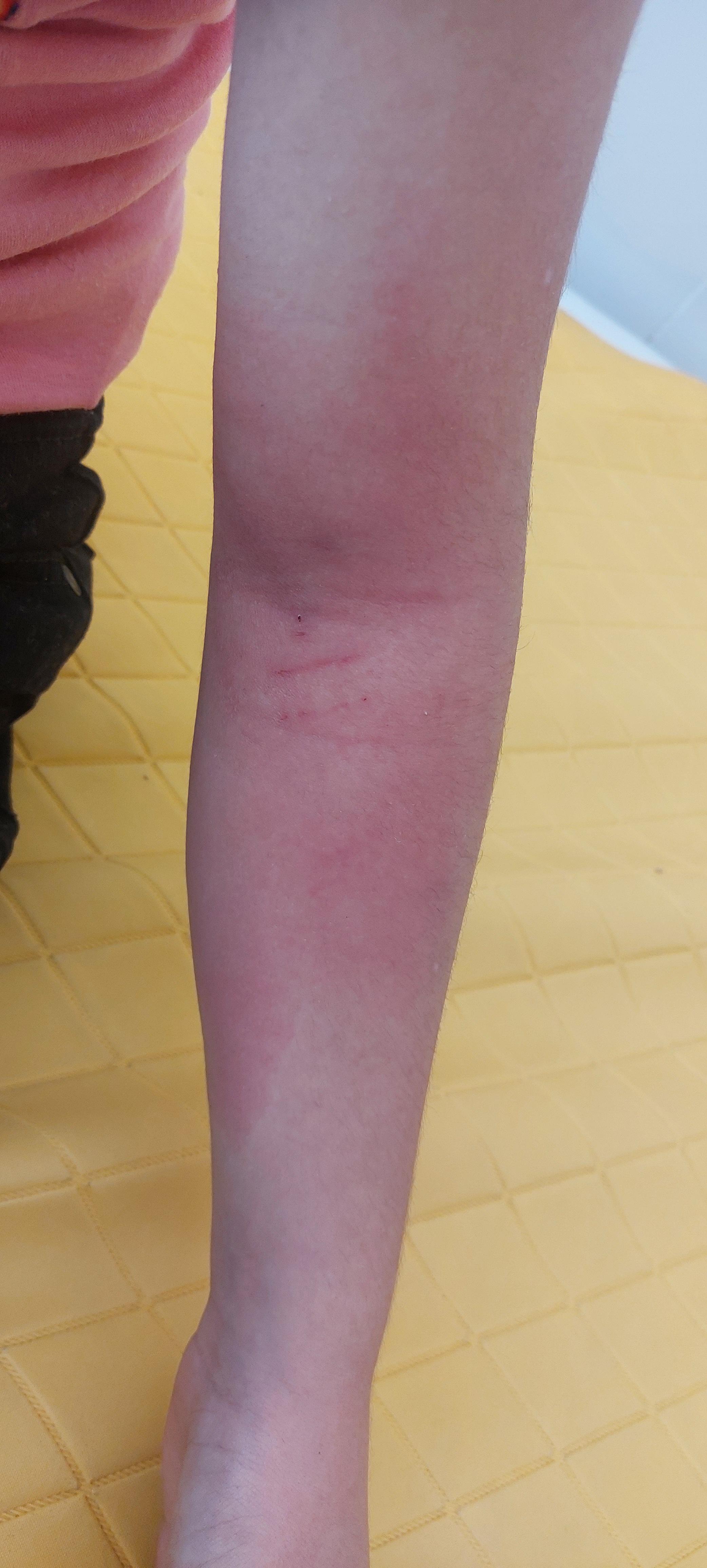
Case Presentation Summary: A 9-year-old girl with a history of asthma was admitted to the emergency department with an acute asthma exacerbation and cough. During hospitalization, she received intravenous fluids and antibacterial therapy. One week later, she developed pain at the catheter insertion site. The catheter was subsequently removed, and topical treatment was administered. On the sixth day of hospitalization, her body temperature increased to 40°C. The following day, she was evaluated by a surgeon at another hospital. Hyperthermia and swelling were observed at the catheter insertion site, along with limited movement of the distal left forearm (Figure 1). Ultrasound revealed subcutaneous edema measuring up to 0.8 cm and an intravascular thrombus consistent with thrombophlebitis. Laboratory tests revealed elevated inflammatory markers: CRP 126 mg/L (<5), WBC 13.9 ×10⁹/L (4.0–10.3), and NEUT 9.56 ×10⁹/L (1.7–7.5). The patient was diagnosed with catheter-associated thrombophlebitis. No other significant abnormalities were identified on examination. The patient was diagnosed with catheter-associated thrombophlebitis.
Learning Points Discussion: This case highlights the importance of appropriate management and regular monitoring of peripheral intravenous catheters in pediatric patients. It also emphasizes the need to carefully assess the indication for intravenous therapy during an acute asthma exacerbation, as IV treatment is not routinely necessary when the patient can be effectively managed with appropriate inhaled and/or oral therapy. Unnecessary invasive interventions may expose patients to avoidable risks and complications, as illustrated by the catheter-associated thrombophlebitis in this case. Every invasive intervention should therefore have a clear clinical indication, with careful consideration of its potential benefits and risks.