Background: Antineutrophil cytoplasmic antibody (ANCA)-associated vasculitis (AAV) is rare in children and rarer still in very young children, with paediatric cohort data reporting a median age at diagnosis of 10.7–14 years. Current international guidance, including the KDIGO 2024 guideline, recommends rituximab induction in children and adolescents as a group, though this recommendation is extrapolated almost entirely from evidence in older children and adults, with no age-specific data to guide induction choice, dosing, or long-term safety in toddlers. We describe a case of myeloperoxidase (MPO)-positive AAV with renal failure in a 2-year-old girl, a presentation not previously individually characterised at this age.
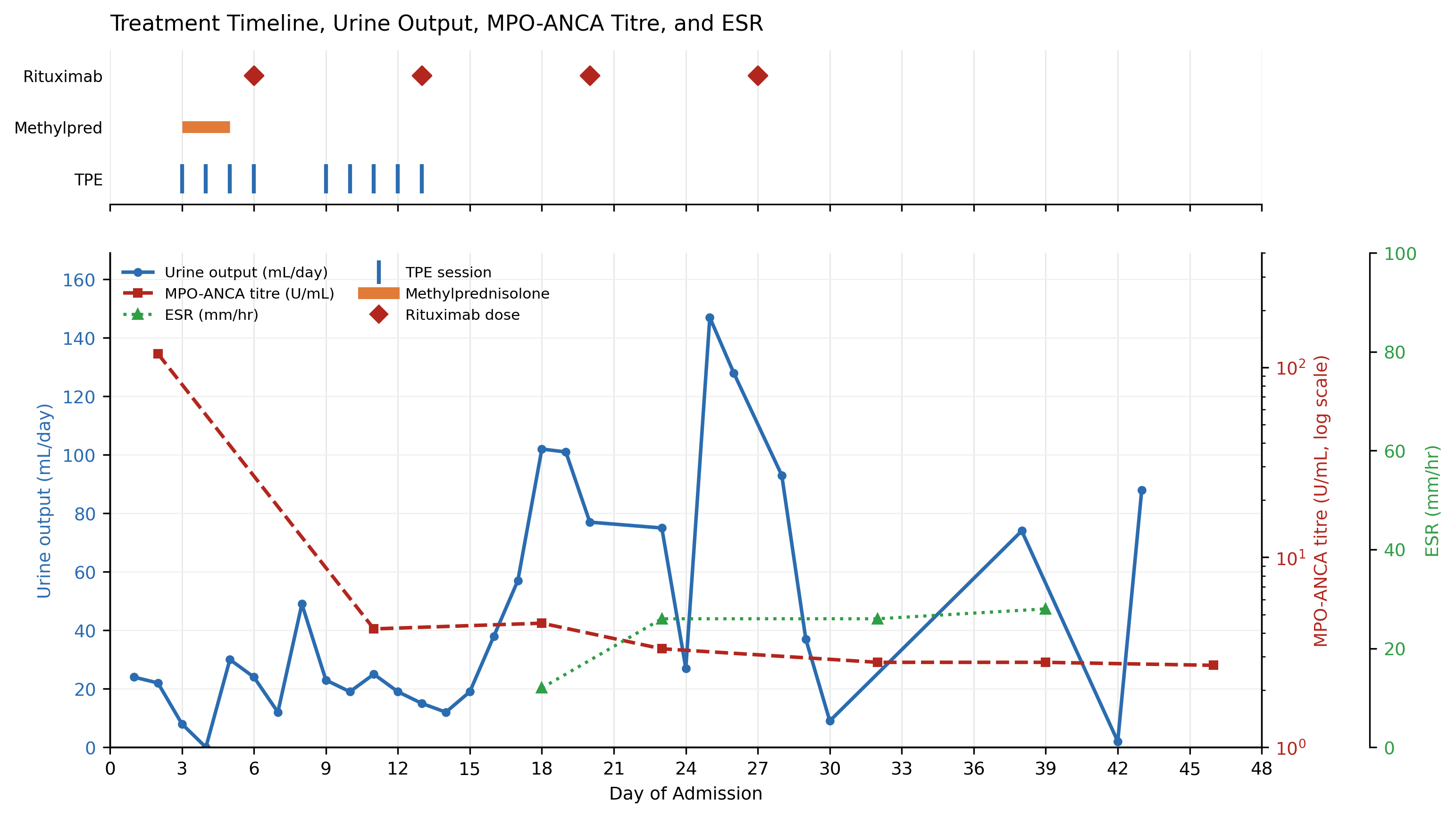
Case Presentation Summary: A 2-year-old girl presented with a two-day history of cough, coryza, and anuria, with a background of recurrent epistaxis, periorbital and pedal oedema, and exertional dyspnoea. Investigations confirmed severe kidney failure (creatinine 649 µmol/L, estimated glomerular filtration rate 5 mL/min/1.73 m²) with electrolyte and metabolic derangement, anaemia, thrombocytopenia and coagulopathy. She was managed with continuous venovenous haemofiltration, therapeutic plasma exchange, and intravenous methylprednisolone pending confirmatory serology. MPO-ANCA returned strongly positive (118 IU/mL). Given severe coagulopathy and thrombocytopenia, treatment proceeded on clinical and serological grounds without renal biopsy, consistent with KDIGO 2024 guidance in clinically and serologically unambiguous cases. Rituximab induction (375 mg/m² weekly for four doses) was commenced on day 6 alongside plasma exchange and a glucocorticoid taper. MPO-ANCA titres normalised within one week of treatment (Figure 1). Renal recovery remained incomplete, and peritoneal dialysis was established on day 12. She was discharged after 46 days with resolution of extra-renal disease. At 6 months' follow-up, she remains in remission but continues on peritoneal dialysis.
Learning Points Discussion: This case sits at the extreme lower end of the reported paediatric AAV age spectrum and adds a rare data point on rituximab induction therapy in a toddler, an age group almost entirely absent from the evidence underlying current guidance. Rapid serological remission was achieved despite this lack of paediatric-specific evidence, suggesting the adult-derived regimen can be effective even at this age, though incomplete renal recovery underscores that outcomes may still differ from those seen in older children. The decision to withhold renal biopsy, driven by severe thrombocytopenia and coagulopathy rather than diagnostic ambiguity, reflects a pragmatic but imperfect solution: it avoided procedural risk in a critically unstable child, but left glomerular chronicity and crescent burden unassessed, limiting what can be said about her longer-term renal prognosis. This case highlights both the diagnostic and therapeutic challenges of managing AAV in very young children, and the urgent need for paediatric-specific outcome data to inform induction choice, dosing, and long-term safety monitoring in this population.