Background: Cortisol measurement is frequently undertaken in neonates, particularly as part of investigations for hypoglycaemia. However, interpretation of neonatal cortisol concentrations can be challenging due to variation with postnatal age and clinical context. We reviewed sampling practices and the subsequent investigation and management of low cortisol results within our neonatal unit.
Methods: A retrospective clinical audit was done of babies born between 1st January 2024 and 31st December 2025 who had a serum cortisol measured during their time on the neonatal unit. Data collected included indication for sampling, postnatal and gestational age at sampling, initial cortisol concentration and subsequent investigation and management. A cortisol concentration of <100nmol/L was considered low.
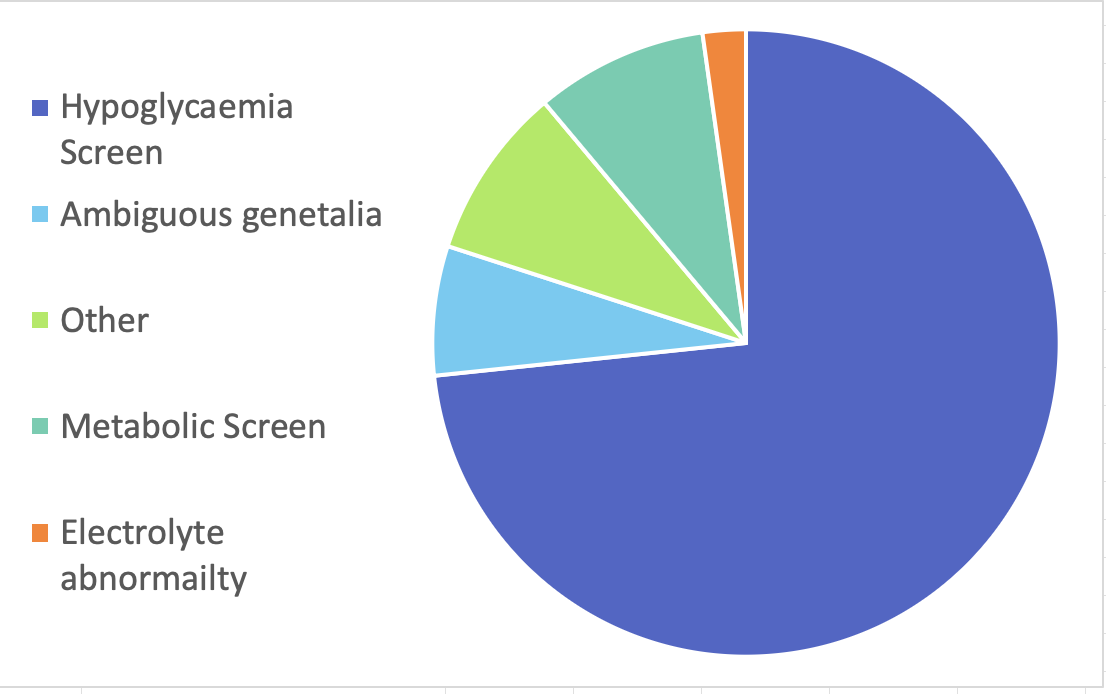
Results: 45 babies had cortisol levels measured during the audit period. The most common indication was investigation of hypoglycaemia (33/45). Other indications included metabolic screening (4/45), ambiguous genitalia (3/45), electrolyte abnormality (1/45), and other clinical indications (4/45), including following dexamethasone treatment, a twin sibling with low cortisol, incidental adrenal haemorrhage identified on ultrasound, and investigation of hyperbilirubinaemia. (Figure 1)
There was considerable variation in the timing of initial cortisol sampling: 14 samples were obtained after 72 hours of age, 6 at 49–72 hours, 6 at 25–48 hours, 10 at 13–24 hours, 2 at 7–12 hours and 8 within the first 6 hours of life.
14 babies (31%) had a low initial cortisol concentration. Gestational ages ranged from 28+5 to 41+2 weeks (median 35+3 weeks). Five babies underwent repeat cortisol measurement; four remained low and one normalised. Seven proceeded directly to short Synacthen testing (SST) without repeat cortisol measurement. Overall, 12/14 babies with a low initial cortisol underwent SST, with 9 demonstrating a normal response and 3 an abnormal response. 2 babies with an abnormal SST were subsequently diagnosed with pituitary stalk syndrome and one with septo-optic dysplasia.
Conclusions: This audit identified variation in the timing and indications for neonatal cortisol sampling with most samples obtained as part of investigations for hypoglycaemia. A proportion of low initial cortisol concentrations subsequently normalised, while SST identified three babies with significant underlying pituitary dysfunction. These findings reinforce the challenges of interpreting isolated neonatal cortisol concentrations. A standardised local pathway for cortisol sampling and management of low results may improve consistency, reduce unnecessary repeat investigations and support timely identification and referral of babies with underlying endocrine disorders.