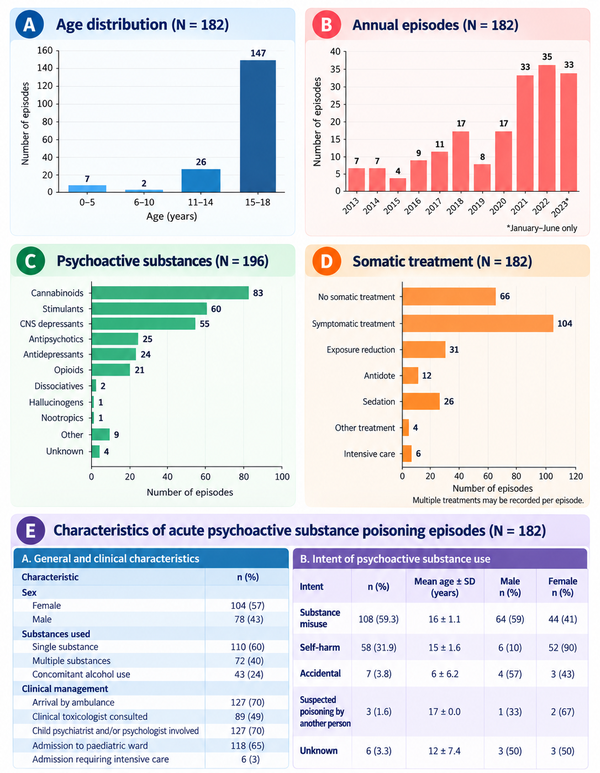
Background: Acute poisoning with psychoactive substances (PAS) is an increasing challenge in paediatric emergency care. Patterns of exposure differ by age and intent, ranging from accidental poisoning in young children to substance abuse and intentional self-poisoning among adolescents. We aimed to describe trends, exposure patterns and clinical management of acute PAS poisoning in children and adolescents treated at a tertiary paediatric centre in Slovenia.
Methods: We conducted a retrospective single-centre study of children and adolescents treated for acute PAS poisoning at the University Children’s Hospital Ljubljana between January 2013 and June 2023. Isolated alcohol intoxications, iatrogenic poisonings, unconfirmed suspected poisonings and incorrectly coded cases were excluded. Demographic and clinical characteristics, substances involved, intent of exposure, concomitant alcohol use, treatment, hospitalisation and involvement of toxicology and mental health specialists were analysed.
Results: We identified 182 acute poisoning episodes in 128 children and adolescents; 19 patients presented more than once (Figure 1). Females accounted for 57% of episodes. Mean age at presentation was 15.4 years, and 147/182 (81%) episodes occurred in adolescents aged 15–18 years. Presentations increased markedly over the study period, particularly after 2020: from 4 episodes in 2015 to 33 in 2021 and 35 in 2022. Intentional substance misuse was the leading cause of poisoning (59.3%) and was more frequent among males (59%). Intentional self-poisoning or poisoning associated with self-harm accounted for 31.9% of episodes and showed a striking female predominance (90%). Accidental poisonings represented 3.8% of episodes and occurred predominantly in younger children. Cannabinoids were the most frequently implicated substances (45%), followed by stimulants (33%) and central nervous system depressants (30%). Polysubstance exposure occurred in 40% of episodes, and concomitant alcohol use was reported in 24%. Sixty-five percent of patients were admitted to a paediatric ward and an additional 3% required intensive care. Somatic treatment was required in 64% of episodes. A clinical toxicologist was consulted in 49%, while a child psychiatrist and/or psychologist was involved in 70% of cases.
Conclusions: Acute PAS poisoning represents a growing burden in paediatric emergency care, with a marked increase in presentations after 2020. Two distinct high-risk patterns emerged: substance misuse, particularly among male adolescents, and intentional self-poisoning or self-harm, predominantly among adolescent females. Cannabinoids were the most frequently involved substances, while polysubstance exposure was common. The high rates of hospitalisation and mental health involvement highlight the need for a multidisciplinary approach extending beyond acute medical stabilisation. Paediatric emergency departments provide a key opportunity for early identification of substance misuse and self-harm and for timely referral to appropriate mental health and substance-use services.