Background: Infantile nephropathic cystinosis is a rare autosomal recessive lysosomal storage disorder caused by pathogenic mutations in the CTNS gene, resulting in defective lysosomal cystine transport and progressive cystine accumulation in multiple tissues, particularly the kidneys and eyes. Early proximal tubular dysfunction (Fanconi syndrome) typically leads to renal solute wasting, normal anion gap metabolic acidosis, and severe failure to thrive. However, proximal tubular dysfunction may be incomplete early in the disease course, creating significant diagnostic challenges.
Case Presentation: We report a previously healthy 15-month-old boy who presented with progressive failure to thrive, profound polyuria reaching approximately 20-21 mL/kg/hr, and excessive polydipsia. Initial investigations demonstrated markedly impaired urinary concentrating ability without glycosuria or overt metabolic acidosis. Failure to concentrate urine during water deprivation and the absence of a significant response to desmopressin initially suggested a diagnosis of nephrogenic diabetes insipidus. Accordingly, treatment with hydrochlorothiazide and amiloride was initiated and resulted in partial improvement in polyuria; however, this response was not sustained.
As his illness evolved, progressive renal potassium, magnesium, and phosphate wasting, together with marked hyperreninemia and hyperaldosteronism, raised suspicion for a Bartter-like salt-losing tubulopathy. In light of the suspected Bartter-like phenotype, ibuprofen was initiated to reduce urinary losses; however, no significant improvement in polyuria was observed.
The diagnosis remained uncertain until he was observed shielding his eyes from the overhead lights while walking in the hospital corridor. This observation prompted a more detailed history, which revealed photophobia since the age of 8 months and led to ophthalmologic evaluation that demonstrated bilateral corneal cystine crystals. The combination of evolving proximal tubular dysfunction and characteristic ocular findings strongly suggested infantile nephropathic cystinosis, which was subsequently confirmed with positive genetic testing.
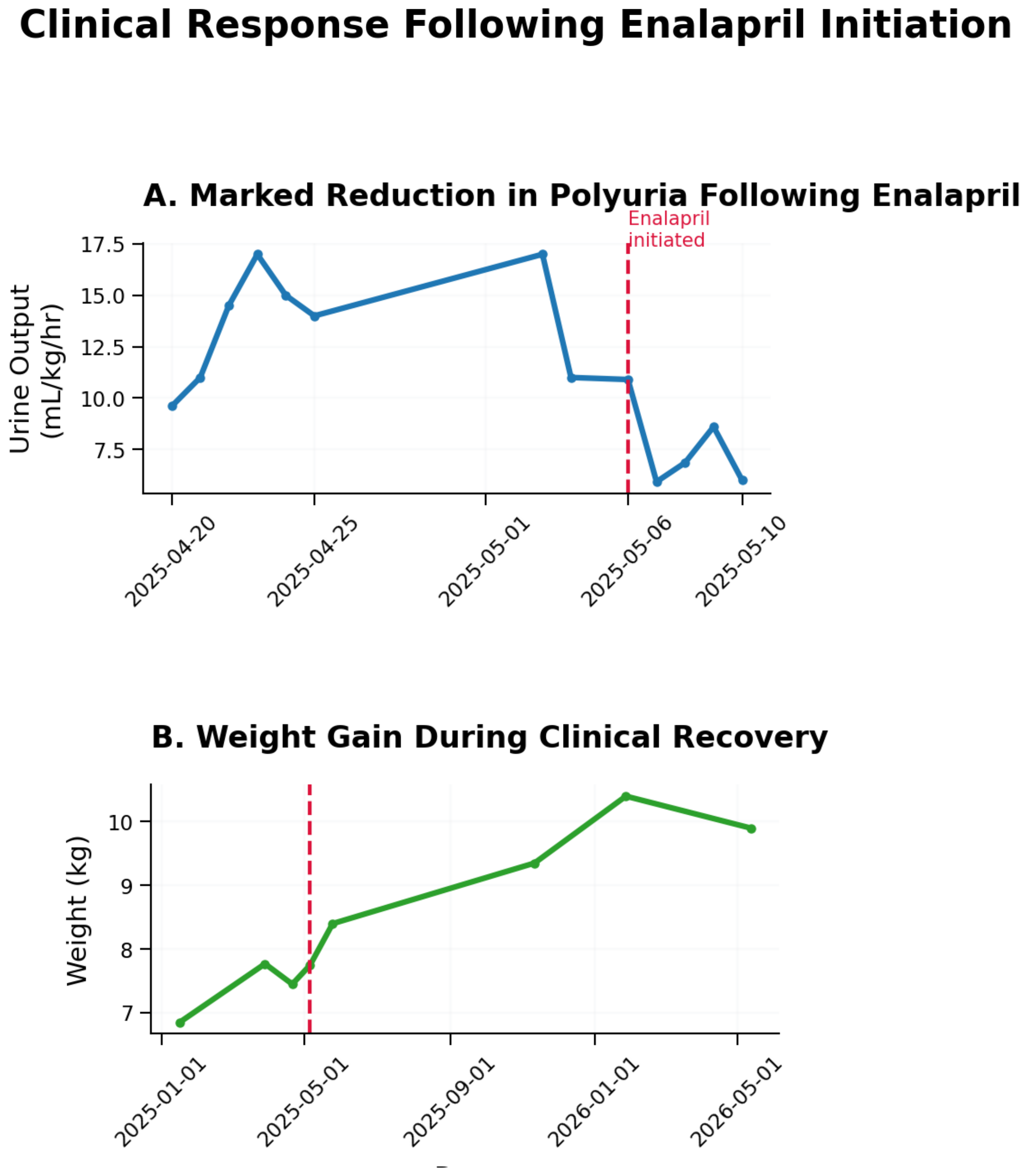
Management targeted both metabolic replacement and aggressive nutritional rehabilitation. Cysteamine therapy and electrolyte supplementation were initiated, alongside gastrostomy tube placement for nutritional support. Because severe polyuria remained refractory to conventional therapeutic measures, including hydrochlorothiazide, amiloride, and ibuprofen, enalapril was introduced as an alternative non-conventional strategy to reduce urinary losses. Following its initiation, urine output decreased markedly, from peak values approaching 20 mL/kg/hr to approximately 6 mL/kg/hr at discharge. This improvement was accompanied by enhanced nutritional tolerance, improved appetite, and progressive weight gain (Figure 1). Together with gastrostomy tube nutritional support, improved control of urinary losses facilitated ongoing growth rehabilitation.
Learning Points: This case illustrates that severe polyuria, nephrogenic diabetes insipidus, and failure to thrive may precede the classic Fanconi syndrome phenotype of infantile nephropathic cystinosis and mimic Bartter syndrome. It also highlights the importance of careful clinical observation and detailed history-taking, as subtle symptoms such as photophobia may provide crucial diagnostic clues. Early, proactive nutritional rehabilitation alongside targeted solute replacement remains essential for optimizing growth and clinical outcomes in children with infantile nephropathic cystinosis. Notably, initiation of renin-angiotensin-aldosterone system (RAAS) blockade with enalapril was associated with a marked reduction in urine output despite limited response to conventional treatment. Although RAAS blockade has been described primarily for the management of proteinuria and preservation of kidney function, its use as a strategy to control severe polyuria is not well established. The marked reduction in urine output observed in this case is therefore particularly noteworthy and deserves further study.