Background: Pediatric venous thromboembolism is usually multifactorial, and evidence guiding invasive treatment of extensive acute-on-chronic iliocaval thrombosis remains limited. We report a child with combined inherited thrombophilic abnormalities and chronic venous obstruction treated with mechanical thrombectomy without adjunctive thrombolysis.
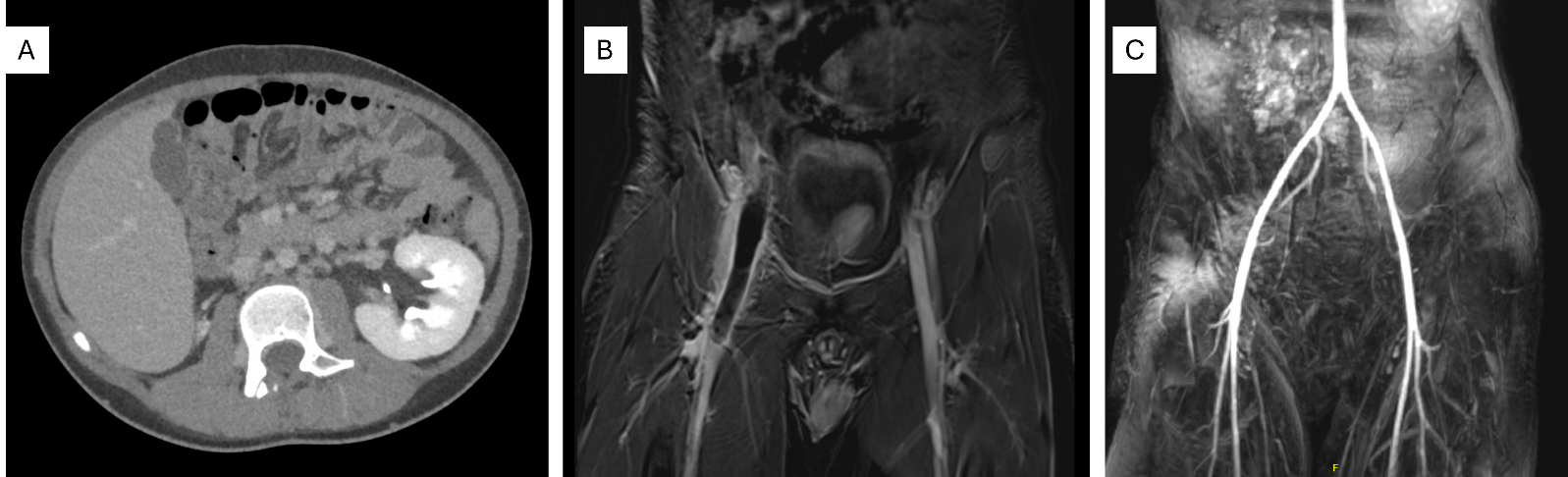
Case Presentation Summary: A previously healthy 12-year-old boy presented with progressive right lower-limb pain and impaired weight-bearing without trauma, immobilization, or recent surgery. Imaging demonstrated extensive thrombosis of the right superficial femoral, common femoral, external iliac and common iliac veins, extending to the left common iliac vein. The infrahepatic inferior vena cava was not visualized, and extensive pelvic, paravertebral, azygos and hemiazygos collaterals indicated longstanding obstruction; MR venography confirmed acute iliocaval thrombosis superimposed on chronic occlusion. A solitary functioning left kidney with marked contralateral renal atrophy was also identified, with preserved renal function (Figure 1). Molecular testing confirmed heterozygous Factor V Leiden and a heterozygous likely pathogenic FGA variant (c.1846del; p.Thr616Hisfs*33), despite normal fibrinogen concentration and thrombin time. His mother had congenital afibrinogenemia, heterozygous Factor V Leiden, and previous pulmonary embolism. Therapeutic low-molecular-weight heparin with anti-factor Xa-guided adjustment produced only partial symptomatic improvement. Because of persistent pain and functional limitation, extensive acute thrombus burden, and an organized chronic component considered unlikely to respond to thrombolysis, multidisciplinary review supported mechanical aspiration thrombectomy without catheter-directed thrombolysis. Recanalization of the right superficial and common femoral veins restored antegrade flow into the external iliac vein; the chronic common iliac and infrarenal inferior vena cava occlusions were not crossed. He improved functionally and was transitioned to weight-adjusted rivaroxaban for long-term anticoagulation.
Learning Points Discussion: The case highlights the interaction of inherited and anatomical risk factors in pediatric thrombosis. A clinically relevant FGA variant may coexist with normal routine fibrinogen testing, supporting comprehensive genetic evaluation in unusually extensive thrombosis. In selected acute-on-chronic iliocaval disease, mechanical thrombectomy without thrombolysis can be considered when the acute obstructive component is clinically significant but organized chronic thrombus and collateralization make thrombolysis less attractive. Pediatric evidence remains limited, so intervention and long-term anticoagulation require individualized multidisciplinary assessment.