Introduction:Anorexia Nervosa is the third most common chronic illness of adolescence, with the highest mortality rate of all psychiatric disorders. We identified a lack of confidence among staff in managing patients admitted with eating disorders (ED), despite increasing incidence in paediatrics. Limited undergraduate teaching and varying experience within the multidisciplinary team (MDT) were highlighted as contributing factors. We explored staff perceptions and confidence, evaluating the impact of a targeted educational session.
Methods: Pre and post-session surveys were distributed to the paediatric MDT attending formal teaching by Wigan and Bolton Young People’s Community Eating Disorder Service (CEDS). Attendees rated familiarity and agreement with statements using the Likert scale. Respondents included nurses, healthcare assistants and doctors working within the Paediatric team at Royal Albert Edward Infirmary.
Results:
Of the patients admitted to the RAEI Rainbow Ward between 1 January and 31 December 2024, ages ranged from 12 to 17 years (average 14.3 years), and 86% were female and 14% male. Most admissions were emergencies (86%); the remaining 14% were elective. Length of admission ranged from 1 to 84 days (average 47.9 days). The primary diagnosis was unspecified eating disorder in 86% of patients, anorexia nervosa in 14% and atypical anorexia nervosa in 14%. No patients had any other eating disorder diagnosis (bulimia nervosa, atypical bulimia nervosa, overeating or vomiting associated with psychological disturbances, or other eating disorders). * Others: Bulimia nervosa, atypical bulimia nervosa, overeating associated with psychological disturbances, vomiting associated with psychological disturbances, and other eating disorders.
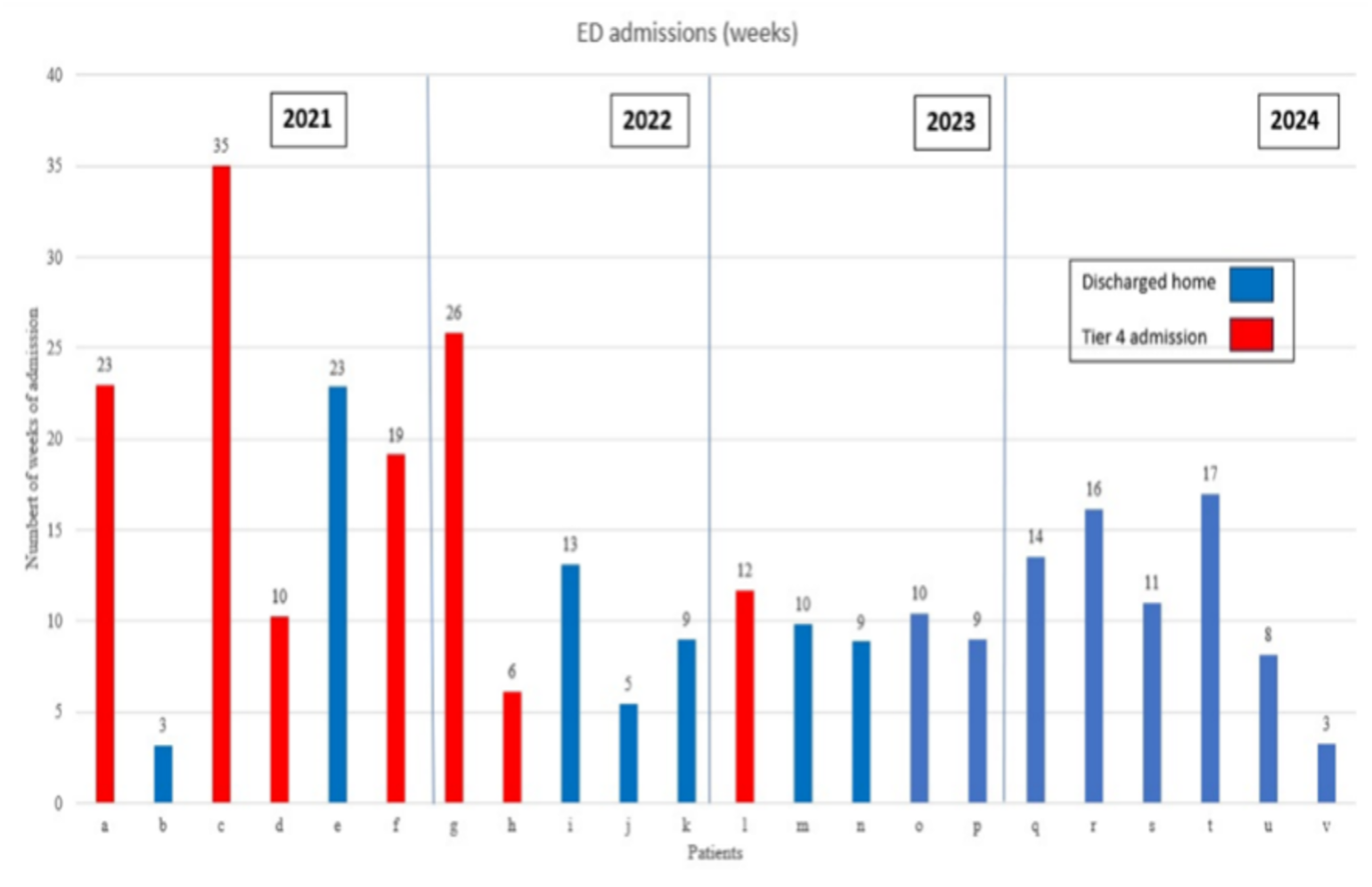
In the preceding 12 months, 86% of admissions were emergencies, with average duration of 47.9 days. Mean age was 14 years, and 86% of patients were female. 72% had an “unspecified diagnosis” coded, highlighting the challenges of diagnosis. Introduction of a dedicated in-reach team and weekly multidisciplinary meetings post COVID-19, has significantly reduced tier 4 admissions (figure 1).
Prior to formal teaching, 45.5% of respondents reported preconceptions towards ED patients.
Following formal teaching, reported familiarity of ED increased by 72.2%. Awareness of admission and discharge criteria improved by 56.8% and knowledge of where to seek support increased by 47.7%. Overall, 66.7% of respondents reported improved confidence and awareness of ED, and 91.7% agreed that all paediatric staff should receive formal ED training.
Conclusion: A dedicated in-reach team and weekly multidisciplinary meetings and teamwork post the COVID-19 pandemic have contributed significantly to reductions in tier 4 admissions. However, emergency admissions with prolonged stays persist, highlighting the need for early recognition and intervention. The importance of education in raising staff awareness and confidence is paramount to this.