Background: Diffuse panbronchiolitis (DPB) is a rare chronic airway disease characterized by destructive inflammation of the respiratory bronchioles causing chronic productive cough, airflow obstruction, and bronchiectasis. Unlike other causes of bronchiectasis, long-term macrolide therapy is highly effective in patients with DPB due to its immunomodulatory effects, and results in improved symptoms and survival. DPB is extremely rare outside East Asia, especially in children. We present a case of progressive bronchiectasis in a renal transplant recipient that resolved completely following macrolide therapy, suggestive of a DPB-like phenotype.
Case Presentation: The patient is a 17-year-old Qatari adolescent who underwent kidney transplantation at 3 years of age for chronic renal failure secondary to congenital posterior urethral valves. He was referred to the pediatric pulmonary clinic at 10 years of age for chronic productive cough following Mycoplasma pneumonia. He was initially treated with corticosteroids for possible asthma with variable response. Subsequently, he developed recurrent lower respiratory tract infections requiring frequent courses of antibiotics and multiple hospitalizations, averaging 3 admissions per year over 6 years.
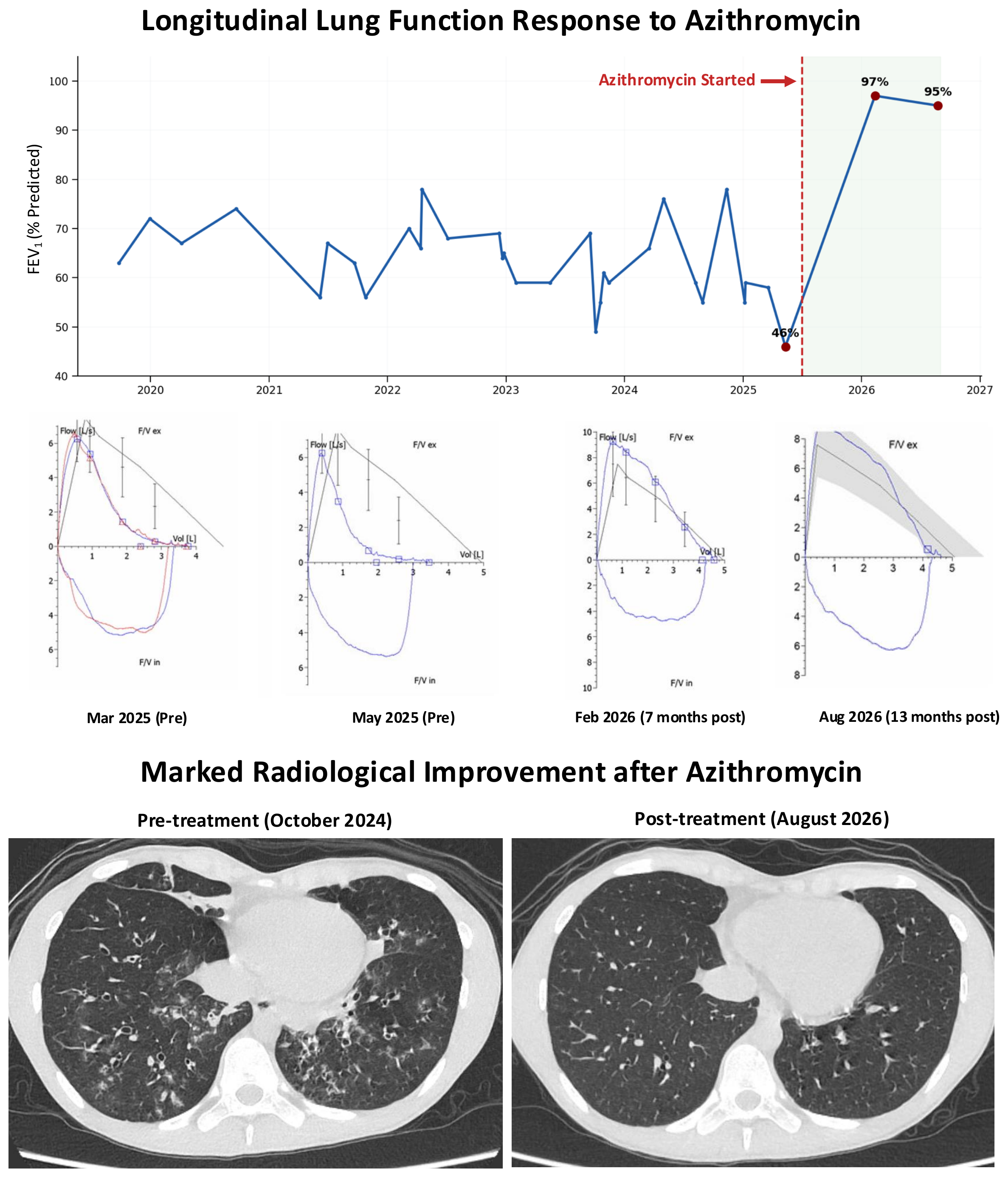
Serial chest CT scans showed progressive bilateral bronchiectasis, especially in the lower lobes, with tree-in-bud opacities, peribronchial thickening and mosaic attenuation. Repeated pulmonary function testing (PFT) demonstrated worsening airflow obstruction despite repeated antimicrobial treatment and daily airway clearance therapy. FEV₁ declined from 78% predicted to 46% predicted over 6 years. Repeated bronchoscopy procedures were also performed and demonstrated diffuse thick secretions bilaterally. Bronchoalveolar lavage fluid showed marked neutrophilic inflammation (68% neutrophils) with no identified pathogen.
Extensive evaluation for causes of bronchiectasis was negative, with normal sweat chloride (13 mmol/L), normal nasal nitric oxide (482 nL/min), negative PCD and CFTR gene mutation panels, normal immunoglobulin levels, reactive anti-bacterial antibodies, and negative mycobacterial cultures and PCR tests. Due to his kidney transplant, he was maintained on sirolimus and methotrexate initially for immunosuppression, with no history of rejection or opportunistic infections. Immunosuppression regimen was changed to tacrolimus plus mycophenolate due to repeated respiratory infections and worsening bronchiectasis, with no significant improvement.
At 16 years of age, macrolide therapy using azithromycin 500 mg three times weekly was added, without any change in his immunosuppression or airway-clearance regimens. Soon after initiating azithromycin, cough and sputum production resolved completely, with no further pulmonary exacerbations. Lung function also normalized within seven months of azithromycin therapy to FEV₁ of 97% predicted and remained stable at 13 months with FEV₁ 94.6% predicted, the best lung function recorded in seven years. Follow-up CT demonstrated complete resolution of the tree-in-bud opacities and peribronchial thickening with marked improvement in bronchiectasis (Figure 1).
Learning Points: We present a case of severe progressive bronchiectasis in a pediatric renal transplant patient which responded to azithromycin, supporting DPB-like phenotype. However, a definitive diagnosis of DPB could not be confirmed. Transplant-associated bronchiectasis remains an alternative diagnosis, but the marked clinical, radiographic, and functional response to azithromycin supports a DPB-like phenotype. This case highlights the importance of considering a DPB-like phenotype in pediatric renal transplant recipients with unexplained progressive bronchiectasis, particularly when evaluation is unrevealing. Early consideration of macrolide therapy may be warranted in these cases.