Background: The Local Neonatal Unit at Royal Albert Edward Infirmary in Wigan, UK had no structured multidisciplinary simulation programme. Despite robust staff compliance with Neonatal Life Support (NLS) Certification and the opportunity to attend the local Difficult Airway Management Day, there was no established simulation faculty or regular opportunity for multidisciplinary practice. The feedback collected from local and rotational resident doctors identified limited confidence in managing certain neonatal life support scenarios and highlighted no opportunities to practise the skills required to manage neonatal patients safely. This quality improvement project aimed to embed a sustainable neonatal simulation programme and improve team readiness and confidence in managing neonatal emergencies, including difficult airway management.
Methods: A prospective mixed-methods quality improvement project was initiated in March 2026. Regular multidisciplinary neonatal simulation sessions, airway skills stations and structured debriefing were introduced. Simulation faculty consisted of trained Neonatal Life Support instructors amongst the staff. Participants included paediatric local and rotational resident doctors, paediatric consultants, neonatal nurses, advanced neonatal nurse practitioners, midwives and allied health professionals. Baseline questionnaires completed by junior and senior paediatric doctors assessed confidence, preparedness and perceived learning needs. Post-session questionnaires evaluated confidence, educational value and future training needs.
Results: Baseline feedback demonstrated substantial concerns regarding confidence in managing neonatal emergencies. Before commencing their rotation in Paediatrics, 73% of junior (Tier 1) doctors reported no confidence in providing neonatal life support. Overall, 93.3% of respondents believed simulation would improve confidence in attending neonatal deliveries. Reported concerns included ineffective or unfamiliar teamwork (37%), limited timely senior support (25%), managing a deteriorating neonate (25%), limited experience and decision-making (17%), and ventilation challenges in extreme prematurity (18%). Amongst senior (Tier 2) paediatric doctors, 63.6% reported no participation in robust hands-on simulation on commencement of the rotation and 77.7% felt that hands-on simulation during their posting in Wigan was insufficient.
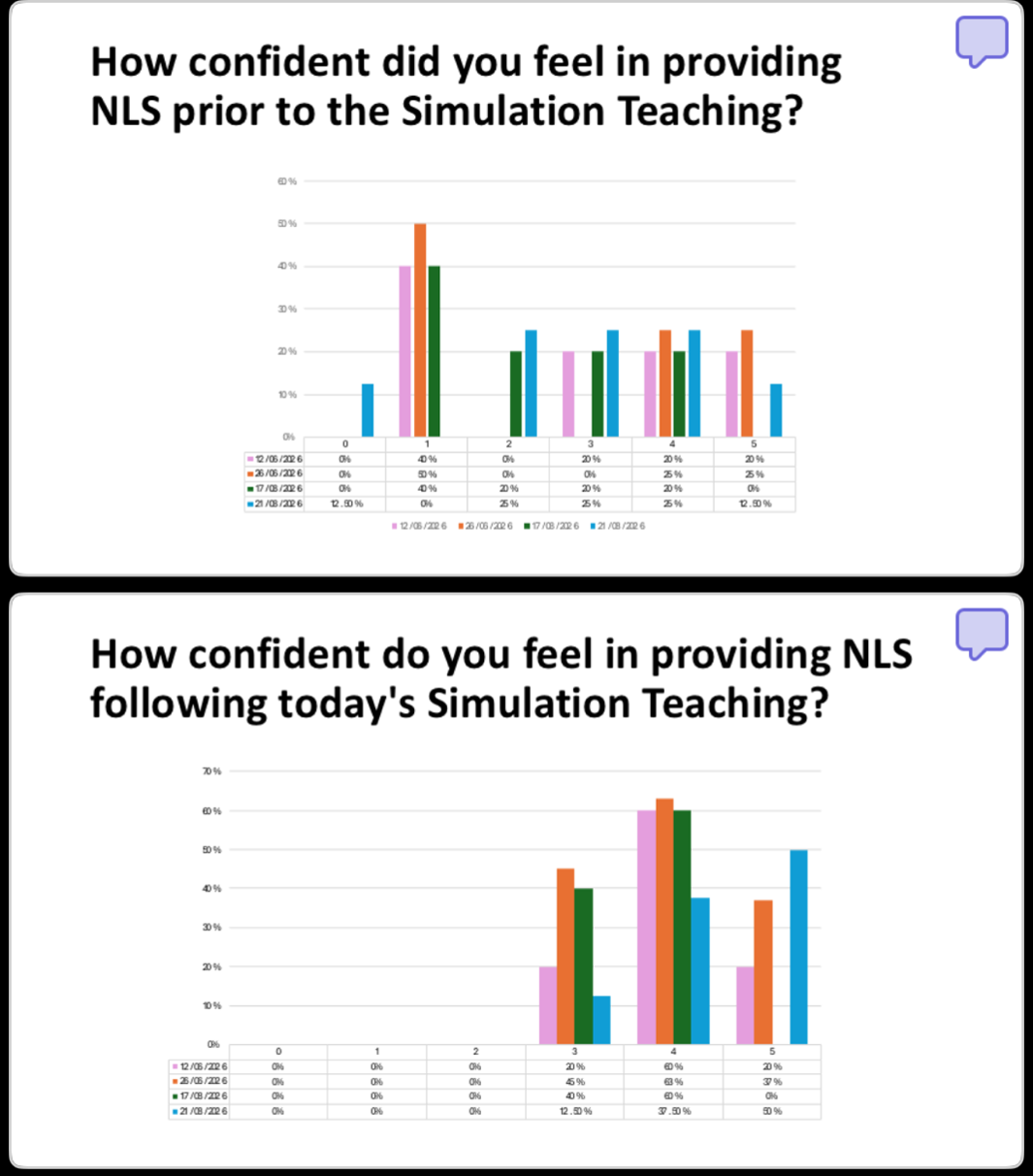
Four simulation days with additional airway skills stations were subsequently delivered. Across the four simulation sessions, participants' self-reported confidence in providing NLS increased following simulation-based teaching. Before the sessions, confidence was predominantly rated 0–1 in 5, whereas following simulation, ratings shifted towards 3–5 in 5 across all sessions (Figure 1). All respondents (100%) found the sessions helpful, particularly valuing structured scenarios, airway practice and debriefing.
Conclusion: A structured multidisciplinary neonatal simulation programme identified important educational, teamwork and system-level learning needs and was associated with substantial improvement in self-reported confidence in managing neonatal emergencies. The ongoing programme is now embedded in our Neonatal Unit. Key barriers to sustainability were faculty availability and clinical workload. Future development will include fortnightly simulation, broader involvement of midwifery and obstetrics, simulation-supported induction and development of a local simulation faculty.