Background: Asthma is a chronic illness that is highly prevalent in children. Approximately one-third of children with asthma experience at least one exacerbation each year. Early administration of a bronchodilator (BD) at home when symptoms of an exacerbation develop is recommended to prevent further deterioration. However, evidence regarding the actual use of BD at home during asthma exacerbations remains limited.
Objectives: To assess home BD use among children presenting with asthma exacerbations and identify reasons for not using home BD.
Methods: This prospective observational study was conducted at the pediatric outpatient clinic and pediatric inpatient ward of Songklanagarind Hospital, Thailand. Caregivers of children aged 2–18 years with asthma who presented with an acute exacerbation between May 2025 and July 2026 were included. Caregiver and child demographics, asthma characteristics, and pre-hospital BD use were collected. Patients with asthma were classified into three groups: the appropriate home BD use group, the underdose group, and the non-use group. Appropriate home BD use was defined as receiving at least one dose of salbutamol inhaler (200–600 μg) or one dose of budesonide/formoterol Turbuhaler before seeking medical care.
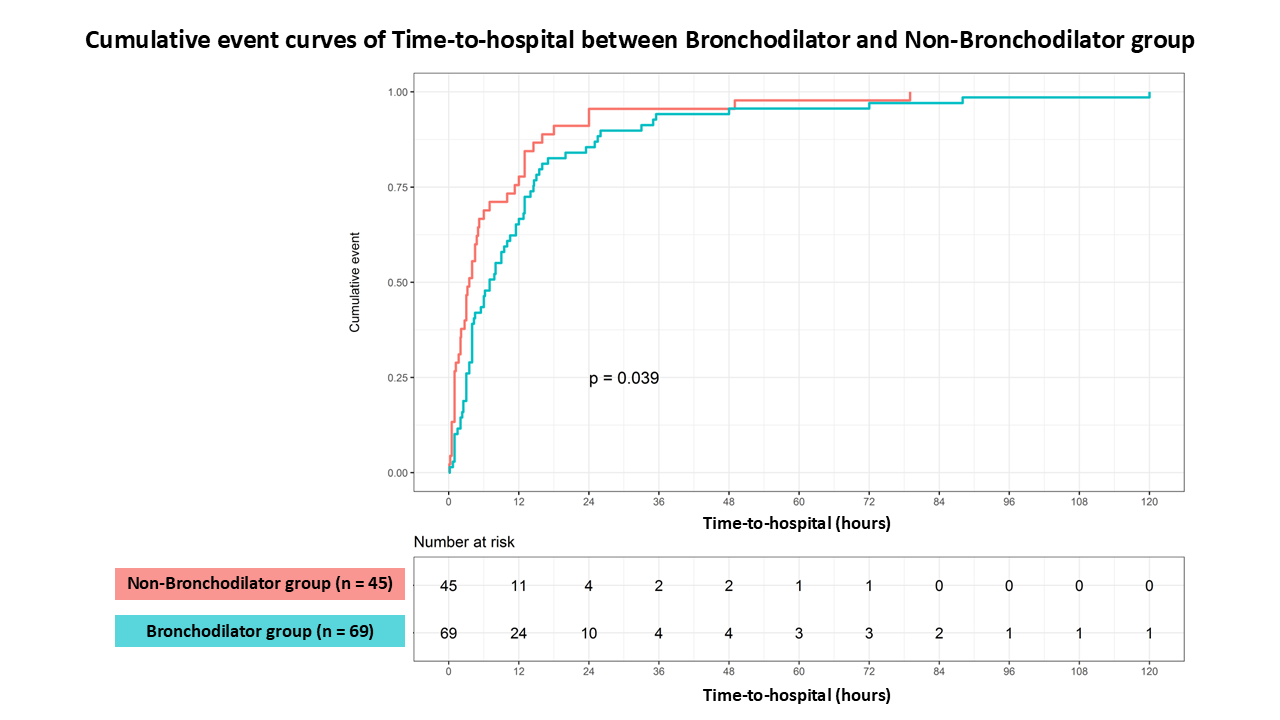
Results: A total of 120 caregivers and their children participated in this study. Among them, 59 (49.2%) received an appropriate home BD use, 10 (8.3%) used an underdose of BD, and 51 (42.5%) did not use BD. The top four reasons for not using home BD were running out of medication (27.4%), needing physician evaluation before using BD (27.4%), no BD medication available at the time (11.8%), and not recognizing asthma symptoms (11.8%). Appropriate home BD use was more prevalent among children receiving higher-step GINA asthma treatment (median [IQR], 3 [2–3] vs 2 [1–3]; p=0.035) and those with a shorter time since their most recent exacerbation (6 [2.4–9.6] vs 9.6 [4.8–19.2] months; p=0.002). (Figure 1).
Conclusion: Approximately half of pediatric patients with asthma received an appropriate home BD dose during acute exacerbations. The low rate of home BD use and the identified reasons for non-use highlight the importance of strengthening asthma action plans through patient and caregiver education on early symptom recognition, appropriate home rescue medication use, and ensuring medication availability.