Background: In VOYAGE (NCT02948959), dupilumab improved lung function and asthma control in children with asthma, with safety consistent with the known dupilumab safety profile. Categorical analyses showed an association between lung function and asthma control across tertiles (low, medium, and high) of change from baseline in pre-bronchodilator percent predicted forced expiratory volume in 1 second (pre-BD ppFEV1) to week 52. This post hoc analysis evaluated the relationship between lung function and asthma control in children (aged 6–11 years) with type 2 asthma (baseline blood eosinophils ≥150 cells/µL and/or fractional exhaled nitric oxide ≥20 ppb).
Methods: 321 children received dupilumab 100/200 mg or matched placebo every 2 weeks (q2w) for 52 weeks. A spline-based generalized additive model assessed the association at week 52 between changes in pre-BD ppFEV1 and the change from baseline in Interviewer-Administered 5-item Asthma Control Questionnaire (ACQ-5-IA) score.
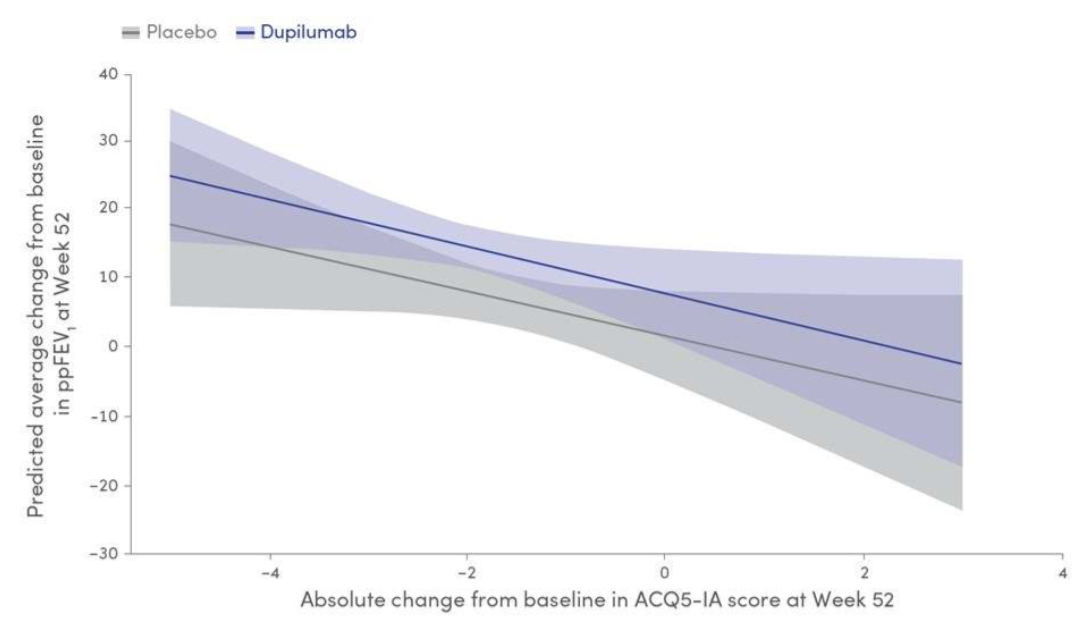
Results: Increases in pre-BD ppFEV1 were significantly associated with improvement in ACQ-5-IA score (P=0.0256) in both treatment arms, with a greater magnitude of effect in lung function improvement for dupilumab vs. placebo. The splines were parallel, and the results were consistent with a constant treatment difference (treatment-by-ACQ-5-IA effect P=0.8528) (Figure).
Conclusions: Results support significant association between lung function improvement and better asthma control in children with type 2 asthma, with a trend toward greater magnitude of effect with dupilumab vs placebo.