Background: Scurvy is a clinical syndrome caused by vitamin C deficiency. Humans cannot synthesise vitamin C and therefore depend on dietary sources. Vitamin C is essential for collagen synthesis and connective tissue integrity, and deficiency can manifest through a wide range of signs and symptoms. Musculoskeletal manifestations tend to predominate and include limb pain, tenderness, limp and refusal to weight-bear. These features, together with radiological abnormalities, may mimic osteomyelitis, inflammatory disease or malignancy, resulting in diagnostic delay and unnecessary investigations Although uncommon in developed countries, scurvy remains an important consideration in children with severe dietary restriction. Children with autism spectrum disorder (ASD) may be particularly vulnerable because of associations with severe food selectivity and multiple nutritional inadequacies.
This case series describes two children with ASD and severe food selectivity who presented with progressive musculoskeletal symptoms and significant functional decline. Both developed clinical and radiological features that initially raised concern for alternative diagnoses, including multifocal osteomyelitis. One case was recognised much earlier and, as a result, underwent fewer invasive investigations and experienced less diagnostic delay. We hope this case study will increase recognition of scurvy in this patient population and prevent unnecessary invasive investigations.
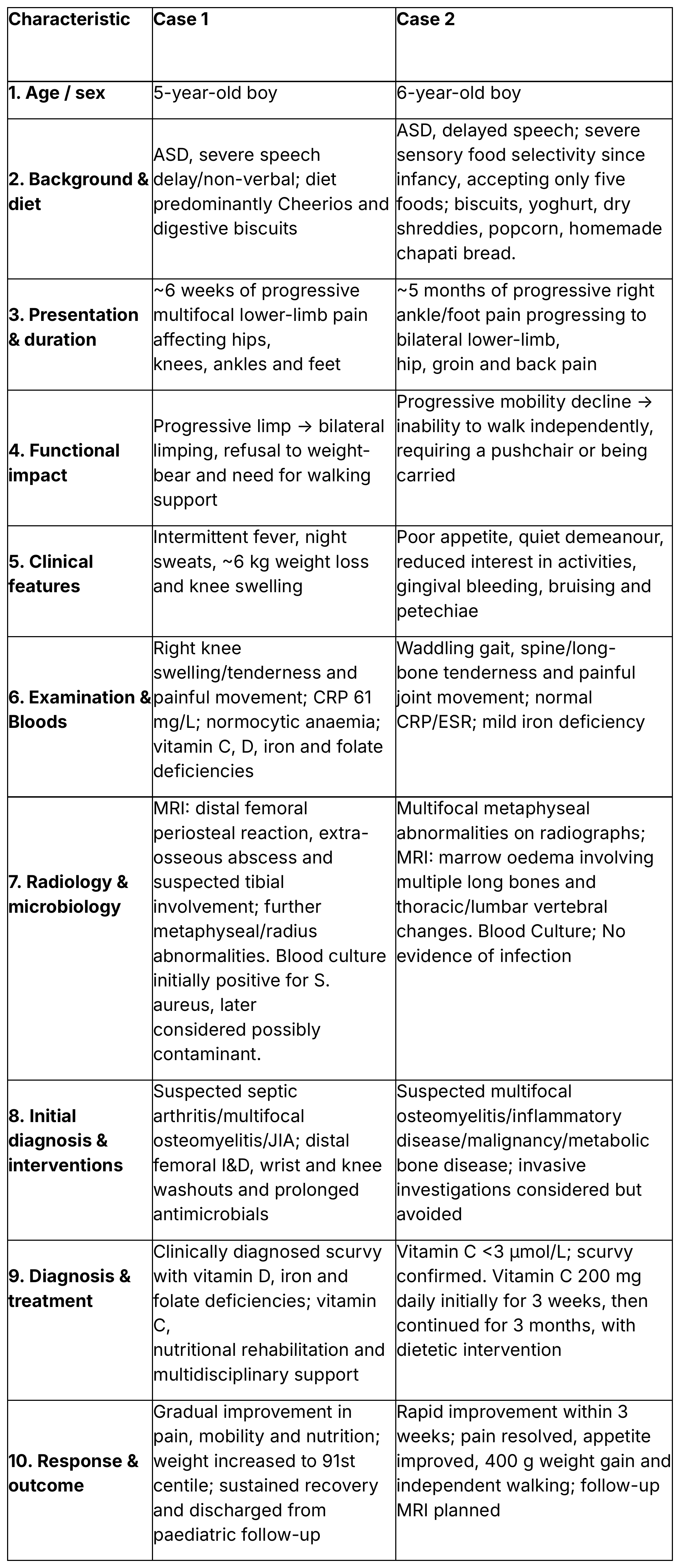
Case Presentation: Case 1: A 5-year-old boy presented in June 2024 with bilateral hip and lower limb pain, increasing reluctance to mobilise and weight-bear. His medical history included marked speech delay and food selectivity. A diagnosis of ASD was made later in 2025. Initial blood testing revealed increased inflammatory markers, with a CRP of 61 mg/L. MRI of the right knee revealed features seemingly consistent with osteomyelitis. In total, he underwent three invasive surgeries over 10 months for suspected multifocal osteomyelitis and received prolonged antibiotic courses. His symptoms did not improve until dietary vitamin C deficiency was identified in May 2025 and supplementation commenced, with excellent clinical response.
Case 2: A 6-year-old boy presented in May 2026 with progressive musculoskeletal pain and worsening mobility, causing functional decline. He had a known diagnosis of ASD, manifested through communicative difficulty and food selectivity. Initial blood testing was unremarkable, with normal inflammatory markers. However, MRI of the lower limbs and spine demonstrated features suspicious of multifocal osteomyelitis. Unlike Case 1, we took a detailed dietary history, which revealed extremely selective intake. Serum vitamin C was measured, and supplementation commenced, with rapid clinical recovery. He did not require invasive procedures.
(Table 1)
Learning Points Discussion: Scurvy should be considered early in children presenting with unexplained musculoskeletal pain, particularly those with ASD and severe food selectivity. A detailed dietary history, careful assessment for clinical features such as gingival bleeding and bruising, and early consideration of vitamin C deficiency may facilitate timely diagnosis and treatment.
Early recognition can prevent unnecessary invasive procedures and allow prompt nutritional rehabilitation and recovery. Preventive strategies should include early identification of food selectivity, dietary education, timely dietetic support, encouragement of a varied, vitamin-rich diet, and consideration of vitamin supplementation where dietary intake is inadequate. Early nutritional intervention may improve dietary tolerance and reduce the risk of micronutrient deficiencies as children grow older.