Background: Neonatal hypotonia is a common but diagnostically challenging presentation with a broad differential encompassing neurological, neuromuscular, metabolic, chromosomal and genetic disorders. Diagnosis can be particularly difficult when early clinical features are non-specific and characteristic syndromic manifestations emerge only during infancy. Shprintzen-Goldberg syndrome (SGS) is a rare SKI-related connective tissue disorder characterised by variable developmental, craniofacial, skeletal and multisystem manifestations.
Case Presentation Summary: A female infant born at 40+4 weeks following reduced fetal movements and an abnormal cardiotocograph had a birth weight of 4.29kg.She developed respiratory distress, feeding difficulties and episodes of bradycardia, desaturation and reduced responsiveness during feeding. Examination demonstrated marked axial hypotonia with significant head lag, alongside non-specific craniofacial features. Muscle bulk, spontaneous limb movements and deep tendon reflexes were preserved.
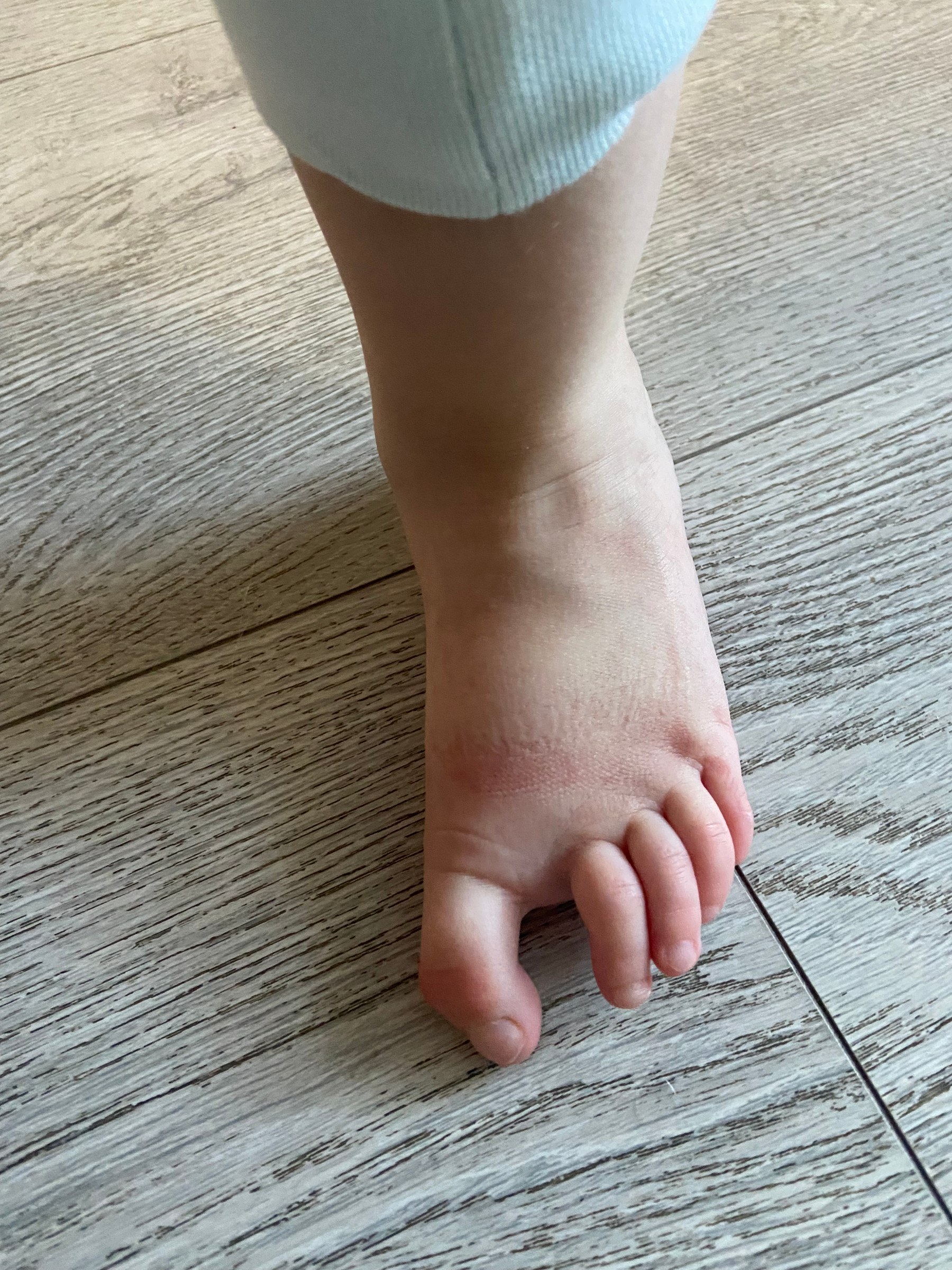
Extensive neonatal investigations, including infection screening, brain MRI, EEG, metabolic investigations, chromosomal microarray, karyotyping and targeted neuromuscular genetic testing, were unrevealing. Persistent hypotonia and delayed gross motor development prompted serial multidisciplinary assessment, during which a progressively recognisable syndromic phenotype emerged.During infancy, the phenotype evolved, with frontal bossing, a wide anterior fontanelle, long slender fingers, bilateral hallux valgus, generalised ligamentous laxity, hearing impairment, craniofacial dysmorphism becoming increasingly apparent (Figure 1).
At 8 months of age, a large persistent umbilical hernia and a large birth size prompted investigation for Beckwith-Wiedemann syndrome, which was negative. Subsequent assessment demonstrated arachnodactyly and lower limb alignment abnormalities. Craniosynostosis was excluded. At 18 months, trio whole-genome sequencing identified a de novo heterozygous SKI variant, c.103C>T p.(Pro35Ser), classified as likely pathogenic, confirming SKI-related SGS. At 2 years, she remains under multidisciplinary follow-up involving clinical genetics, community paediatrics, physiotherapy, speech and language therapy, orthopaedics, audiology, ophthalmology, craniofacial and cardiovascular surveillance.
Learning Points Discussion: SGS may initially present with non-specific neonatal hypotonia before characteristic craniofacial, skeletal and connective tissue manifestations become apparent. This case highlights the importance of longitudinal phenotyping when assessing infants with unexplained hypotonia, particularly when initial investigations are unrevealing. Progressive emergence of skeletal, connective tissue and craniofacial features should prompt consideration of syndromic diagnoses and comprehensive genomic testing. The absence of craniosynostosis should not exclude SGS. Earlier molecular diagnosis may facilitate timely surveillance and multidisciplinary management, while providing families with a clearer understanding of the diagnosis, access to appropriate support, and informed genetic counselling.