Background: Primary infection with Human herpesvirus 6 (HHV-6) and human herpesvirus 7 (HHV-7) commonly occurs in early childhood, with later reactivation occurring during acute illness or immunosuppression. HHV6/7 infections have been linked to hepatitis and liver failure and so they are commonly screened for at our institution in children with both native liver disease and post-liver transplant graft dysfunction. However, the clinical utility of this practice is uncertain.
Method: We conducted a single-centre retrospective descriptive study at a tertiary paediatric liver centre. All children managed by the paediatric liver service who were tested for serum HHV-6 and/or HHV-7 DNA PCR between December 2023 and November 2025 were included. Electronic patient records were reviewed for those with positive results to determine clinical significance.
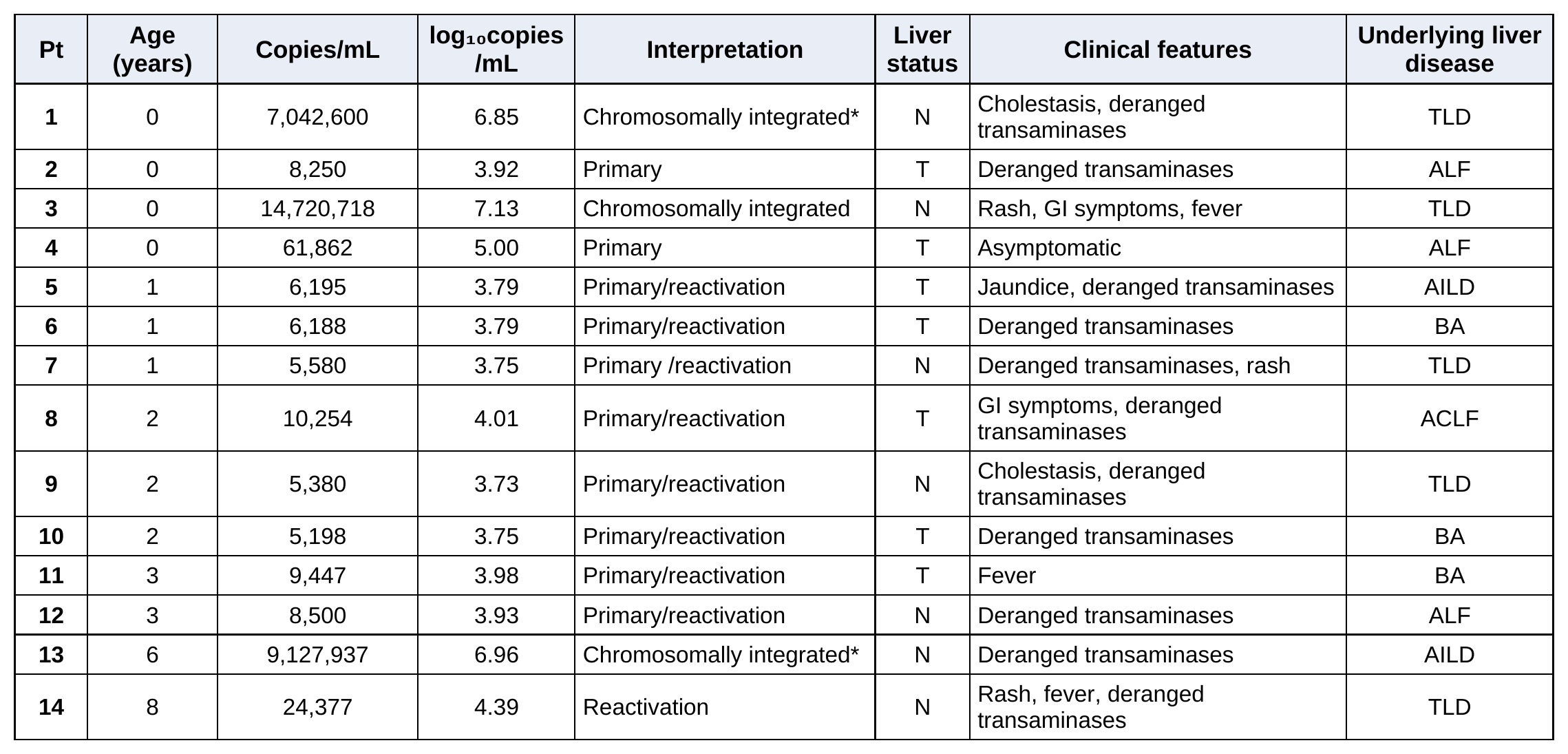
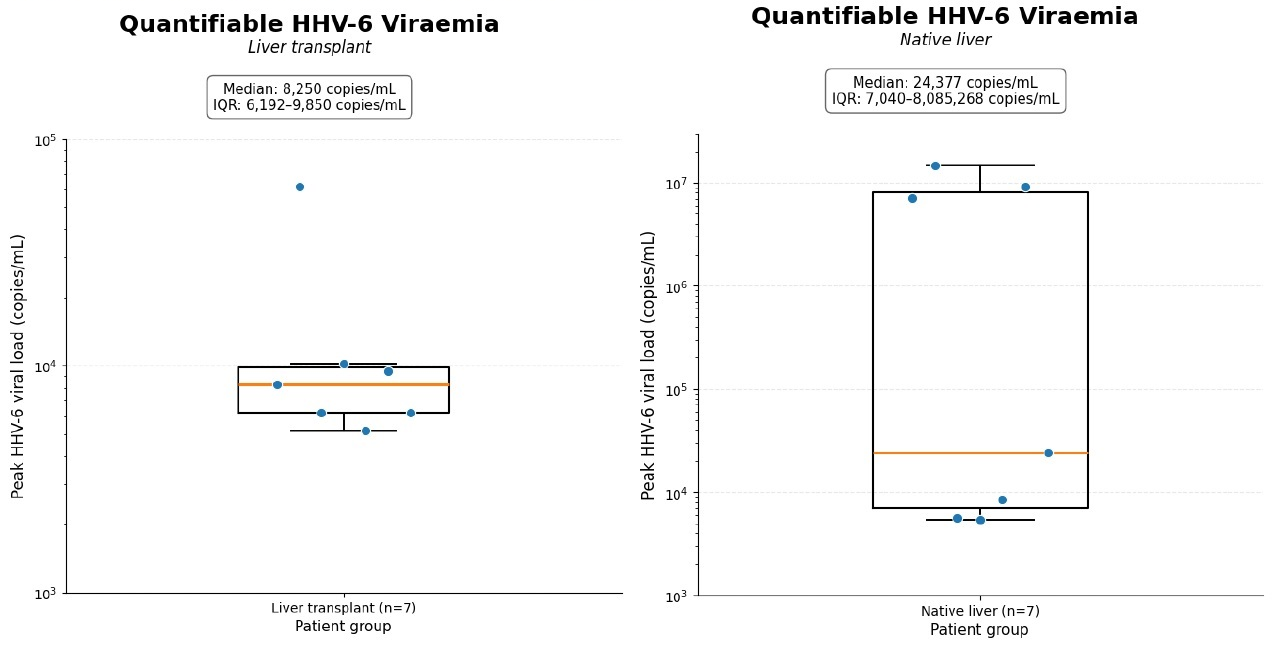
Results: During the study period, 332 HHV-6 and 324 HHV-7 PCR tests were performed within the paediatric liver unit. Thirty-four HHV-6 (10.2%) and 58 HHV-7 tests (17.9%) were positive, representing 82 initial positive episodes (29 HHV-6, 53 HHV-7) and 10 repeat-positive follow-up results. Fourteen children had quantifiable HHV-6; no quantifiable HHV-7 was detected. Deranged transaminases were present in 72/82 positive episodes, followed by cholestasis (n=9), gastrointestinal symptoms (n=8), asymptomatic testing (n=7), fever (n=6), rash (n=5), and jaundice (n=2). Among 14 patients with quantifiable HHV-6 viraemia, three were considered chromosomally integrated, two primary infections, eight primary infection/reactivation, and one reactivation; seven had native and seven had transplanted livers (Table 1). Both primary HHV-6 infections occurred post-liver transplantation. Median peak HHV-6 viral load was 24,377 copies/mL (IQR:7,040–8,085,269) in native-liver patients and 8,250 copies/mL (IQR:6,192–9,851) in transplant recipients (Graph 2). No patient received HHV-directed antiviral treatment, and the clinical significance of these infections remained unclear.
Conclusion: In our cohort, liberal screening for HHV-6/7 viraemia in paediatric patients with native and graft liver dysfunction did not impact clinical management and is therefore of unclear utility. No quantifiable HHV-7 viraemia was identified. Among the 14 children with quantifiable HHV-6 viraemia, it is unclear whether it contributed to their transaminitis, and further studies incorporating in situ hybridization and immunohistochemical analysis of liver tissue may add clarity. In particular, the impact of primary HHV-6 on these patients warrants further study to determine whether antiviral therapy may provide clinical benefit.