Background: Tuberous sclerosis complex (TSC) is a multisystem genetic disorder characterised by the development of hamartomatous lesions affecting the brain, kidneys, heart and other organs. Neurological manifestations are common, but severe hypertension as an early presenting feature, particularly in association with seizures, may be overlooked. We describe an infant in whom recurrent abnormal movements and severe hypertension led to the diagnosis of TSC, with subsequent evolution of the neurological phenotype to infantile spasms.
Case Presentation: A 13-week-old female infant, born at 36+4 weeks following premature rupture of membranes and requiring 5 days of intravenous antibiotics in a neonatal unit, presented with recurrent episodes of upper-limb stiffening and rhythmic jerking, initially affecting one hand and subsequently both hands. Episodes lasted 15–30 seconds, were associated with eye flickering and occurred predominantly around sleep. Examination revealed hypotonia and head lag. Investigations demonstrated an elevated adjusted calcium of 2.77 mmol/L.
Two days later, she re-presented with increasing frequency of episodes, occurring up to 10 times daily and lasting up to 2 minutes. Severe hypertension was repeatedly documented, with a maximum blood pressure of 164/53 mmHg. Hepatosplenomegaly was noted clinically. Metabolic investigations, including lactate, ammonia and urinary organic acids, were unremarkable.
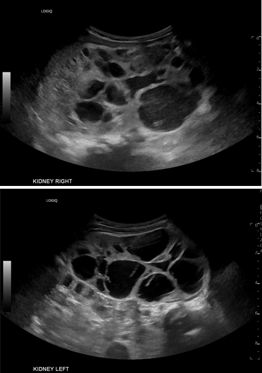
Abdominal ultrasonography demonstrated bilaterally enlarged kidneys containing multiple cysts throughout the renal parenchyma, consistent with polycystic kidneys (Figure 1). Brain magnetic resonance imaging (MRI) demonstrated multiple cortical/subcortical tubers, subependymal nodules and radial migration bands, consistent with TSC. Electroencephalography (EEG) showed occasional right frontal focal sharp-wave discharges without hypsarrhythmia. Echocardiography demonstrated small lesions suggestive of cardiac rhabdomyomas. She was diagnosed with hypertensive encephalopathy and seizures and required tertiary multidisciplinary management, including amlodipine, atenolol, captopril and levetiracetam.
At eight months of age, she was re-admitted with clusters of abnormal movements characterised by bilateral arm flexion/elevation and upward/rightward eye deviation. Episodes typically lasted 5–7 minutes, with the longest lasting 11 minutes. A 24-hour EEG demonstrated modified hypsarrhythmia, and the clinical diagnosis of infantile spasms was made. Vigabatrin was commenced, with repeat EEG and neurology follow-up planned.
Learning Points:
- Blood pressure should be routinely measured in infants presenting with seizures or abnormal movements, as severe hypertension may be an important underlying cause or associated finding.
- Renal involvement should be actively considered in infants with TSC and hypertension, particularly when there is evidence of bilateral renal enlargement and multiple renal cysts.
- TSC can present with evolving neurological manifestations. Initial seizures may occur without hypsarrhythmia, with infantile spasms developing later in infancy.
- Ongoing neurological surveillance is important in infants with TSC, with repeat EEG and prompt assessment of new or changing abnormal movements to facilitate early recognition and treatment of infantile spasms.
- A multisystem approach is essential when TSC is suspected, including assessment of neurological, renal and cardiac involvement and coordinated multidisciplinary follow-up.