Background: Multidisciplinary in-situ simulation-based education provides an opportunity to improve resuscitation skills for teams. Mounting evidence suggests simulation-based education may improve patient outcomes. Many academic pediatric emergency departments (EDs) in North America conduct regular in-situ team training, yet most pediatric patients in Canada present to non-academic general EDs, leaving a large gap in skill training.
Aims: We aimed to evaluate the effectiveness of a pediatric emergency outreach simulation program by examining participants’ perceived confidence in providing emergency care to pediatric patients.
Methods: Following a needs assessment of regional emergency department health care providers, a pediatric emergency simulation curriculum was developed. Each multidisciplinary half-day simulation session consisted of 3 scenarios, each consisting of a 15-20 minute simulation followed by a 45-minute debriefing session. A survey focused on improvements to their confidence in a number of domains, including knowledge/assessments and crisis resource management skills, was completed by participants.
Results: 21 different multidisciplinary teams completed 7 half-day simulation sessions. 95 of 98 participants completed the survey. Participants included 47 Nurses, 37 Physicians, 7 Respiratory Therapists, 5 Paramedics and 2 Nurse Practitioners.
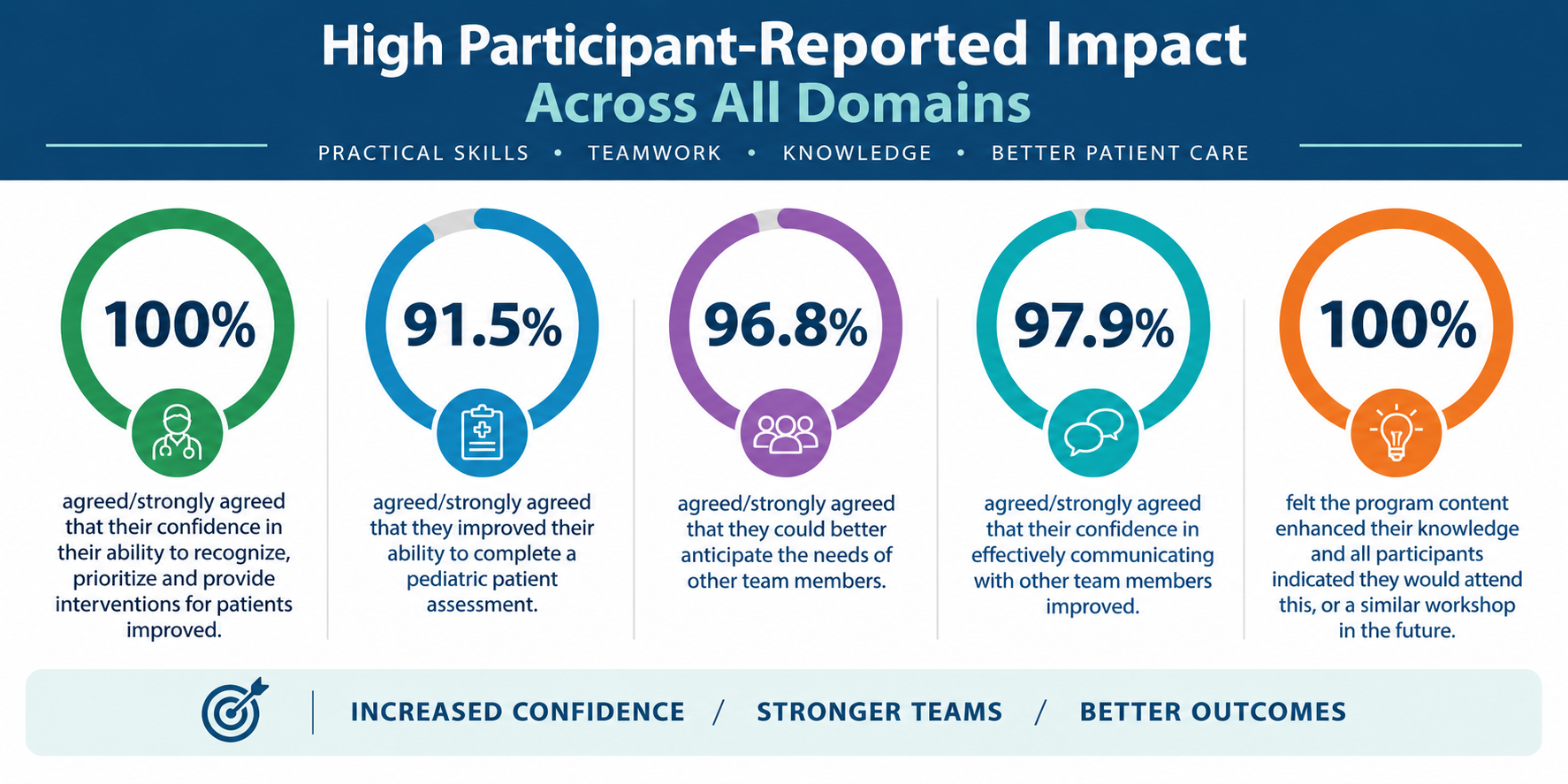
100 % of participants agreed/strongly agreed that their confidence in their ability to recognize, prioritize and provide interventions for patients improved. 91.5% agreed/strongly agreed that they improved their ability to complete a pediatric patient assessment. 96.8% agreed/strongly agreed that they could better anticipate the needs of other team members and 97.9% agreed/strongly agreed that their confidence in effectively communicating with other team members improved. Overall, 100% of participants felt the program content enhanced their knowledge, and all participants indicated they would attend this or a similar workshop in the future (Figure 1).
Conclusions: The implementation of a pediatric emergency simulation outreach educational program increases healthcare professionals’ confidence in performing clinical assessments, recognizing, prioritizing and providing interventions, anticipating needs and communicating effectively within their teams. This intervention could be a model for similar programs in different international jurisdictions. Further study is required to determine if multidisciplinary simulation can improve patient outcomes for pediatric patients presenting to emergency departments.