Objectives: To determine whether research on neurodevelopmental disorders (NDDs) in premature individuals places a greater emphasis on predictive measures than preventative interventions.
Background: Prematurity remains a global risk factor for neurodevelopmental disorders (NDDs), with 16% of all premature infants having neurodevelopmental impairments. While early predictive measures, such as neonatal magnetic resonance imaging (MRI) and early biomarker profiling, may allow clinicians to identify high-risk infants early, long-term health outcomes potentially depend heavily on preventative interventions designed to halt or lessen neurological impairment. Identifying whether current research focuses predominantly on predicting outcomes rather than preventing them is critical for reallocating research efforts toward actionable clinical solutions. The primary objective of this study was to determine whether academic research on NDDs in premature individuals places a greater emphasis on predictive measures compared to preventative interventions.
Methods: Using the Web of Science, we conducted a preliminary search using the keywords "prematurity," "predictive tools," and "preventative interventions," yielding 1,446 records. Articles were multi-screened and included for qualitative analysis when relevant to predictive tools or preventive measures. We then extracted the top 100 most cited articles from this dataset and organized them in a Microsoft Excel spreadsheet, utilizing metadata such as source titles, author institutions, citation counts, and DOIs. The descriptive outcome studies were categorized under the broader umbrella of predictive research because historical data patterns from outcome studies are often used to predict future diagnoses. We used Biblioshiny to conduct a comprehensive bibliometric analysis and generate vertical bar charts, longitudinal line graphs, keyword co-occurrence networks, and a categorical pie chart.
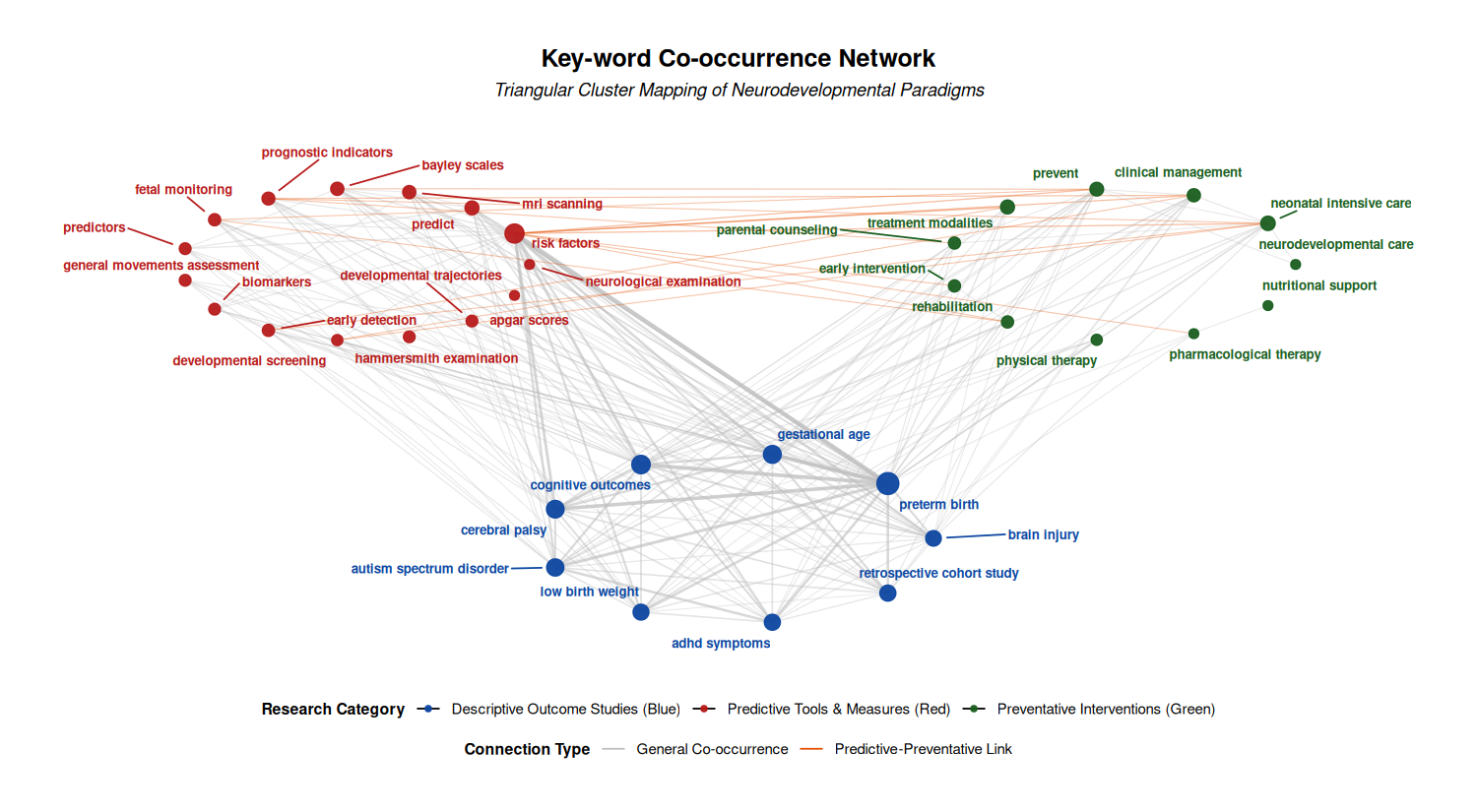
Results: Predictive measures accounted for 60% of the corpus, compared to 9% for preventative interventions and 31% for non-aligned topics. Keyword co-occurrence mapping (Figure 1) reflected this pronounced distribution, showing a higher term frequency for “risk assessment” (54.7%) compared to “preventative protocols” (15.8%). Across a 40-year period, predictive measures appeared more frequently than preventative interventions, with predictive publications showing greater representation in the later years. Additionally, two of the top three senior author institutions were observed to have specialties in writing predictive research.
Conclusions: The main study limitation was the restricted sample size of 100 articles, determined by time and computational constraints. This study should be replicated using a larger dataset to improve the generalizability and robustness of the findings. Given that the results indicate a disproportionately large volume of predictive studies relative to preventative solutions, future research should expand its examination of preventative interventions, such as structured nutritional support, prenatal steroids, and targeted early rehabilitation, to create a more balanced literature. While predictive tools potentially offer valuable early risk identification, bridging the gap toward preventative action remains an important consideration for improving actual long-term neurodevelopmental outcomes in premature infants, addressing what meaningful options can be offered to families when an infant is identified as at risk, and translating their needs into clinical care.