Background: Gitelman syndrome (GS) is a rare autosomal recessive salt-losing tubulopathy caused by pathogenic variants in SLC12A3. It is characterized by hypokalaemic metabolic alkalosis, hypomagnesaemia and hypocalciuria. Although chondrocalcinosis and calcium pyrophosphate deposition disease (CPPD) are well-recognised complications in adults with longstanding hypomagnesaemia, arthritis as the initial manifestation in childhood is exceptionally rare.
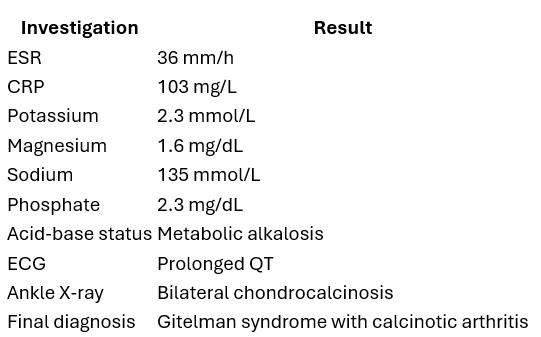
Case Presentation Summary: A previously healthy 14-year-old boy presented with acute bilateral ankle pain, swelling, erythema, warmth and inability to walk, accompanied by low-grade fever. Two weeks earlier he had experienced self-limited gastroenteritis. Initial laboratory investigations demonstrated markedly elevated inflammatory markers (ESR 36 mm/h; CRP 103 mg/L), and empirical intravenous cefotaxime and clindamycin were commenced for presumed septic arthritis.
Further evaluation revealed severe hypokalaemia (2.3 mmol/L), prolonged QT interval requiring intravenous potassium replacement, albuminuria (470 mg/24 h) and ankle radiographs demonstrating chondrocalcinosis. Subsequent investigations showed persistent hypomagnesaemia (1.6 mg/dL), mild hyponatraemia (135 mmol/L), hypophosphataemia (2.3 mg/dL), metabolic alkalosis and hyperuricaemia (Table 1). Directed history-taking uncovered longstanding polydipsia, polyuria, fatigue and marked salt craving, raising suspicion of an inherited renal tubulopathy. Following electrolyte correction, both electrocardiographic abnormalities and arthritis resolved without invasive joint intervention. The patient was discharged after 13 days with a diagnosis of Gitelman syndrome presenting with acute calcinotic arthritis.
Learning Points Discussion: This case highlights that acute inflammatory arthritis in adolescents may represent the first manifestation of an underlying metabolic or renal disorder rather than primary infection. The coexistence of hypokalaemia, hypomagnesaemia and chondrocalcinosis should prompt consideration of Gitelman syndrome, even in paediatric patients. Early recognition enables appropriate electrolyte replacement, prevents potentially life-threatening cardiac complications associated with severe hypokalaemia, and avoids unnecessary antimicrobial therapy or invasive procedures. Clinicians should include inherited renal tubulopathies in the differential diagnosis of unexplained inflammatory arthritis with electrolyte abnormalities.