Background: Epilepsy affects approximately 1 in 250 children in the UK, and up to 24% of epilepsy-related deaths are considered potentially preventable. A national audit highlighted inadequate discharge information and caregiver uncertainty about when to seek help. Local clinicians at a paediatric first seizure clinic similarly reported inconsistent or incorrect seizure safety advice being given at referral. National Institute for Health and Care Excellence (NICE) recommends clear, comprehensive safety guidance at first presentation, yet this is not reliably delivered. The period between initial attendance and specialist review is therefore a vulnerable window where patients may lack essential safety knowledge.
Methods: A quality improvement project was undertaken using two PDSA cycles.
PDSA 1 (Patient-focused): Pre-intervention questionnaires assessed patient/carer understanding of seizures, safety advice, red flags, and support pathways. A seizure safety leaflet was developed based on findings and NICE guidance. A second patient group was surveyed after receiving the leaflet.
PDSA 2 (Staff-focused): Healthcare professionals referring to the clinic were surveyed regarding their confidence, accuracy, and consistency in providing seizure safety netting. A referral proforma was designed to standardise information provision. Staff were re-audited after implementation.
Results:
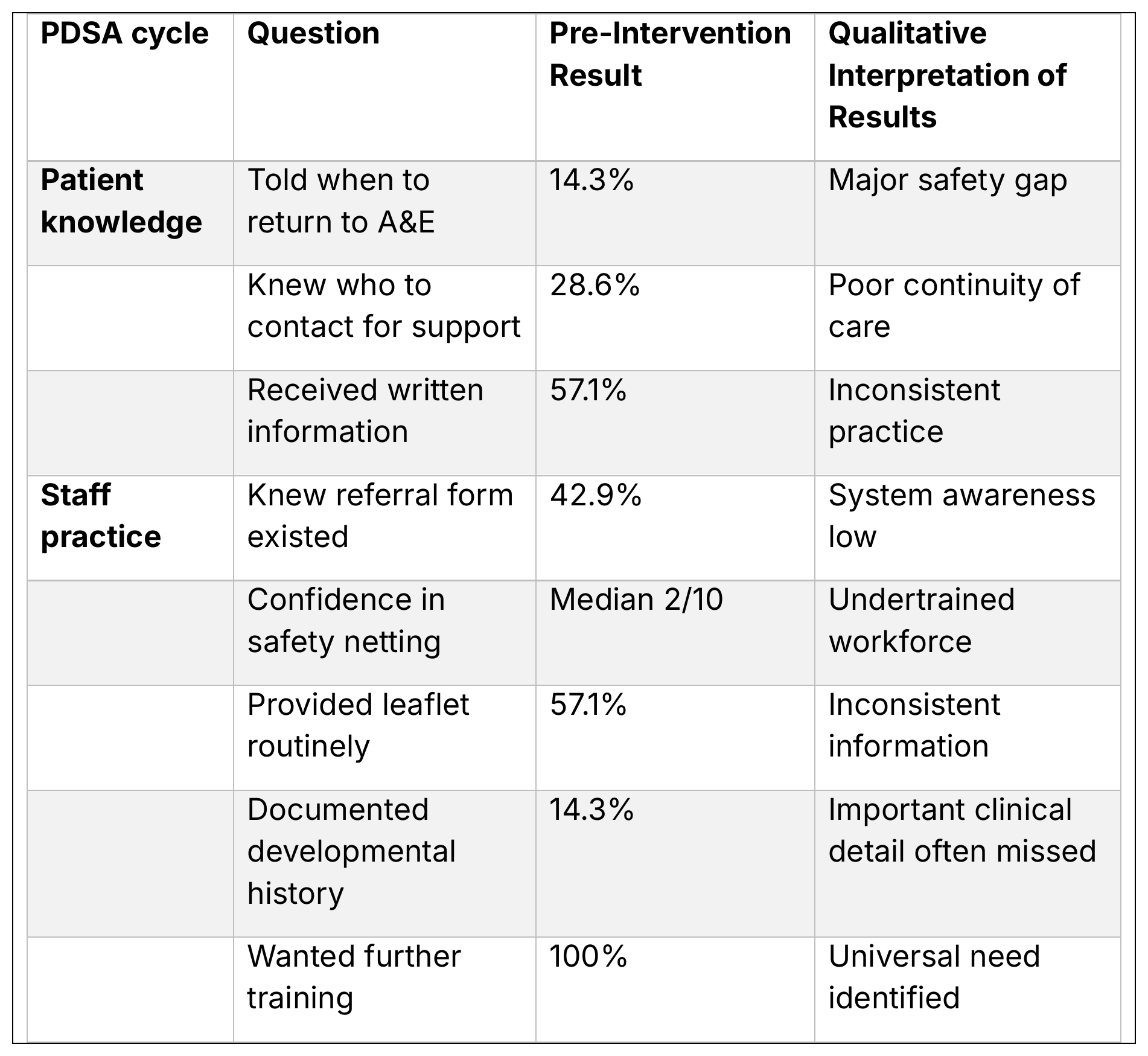
PDSA 1: Before intervention, 42.9% of patients (n=7) reported insufficient seizure information, 85.7% were not told when to return to A&E, and 71.4% did not know who to contact for support. After leaflet introduction, 100% of patients (n=5) found it useful and reported learning new information, with a mean usefulness score of 8.2/10.
PDSA 2: Staff demonstrated wide variation in safety advice, with some providing inaccurate guidance (e.g., routine midazolam use, advising urgent medical review after all seizures). Pre intervention (n=7), 100% reported low confidence and a desire for further training. The proforma was rated 7.7/10 for usefulness (n=7). Only 57% of staff stated they would routinely perform all recommended steps, while the others felt it would help prevent omissions in a high-pressure environment.
See Table 1 for further information.
Conclusions: This project identified significant gaps in seizure safety education for both patients and referring clinicians. Simple, low-cost interventions (written patient information and a standardised referral proforma) were well received and improved perceived knowledge and consistency of care. Limitations included small sample size, non-identical pre/post questionnaires, and reliance on self-reported outcomes. Future work should involve larger cohorts, standardised data collection, and measurement of clinical outcomes such as A&E reattendance or seizure-related harm. System-based interventions embedded into routine workflow show promise for improving safety during the vulnerable period between first presentation and specialist review.