Background: The term "global developmental delay” (GDD) refers to the failure of attaining maturity in at least two developmental domains at least 2 standard deviations (-2SD) below the mean with standardized developmental tests by a child below 5 years of age. Global developmental delay (GDD) is a major public health concern worldwide. Since 95% of the population resides in middle- to low-income conditions, they are greatly predisposed to such neurodevelopmental delays (NDDs), posing risks of chronic individual disability (psychosocial and motor skills). Early identification of developmental delay is crucial for timely interventions and early rehabilitation for better outcomes. This study was conducted to assess socioeconomic factors and identify barriers contributing to the delayed diagnosis of global developmental delay (GDD) among children in the tribal areas of Jharkhand.
Objectives:
1. To evaluate the key socioeconomic determinants associated with GDD in children attending a tertiary healthcare center in eastern India.
2. To identify caregiver-related, healthcare system-related, and sociocultural barriers that contribute to the delayed diagnosis of global developmental delay.
Methods: This was a hospital-based cross-sectional observational study conducted at a tertiary care center in the tribal area of Jharkhand. The study included 254 children aged 6 months to 5 years with GDD (DSM-5 criteria) who attended the OPD. Delayed diagnosis was pre-defined as a lag of greater than 12 months between the first caregiver concern and formal clinical diagnosis. Reported barriers were categorized into caregiver-related, health-system, and socioeconomic/logistic factors. Bivariate analyses (Chi-square, Fisher’s exact, Student's t, and Mann-Whitney U tests) were performed, followed by a multivariable logistic regression model to identify independent predictors of diagnostic delay (adjusted odds ratio [aOR] with 95% confidence intervals [CI]).
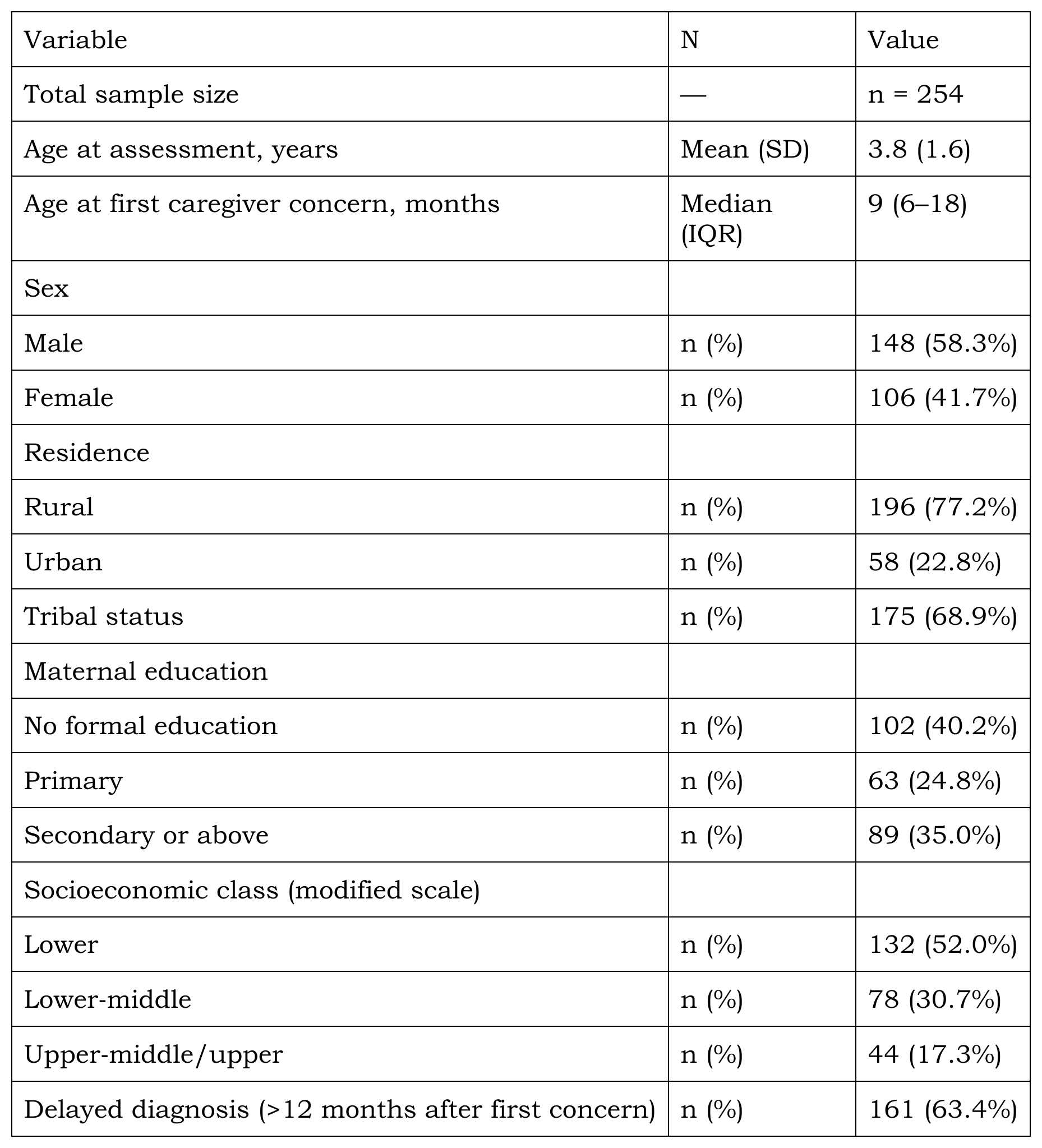
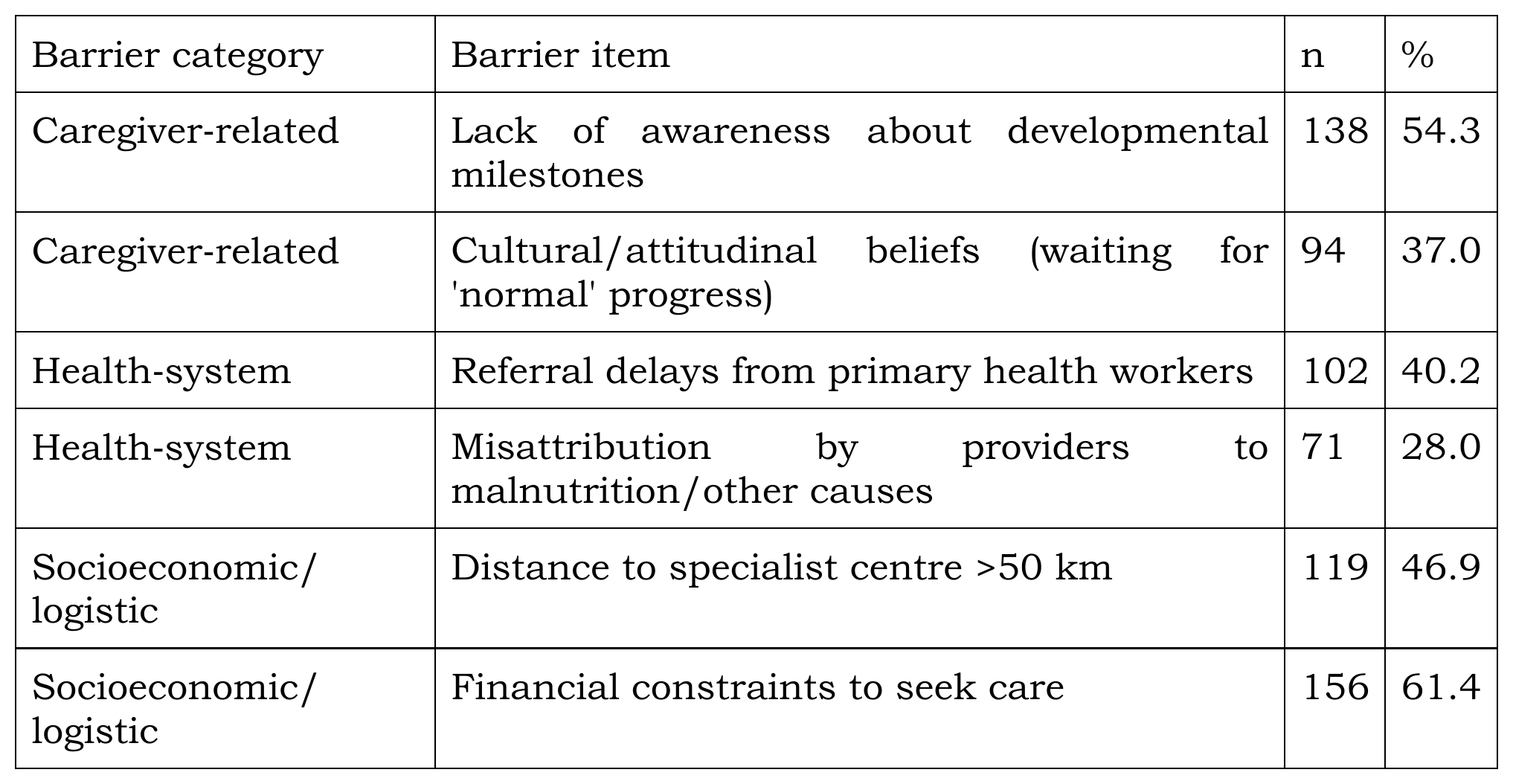
Results: Among 254 children with GDD assessed, the mean age was 3.8 ± 1.6 years; 68.9% were from tribal communities, and 77.2% from rural areas (Table 1). A delayed diagnosis of GDD, defined as a diagnosis >12 months after the first caregiver concern, was present in 161 (63.4%) children. The most frequently reported barriers were financial constraints (61.4%), lack of caregiver awareness of developmental milestones (54.3%), distance >50 km from specialist services (46.9%), referral delays (40.2%), cultural/attitudinal beliefs (37.0%), and misattribution of symptoms to malnutrition or other causes by providers (28.0%) (Table 2). On bivariate analysis, lower maternal education, rural residence, greater distance to specialist services, financial constraints, and later recognition of developmental concerns were significantly associated with delayed diagnosis (Table 3). On multivariable logistic regression, independent predictors of delayed diagnosis were maternal education of secondary level or higher, which proved protective (aOR = 0.41, 95% CI: 0.25–0.67, p < 0.001); financial constraints (aOR = 2.57, 95% CI: 1.56–4.22, p < 0.001); distance >50 km to specialist care (aOR = 1.95, 95% CI: 1.18–3.22, p = 0.009); rural residence (aOR = 1.82, 95% CI: 1.02–3.26, p = 0.043); and older age at first caregiver concern (aOR = 1.05 per month increase, 95% CI: 1.03–1.08, p < 0.001) (Table 4). Sensitivity analyses confirmed the stability and robustness of these predictors.
Conclusion: Children from rural areas and lower socioeconomic backgrounds frequently experienced delays in diagnosis of GDD. Factors such as lower maternal education, financial constraints, long distances to specialist services, and the caregiver's delayed recognition independently contributed to these diagnostic delays. Enhancing caregiver awareness and implementing developmental monitoring at the primary level can help in achieving earlier diagnoses and improve access to interventions.