Introduction: Intraventricular haemorrhage (IVH) is a serious complication of preterm birth. There are routine cranial ultrasound (CrUS) protocols in place to detect IVH and to monitor neurological complications. However, there is limited evidence regarding the optimal frequency and necessity of serial imaging in infants with mild (Papile grade I-II) IVH. This study aimed to evaluate CrUS outcomes in preterm infants to assess the clinical value and rationale behind current CrUS surveillance protocols.
Methods: This 2-year retrospective cohort study reviewed infants born at <32 weeks’ gestation admitted to St Mary’s Neonatal Intensive Care Unit (NICU) in Manchester, between January 2023 and December 2024. Electronic patient records were used to collate demographic and clinical data with CrUS imaging reports. Outcomes were then analysed and discussed.
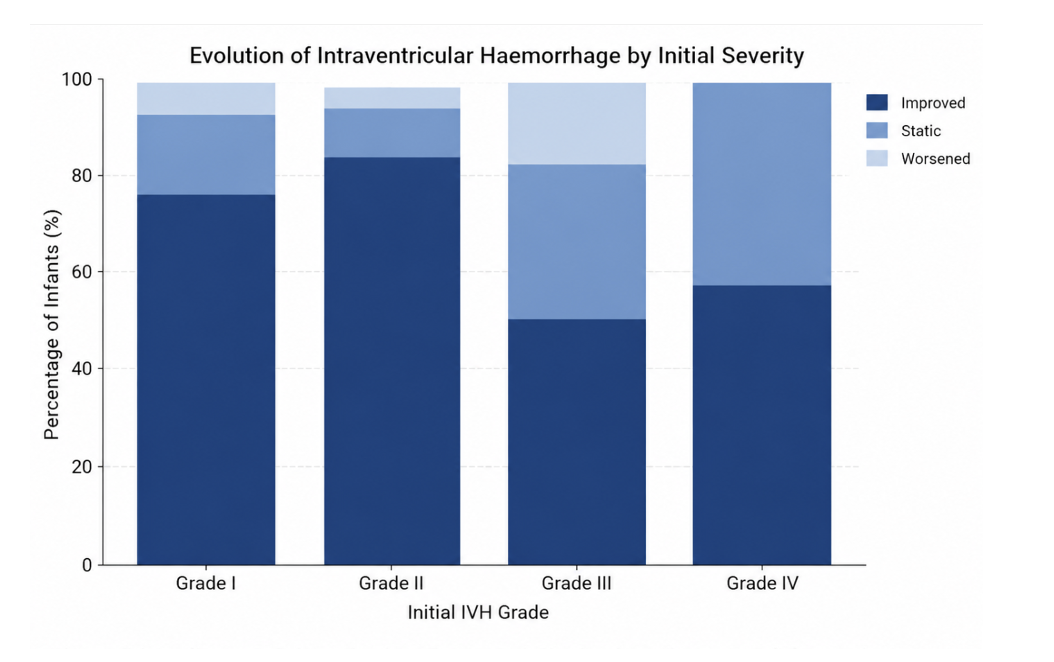
Results: Of the 399 preterm infants admitted during the study period, 97 met the inclusion criteria. Most infants with mild IVH identified on initial scan demonstrated improvement by term-corrected imaging (80.8%), with deterioration uncommon (3.8%) (Figure 1). Conversely, infants with severe IVH (Papile grade III-IV) were significantly less likely to improve (52.6%, p=0.017), with a substantially greater risk of developing post-haemorrhagic hydrocephalus requiring neurosurgical intervention.
Conclusion: Whilst current CrUS protocols remain clinically valuable, particularly in severe IVH, ultimately, the favourable progression observed with mild IVH suggests future research into risk-stratified surveillance may be warranted.