Background: Threadworm (enterobiasis) is the most common parasitic infection in the UK, with up to 30% of children experiencing at least one episode. Recurrent infection is common, especially in younger children, and carries a significant physiological and psychological burden. Multiple courses of anti-helminthic treatment are often needed, raising concerns of long-term overtreatment. Currently, there is no national guidance existing for recurrent infection, leading to variation in clinical practice and an opportunity to standardise care.
Methods: A retrospective audit was carried out of Paediatric Infectious Diseases (PID) clinics at St. George’s Hospital examining children and young people referred with recurrent threadworm infection over a 5-year period. The primary outcome was to describe the characteristics, management strategies, and documented outcomes of children and young people referred with recurrent threadworm infection to a PID clinic over a five-year period. The secondary aim was to identify any co-morbidities in children referred to the PID clinic with recurrent threadworm, to explore any trends. Data was collected on: Patient demographics, disease burden at presentation, treatment history, escalation strategies, household management, outcomes, and follow-up.
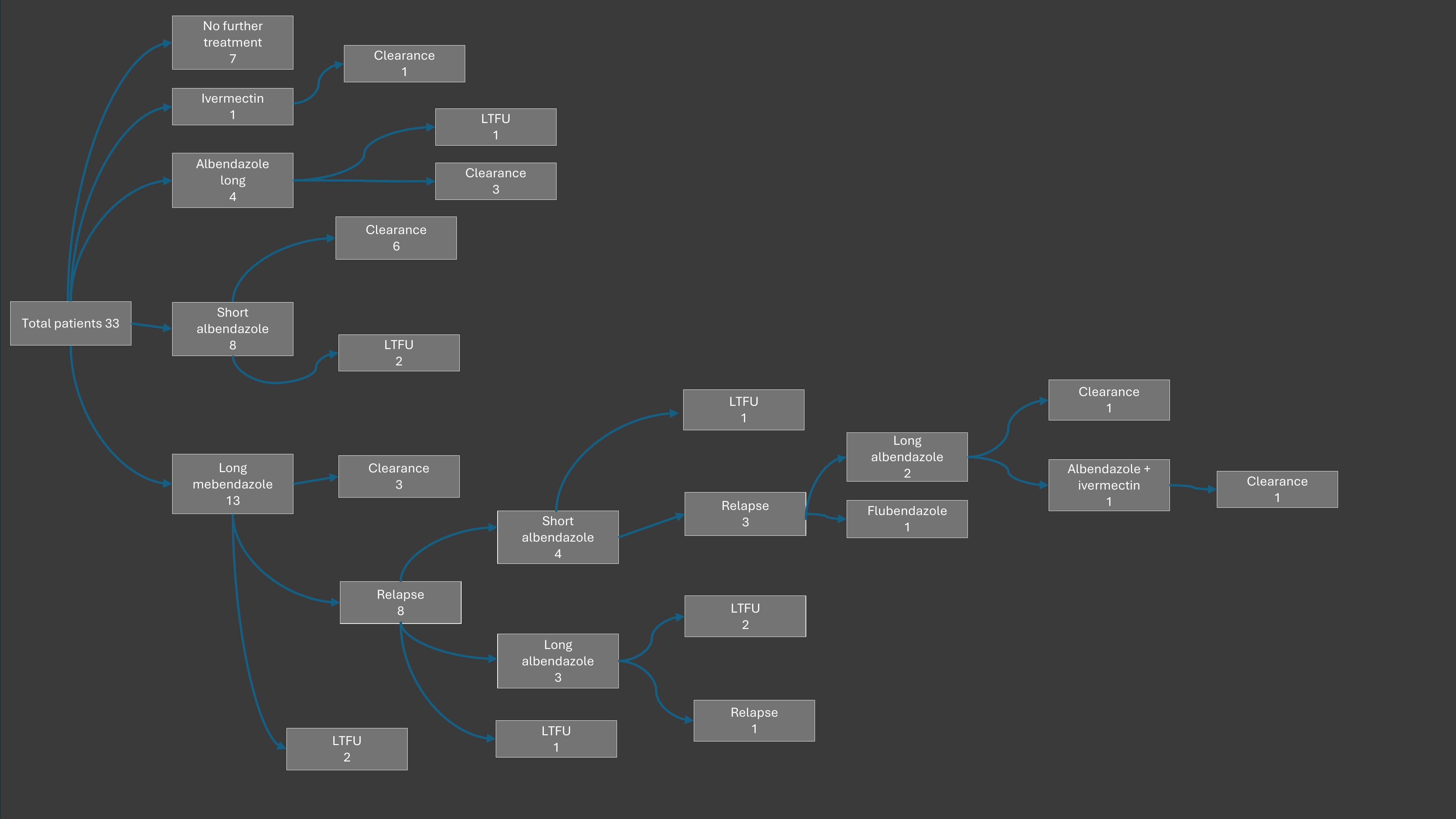
Results: In total, there were 33 patients, of whom 25(76%) were female, and 8(24%) were male. The median age at first episode was 5 years. Notably, 7(21%) of children also suffered from constipation, and 3(9%) suffered from recurrent Urinary Tract Infections, possibly reflecting shared predisposing factors. 21(65%) patients were experiencing more than 3 episodes per year at presentation. Family was affected in 24% of cases, and microbiological confirmation was inconsistent at 15%. Management strategies varied considerably: Repeated short courses of Mebendazole, long courses, combination therapy with Albendazole, and ivermectin use were all seen alongside inconsistent household treatment. 21(62%) of patients were cleared successfully, with 1(3%) persisting and 11(32%) lost to follow up (Figure 1).
Conclusion: Overall, this audit demonstrates variation in treatment approaches and incomplete follow-up, highlighting areas where standardisation of treatment pathways through local and national guidelines could benefit patients. There was no consistent or predefined pathway guiding escalation. This variation provides an opportunity to develop a structured local pathway and contribute to national standardisation of management. To contextualise these findings at a national level, a multicentre national audit has been initiated. Preliminary questionnaire data from participating centres has corroborated the variation observed locally: Notably that only 29% of centres request microbiological confirmation, with significant variation in the type of investigation used, and considerable differences in first line treatment choices for recurrent infection across centres.
This audit is limited by its small centre design and small sample size. However, taken together with the emerging national data, these findings highlight a clear need for standardised national guidance for recurrent threadworm infection in children. Future work will explore the feasibility of a randomised clinical trial to evaluate optimal treatment strategies, with the ultimate aim of improving outcomes for this underserved patient group.