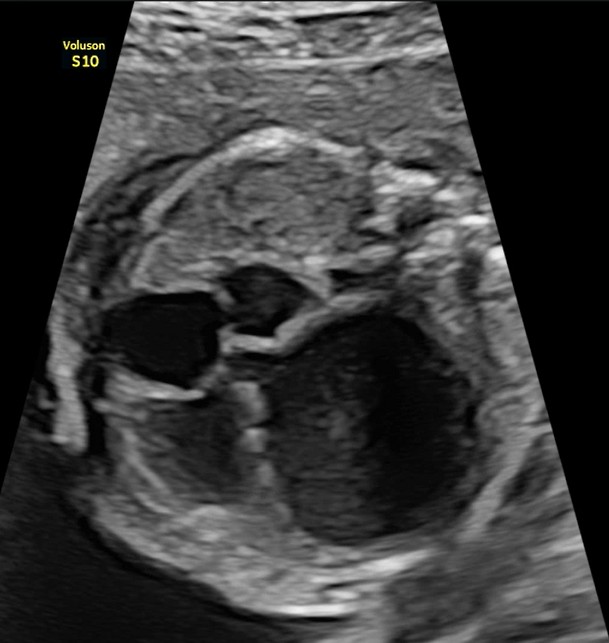
Background: Congenital left ventricular aneurysm (VA) is a rare cardiac malformation characterized by local outpouching of the left ventricular wall. Differential diagnosis between ventricular (VD) diverticulum and VA is challenging during the prenatal period. VD is composed of 3 layers (epicardium, myocardium and endocardium), whereas VA presents with a defect or absence of myocardium (fibrotic tissue) with impaired contractility. The etiology of VA remains poorly understood and proposed mechanisms include myocardial ischemia, viral infections, intrinsic weakness of the myocardium (cardiomyopathies). The clinical outcomes range from fetal demise to asymptomatic survival. Antiphospholipid syndrome (APS), which is characterized by the presence of antiphospholipid antibodies, is associated with increased risk of thrombosis and obstetric complications, including preterm delivery and recurrent pregnancy losses. We report a case of fetal left VA in a woman with APS.
Case Summary: We report a 31-year-old woman, pregnant for the second time, with a history of a previous late fetal loss due to antiphospholipid syndrome. After confirmation of pregnancy, low-dose aspirin and a prophylactic dose of low molecular weight heparin were recommended. At 20 weeks’ gestation, the routine obstetric ultrasonography revealed a dilated left ventricle, suggesting an AV with a small pericardial effusion. The fetal heart and rhythm were normal. At 23 weeks’ gestation, a follow-up echocardiogram showed worsening dilatation, and severe mitral regurgitation was now apparent due to left ventricular dysfunction (Figure 1). Magnetic resonance imaging confirmed left VA with a hypokinetic and thin free wall. Multigene panel genetic testing for myocardiopathy, based on an amniotic fluid sample, was normal. The fetus developed hydrops and after consultation, the patient chose to terminate the pregnancy at 24 weeks' gestation.
Learning Points Discussion:
1. Left ventricular aneurysm is a rare condition, but we must not let it be forgotten.
2. An increase in the size of the outpouching during the pregnancy was associated with hydrops and fetal demise
3. In adults, antiphospholipid syndrome is associated with an increased risk of thrombosis and myocardial infarctions.
4. Because decidual cells and syncytiotrophoblasts express high basal levels of β2 glycoprotein I (β2GPI), even low antiphospholipid antibodies titers may increase the risk of adverse pregnancy outcomes.
5. Could a fetal ventricular aneurysm be caused by fibrosis following a fetal coronary ischaemic event in a pregnancy complicated by antiphospholipid syndrome?