Background: Central precocious puberty (CPP) is defined by the premature activation of the hypothalamic-pituitary-gonadal (HPG) axis. The MKRN3 gene, located at chromosome 15q11-q13 and subject to maternal imprinting, encodes a negative regulator of pubertal onset. While loss-of-function variants in MKRN3 have been associated with familial CPP, the epigenetic mechanisms governing its regulatory regions remain poorly understood. The main objective of this study is to characterize the DNA methylation profile of the candidate cis-regulatory element (cCRE) EH38E3123278 in female patients with idiopathic CPP and to compare this profile exploratorily with data from healthy individuals.
Methods: Thirty female patients with idiopathic CPP (mean thelarche onset: 6.5 ± 1.0 years) were enrolled. Genomic DNA was extracted from peripheral blood and subjected to bisulfite conversion. The enhancer region (chr15:23566055–23566583, GRCh38/hg38) was amplified by PCR and sequenced by amplicon-based next-generation sequencing (NGS) on the DNBSEQ-T7 platform. CpG methylation levels were quantified as beta-values using a Bismark-based bioinformatic pipeline, with positions covered by fewer than 200 reads excluded. For exploratory comparison, Whole Genome Bisulfite Sequencing (WGBS) data from healthy adult females (MUTHER cohort) were aligned positionally to the same genomic coordinates.
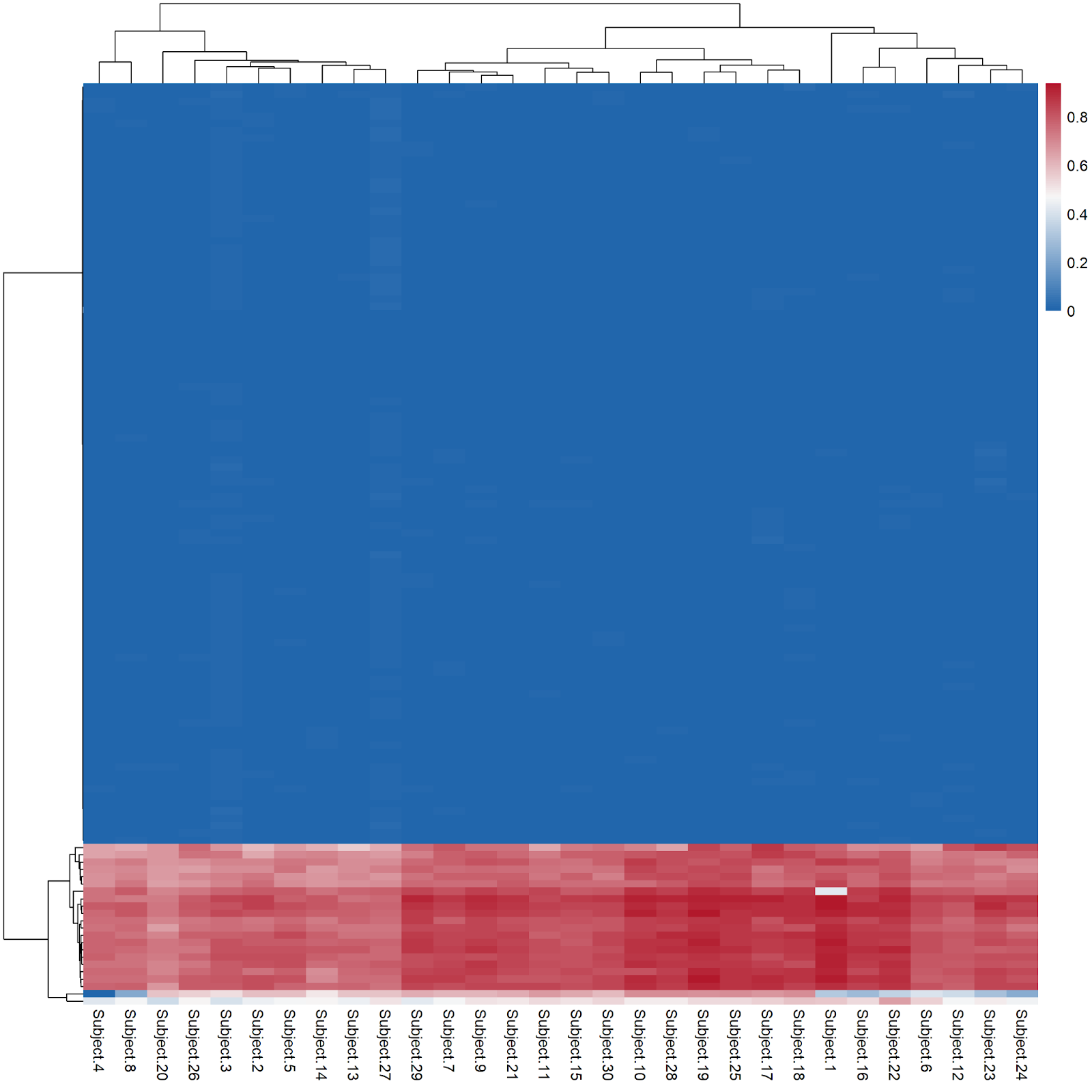
Results: Among 128 valid CpG sites, the enhancer exhibited a predominantly hypomethylated landscape (beta-values < 0.01 at most positions), consistent with accessible chromatin. However, focal islands of aberrant hypermethylation were identified in the central region (chr15:23566128–23566183), with mean methylation levels of ~84.6% and ~84.8% at positions 23566135 and 23566152, respectively (Figure 1). This pattern was highly conserved across patients (hierarchical clustering confirmed minimal interindividual variability). In contrast, the MUTHER controls showed complete absence of methylation (0.0%) at these same central loci, while presenting physiologically high methylation (92–100%) at distal positions where CPP patients were paradoxically hypomethylated. This bidirectional spatial dichotomy suggests a singular chromatin remodeling specific to CPP, rather than a mere advancement of the epigenetic clock.
Conclusion: This study provides the first high-depth, targeted characterization of the EH38E3123278 enhancer methylation profile at the MKRN3 locus in CPP patients. The spatial methylation pattern identified — distinct from that of healthy adult controls — demonstrates the epigenetic variants of this genomic region and its association with CPP. These findings promote a deeper understanding of MKRN3 methylation pattern and its epigenetic dynamic association with neuroendocrine pubertal control.