Background: Heart murmurs are a frequent reason for paediatric cardiology referrals, yet the vast majority are benign and do not require specialist intervention. Local paediatric cardiology clinics are often overburdened with such referrals, contributing to prolonged wait times and inefficient resource utilisation. In response, a dedicated murmur clinic was introduced at a district general hospital to streamline the referral process, identify significant cardiac pathology early, and reduce unnecessary local and tertiary paediatric cardiology referrals.
Aims: This audit aimed to assess the effectiveness of the murmur clinic in triaging paediatric patients referred for heart murmurs. Specific objectives included evaluating referral patterns, the prevalence of structural cardiac lesions, the need for onward referral to tertiary services, and the impact on clinic waiting times.
Methods: A retrospective review was conducted on 260 patients referred to the murmur clinic between August 2019 and February 2025. Data were extracted from the TrackCare system and included referral type, timing, clinic attendance, and diagnostic outcomes. Patients were stratified based on whether they were managed at paediatric cardiology clinic locally, or referred to a tertiary centre.
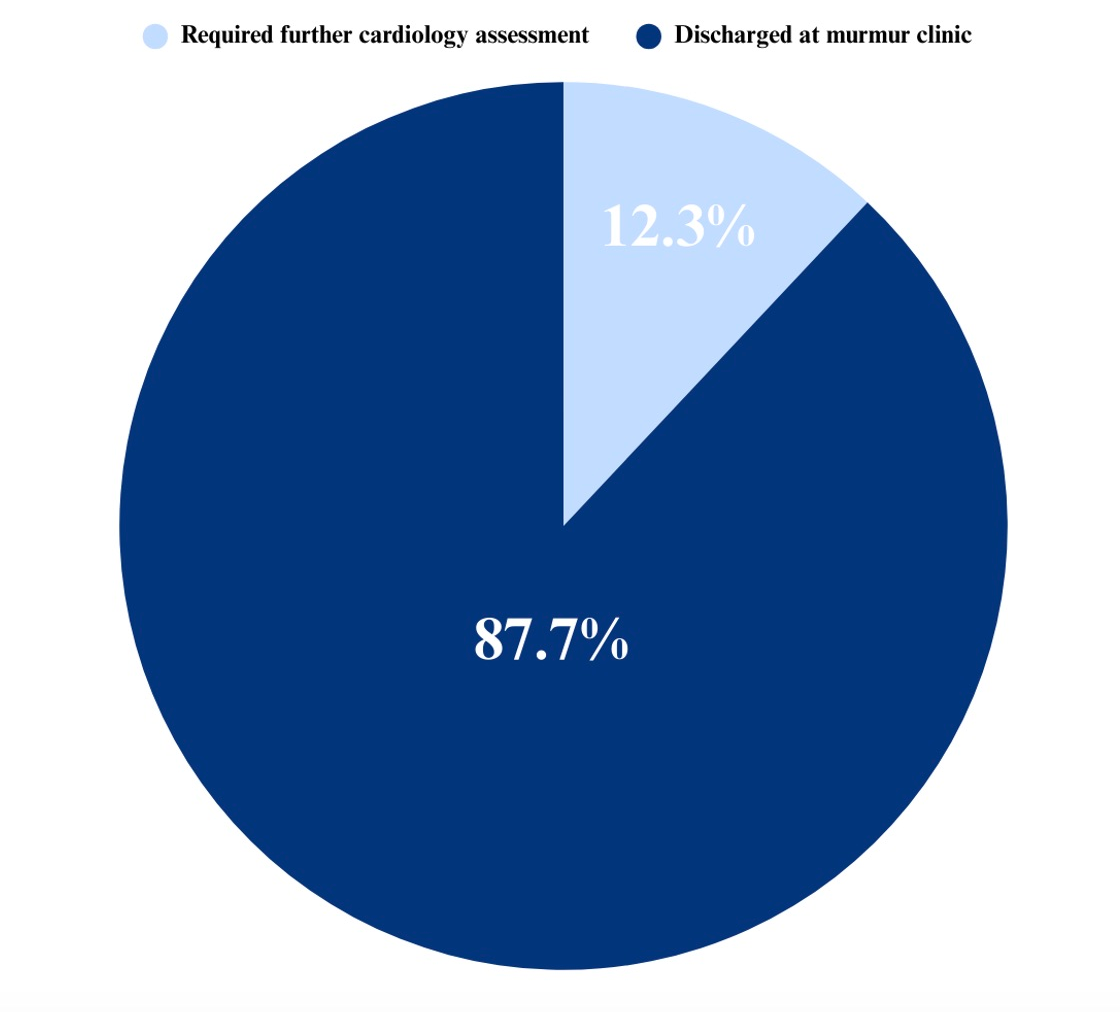
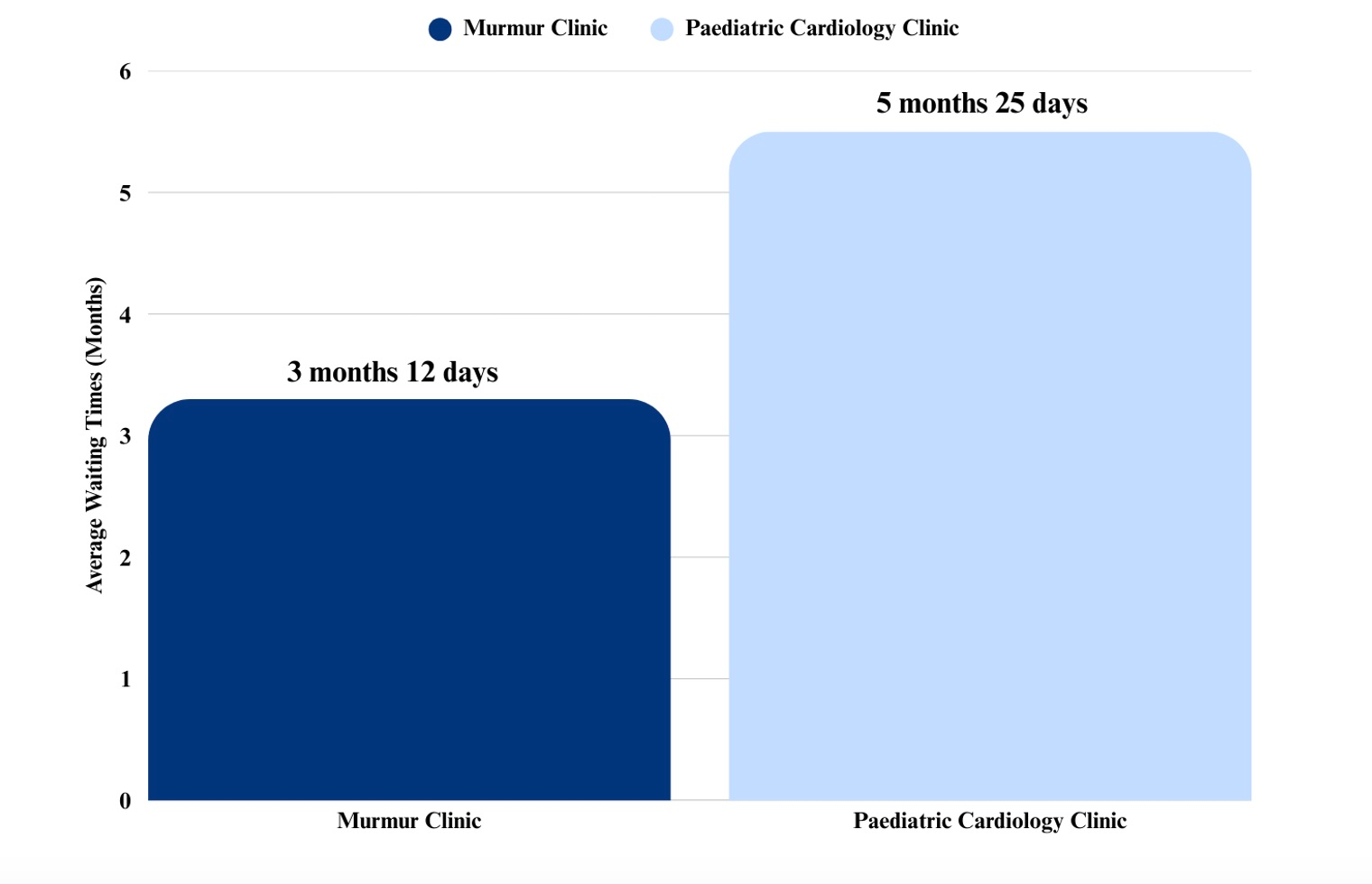
Results: Out of 260 patients assessed at the murmur clinic conducted once a month, 32 (12.3%) were referred to local paediatric cardiology clinic for further evaluation (Figure 1). 8 out of 32 patients (3.1%) were found to have a structural cardiac lesion. Of these, 2 (0.8%) required cardiac intervention at tertiary centre. Of the 260 patients assessed, 250 (96.2%) were referred by paediatricians, while 10 (3.8%) were referred by community general practitioners to the murmur clinic. The mean waiting time to be seen in the murmur clinic was 3 months and 12 days (Figure 2). For those referred to the paediatric cardiology clinic from the murmur clinic, the average wait to be seen was 5 months and 25 days. These figures reflect the constraint of having a single murmur clinic session per month, contributing to delays in patient assessment and onward referral. Overall, 87.7% of patients were managed locally through the murmur clinic without the need for specialist paediatric cardiology referral. This highlights the murmur clinic’s effectiveness in appropriately identifying benign cases and conserving tertiary resources for more complex cases.
Conclusions: The Murmur Clinic model has proven to be an effective triage mechanism in effectively reducing referrals to paediatric cardiology services. The low percentage of patients found to have a congenital cardiac lesion and requiring a cardiac intervention following diagnosis highlights that the majority of murmurs are innocent heart murmurs and should be assessed in a well-established murmur clinic. Despite the success, currently there is a limited capacity to run a murmur clinic once a month with long waiting times. The audit recommendations are to expand murmur clinic capacity, rationalise diagnostic protocols of heart murmurs in children (innocent vs. pathological) and implement a feedback loop to optimise and improve the accuracy of paediatric cardiology referrals.