Background: Familial hypercholesterolaemia (FH) is an underdiagnosed genetic condition associated with elevated low-density lipoprotein cholesterol (LDL-C) from childhood. Early identification and treatment are essential to reduce long-term cardiovascular risk. This study describes the characteristics, referral pathways, and treatment patterns of children assessed in a regional paediatric lipid service.
Methods: A retrospective review was conducted of 28 children referred for suspected or confirmed FH. Demographic data, genetic diagnosis, family history, anthropometry, lipid profiles, and treatment initiation were analysed.
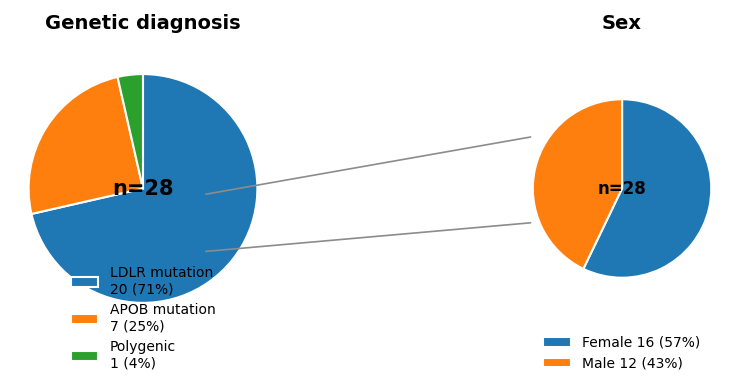
Results: Twenty-eight children (12 male, 16 female; mean age 9.93 years) were included. Genetic testing identified LDLR mutations in 20, APOB mutations in 7, and polygenic hypercholesterolaemia in 1 child. (Figure 1) A positive family history was common, with affected relatives on the maternal side in 12 cases and paternal side in 16. Most referrals (n=26) occurred through cascade screening. The median waiting time to first review was 4 months. At presentation, BMI was within the normal range for most children (median 19.4 kg/m²). Mean baseline lipid levels were total cholesterol 6.3 mmol/L and LDL-C 4.6 mmol/L. Statin therapy was initiated in 14 children (atorvastatin n=10; simvastatin n=4), with a median time to treatment of 16 months. Follow-up lipid profiles showed modest reductions (mean LDL-C 4.16 mmol/L; total cholesterol 5.21 mmol/L). Among the 14 children aged ≥10 years, 9 commenced statins, 2 were not treated (one with normal LDL-C), and 3 awaited review.
Conclusions: The majority of children were identified through cascade screening and had monogenic FH. Although statin therapy was initiated in eligible children, delays between first review and treatment were common. Earlier intervention and streamlined pathways may improve lipid control and long-term cardiovascular risk reduction in paediatric FH.