Background: Hypercalcaemia is an uncommon finding in children and most often raises suspicion of malignancy. Granulomatous diseases such as tuberculosis (TB) are rare but important alternative causes.
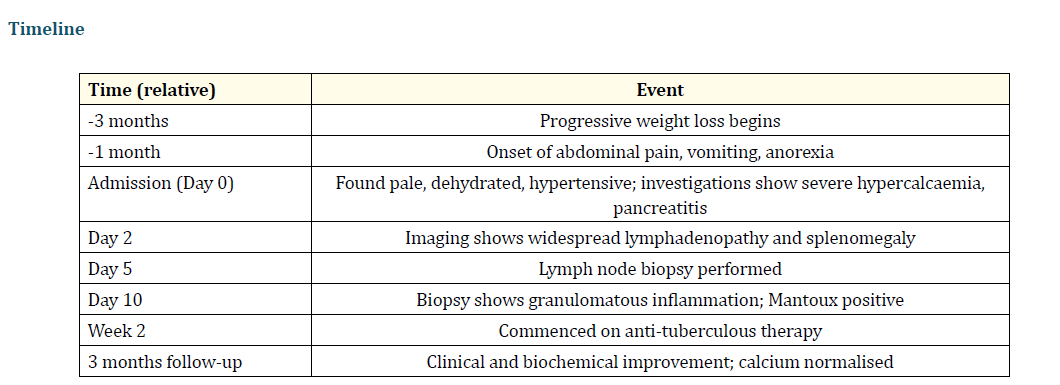
Case Presentation: A 14-year-old boy was referred by his GP for concerns of abdominal pains and vomiting, with weight loss and anorexia. The child was seen in Paediatric Assessment Unit. Examination revealed Pallor, dehydration, hypertension, and epigastric tenderness. Investigations were done and revealed severe hypercalcaemia, pancreatitis, suppressed parathyroid hormone, and widespread lymphadenopathy. Lymphoma was initially suspected. However, lymph node biopsy demonstrated granulomatous inflammation, a Mantoux test was strongly positive, and there was a history of TB exposure (Table 1).
Method: He was commenced on anti-tuberculous therapy with resolution of symptoms and normalisation of calcium.
Conclusion: Disseminated TB can mimic haematological malignancy in children. Awareness of this presentation is essential, particularly in patients with TB risk factors, to avoid misdiagnosis and unnecessary chemotherapy.