Report

Vaccination Equity Report 2025

The report brings together evidence, policy perspectives, and practical experience from leading experts across public health, clinical practice, social science, civil society, and policy, all focused on a critical question: why do vaccination inequities persist, and what will it take to fix them? The answer that emerged is clear: Vaccination inequities are not accidents. They are predictable, patterned, and preventable outcomes of how systems are designed, measured, and experienced.

⇣Scroll to read the full report

Immunization and Vaccination Equity

2025 Lifecourse Prevention Summit
4–5 December 2025
Paris, France

[ MEETING REPORT ]

Immunization & Vaccination Equity| 2025 Lifecourse Prevention Summit

Executive Summary

Despite the availability of safe and effective vaccines and longstanding commitments to universal immunization, significant inequities in vaccination uptake and protection persist across populations and settings. These inequities disproportionately affect children and families experiencing poverty, social exclusion, marginalization, and limited access to services, with consequences that extend across the life course.

The Vaccination Equity session of the 2025 LifeCourse Prevention Summit brought together experts in public health, clinical practice, social science, civil society, and policy to examine why vaccination equity remains unresolved and how systems can be redesigned to deliver more equitable outcomes. The meeting deliberately moved beyond individual-level explanations and focused on the systemic drivers of inequity, integrating evidence, policy perspectives, and practical experience to identify concrete actions.

Key Insights from the Evidence

Across the expert briefings, a consistent message emerged: vaccination inequities are predictable, patterned, and preventable outcomes of system design.

  • Data and measurement systems frequently rely on aggregate coverage indicators that mask disparities, delay action, and underestimate exclusion.
  • Structural and socioeconomic barriers, including poverty, administrative complexity, and inflexible service design, limit access to vaccines even when they are provided free of charge.
  • Trust in vaccination reflects trust in institutions. Mistrust often emerges as a rational response to the lived experience of inaccessible or inconsistent systems, rather than individual reluctance.
  • Communities interpret vaccination through moral, social, and relational frameworks, with decisions shaped by social networks, norms, and power relations.
  • Community engagement and co-designed approaches are effective when embedded, sustained, and resourced, but remain marginal in many vaccination systems.

Taken together, the evidence demonstrates that achieving equity requires deliberate reform of governance, service delivery, and accountability structures, alongside coordinated communication and sustained community engagement.

Perspectives on Policy

Policy interventions presented at the meeting reinforced the need to explicitly embed equity into vaccination governance and practice. Contributors highlighted the importance of:

  • Strengthening primary care and the frontline workforce as equity enablers
  • Integrating equity into decision-making frameworks, including vaccine introduction and prioritization
  • Formalizing the role of civil society and community voices in policy design
  • Supporting accurate, non-stigmatizing public discourse on vaccination
  • Recognizing and reinforcing shared responsibility among public health authorities, professional bodies, civil society, industry, and information providers

These perspectives converged on the view that equity must be treated as a core objective, embedded within system design, governance, and implementation.

Headline Commitments

From the meeting emerged a set of shared commitments that form the basis of an action-oriented outcome:

  • Embed equity as a core performance objective in vaccination policy, delivery, and accountability frameworks.
  • Reform vaccination data systems to make inequities visible and actionable through disaggregated, equity-sensitive indicators.
  • Ensure equity is embedded in new vaccine programs from the outset, so that the system does not reproduce structural gaps in access or uptake.
  • Address structural barriers to access, recognizing that free vaccines do not guarantee equitable access across all communities.
  • Rebuild trust based on transparency, competence, and responsive service experience, enabled through institutional reform and reinforced by clear, consistent communication.
  • Embed community engagement and co-design as core vaccination infrastructure, supported by sustained investment.
  • Strengthen coordination and shared responsibility across the vaccination ecosystem, spanning public authorities, health services, community organizations, and information providers.

From Evidence to Action

These commitments are operationalized in a 1-page Action Framework, which sets out priority actions, rationales, responsible actors, and time horizons across seven action areas: measurement, resource targeting, trust, program design, engagement, coordination, and ongoing accountability. The Action Framework is intended to serve as a living tool, adaptable to different national and regional contexts. It is designed to guide follow-up action, monitor progress, and sustain collective accountability beyond the meeting.

Looking Ahead: From Commitment to Implementation

This meeting establishes a clear foundation for moving from analysis to implementation. By reframing vaccination equity as a system-level responsibility and identifying concrete actions, it contributes to a growing body of work aimed at ensuring that immunization programs deliver protection to underserved populations. The outcomes of the meeting are intended to inform future policy dialogue, program design, and collaborative action within the LifeCourse Prevention agenda and beyond. Vaccination equity is an ongoing commitment that requires sustained attention, coordination, and investment to translate commitments into lasting impact and to drive system change.

1.

Introduction and Context

The Vaccination Equity session of the 2025 LifeCourse Prevention Summit convened to examine why significant inequities in vaccination uptake and protection persist, despite the availability of safe and effective vaccines and longstanding policy commitments to universal immunization. The meeting brought together experts from public health, clinical practice, social science, civil society, and policy organizations to explore how vaccination systems function in practice for underserved populations.

A central aim of the meeting was to move beyond descriptive accounts of unequal outcomes and to interrogate the system-level drivers that produce and sustain inequity. Participants were invited to consider not only where gaps exist, but how data systems, service design, governance structures, and engagement approaches contribute to those gaps.

Framing remarks by the meeting's Chair emphasized the urgency of addressing vaccination inequity as part of a broader LifeCourse prevention agenda. Speakers throughout the session highlighted that inequities in childhood vaccination have implications well beyond immediate disease risk, shaping health trajectories, trust in institutions, and cumulative disadvantage over time.

The meeting therefore sought to:

  • Clarify why vaccination equity remains unresolved in many settings
  • Center the experiences of populations that are routinely missed by current systems
  • Integrate evidence, policy perspectives, and practical experience into actionable outcomes.

Vaccination Inequity is a Systemic Challenge

A consistent theme across the briefings was that vaccination inequity cannot be adequately explained by individual attitudes, gaps in information, or isolated instances of refusal. Instead, speakers emphasized that inequities are produced by the interaction of system design, social conditions, and institutional practice.

Evidence presented during the session demonstrated that system-level factors—including how services are organized, how success is measured, how resources are allocated, and how communities are engaged—shape who is reached by vaccination programs and who is left behind. Structural inequalities such as poverty, housing insecurity, and unequal access to services were shown to translate directly into unequal vaccination outcomes, even in settings where vaccines are provided free of charge.

Speakers also highlighted that trust in vaccination is inseparable from trust in institutions. Where systems are experienced as inconsistent, inaccessible, or unresponsive, mistrust can emerge as a rational response to lived experience rather than an expression of individual reluctance. In this context, under-vaccination reflects broader power relations and moral economies that influence how authority, responsibility, and risk are perceived.

By situating vaccination equity within these wider system dynamics, the meeting established a foundation for examining evidence and policy responses that address root causes rather than symptoms.

2.

Framing the Problem: From Individual Behavior to System Responsibility

Moving Beyond "Vaccine Hesitancy"

The meeting challenged the widespread reliance on "vaccine hesitancy" as a primary explanatory framework for unequal vaccination uptake. Speakers cautioned that the term is often used imprecisely, grouping together diverse experiences such as access barriers, delayed vaccination, partial uptake, and mistrust under a single behavioral label.

Evidence presented showed that framing under-vaccination as hesitancy risks:

  • Misattributing system failures to individual choice
  • Stigmatizing communities that face structural barriers
  • Diverting attention from modifiable aspects of service design and policy

Speakers emphasized that decisions about vaccination are shaped by social norms, institutional experiences, and material constraints. In many cases, what is described as hesitancy reflects the difficulty of navigating systems, rather than opposition to vaccination itself. Reframing the problem away from individual behavior was identified as a necessary step for designing effective and equitable interventions.

Equity vs Equality in Vaccination Delivery

A key distinction between equality and equity in vaccination was discussed by speakers, who shared that providing the same services to all populations does not guarantee equitable outcomes, particularly in contexts of social and economic inequality.

Evidence showed that "equal" delivery models—such as standard clinic hours, uniform communication strategies, or one-size-fits-all pathways—often advantage those with greater resources and capacity to navigate systems, while disadvantaging those facing poverty, instability, or exclusion. As a result, equality in service delivery does not guarantee equity in protection.

The principle of proportionate universalism emerged as a framework for addressing this challenge: maintaining universal vaccination programs while tailoring intensity and support according to level of need. This approach was linked to engagement models, co-designed interventions, and flexible delivery strategies that respond to diverse circumstances.

By clarifying this distinction early in the report, the meeting established a conceptual basis for the evidence and actions presented in subsequent sections, reinforcing the need to design vaccination systems that actively reduce—rather than inadvertently reproduce—inequity.

3.

Evidence from Expert Briefings: What the Evidence Shows

3.1 Data Blind Spots and Measurement Failures

Key question: What are we failing to see?

A central theme that emerged from the expert briefings was that current vaccination data systems systematically underestimate inequity, creating blind spots that delay or misdirect policy action. Speakers emphasized that while headline coverage figures may appear reassuring, they frequently mask deep, persistent, and predictable inequalities affecting specific population groups. [Fig.1]

Over-reliance on Aggregate Coverage Indicators

Several contributors highlighted that national and regional vaccination coverage statistics are typically reported as single averaged figures, which obscure substantial variation within populations. These aggregate indicators often fail to capture:

  • Differences between socioeconomic groups
  • Geographic micro-inequalities within cities and regions
  • Patterns of delayed, incomplete, or interrupted vaccination

As a result, systems may be classified as "high performing" while still allowing clusters of vulnerability to persist, increasing the risk of outbreaks and avoidable disease burden. These patterns are also evident across deprivation groups and over time. [Fig.2]
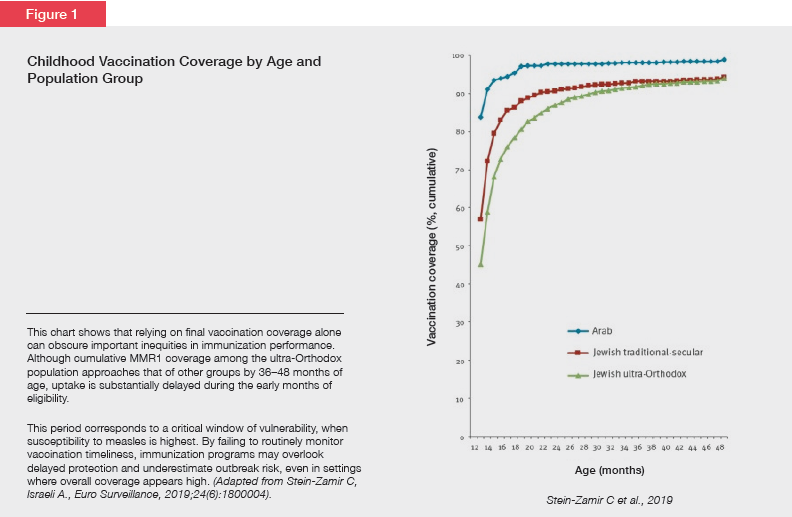
Figure 1

Childhood Vaccination Coverage by Age and Population Group

Stein-Zamir C et al., 2019

This chart shows that relying on final vaccination coverage alone can obscure important inequities in immunization performance. Although cumulative MMR1 coverage among the ultra-Orthodox population approaches that of other groups by 36–48 months of age, uptake is substantially delayed during the early months of eligibility. This period corresponds to a critical window of vulnerability, when susceptibility to measles is highest. By failing to routinely monitor vaccination timeliness, immunization programs may overlook delayed protection and underestimate outbreak risk, even in settings where overall coverage appears high. (Adapted from Stein-Zamir C, Israeli A., Euro Surveillance, 2019;24(6):1800004).
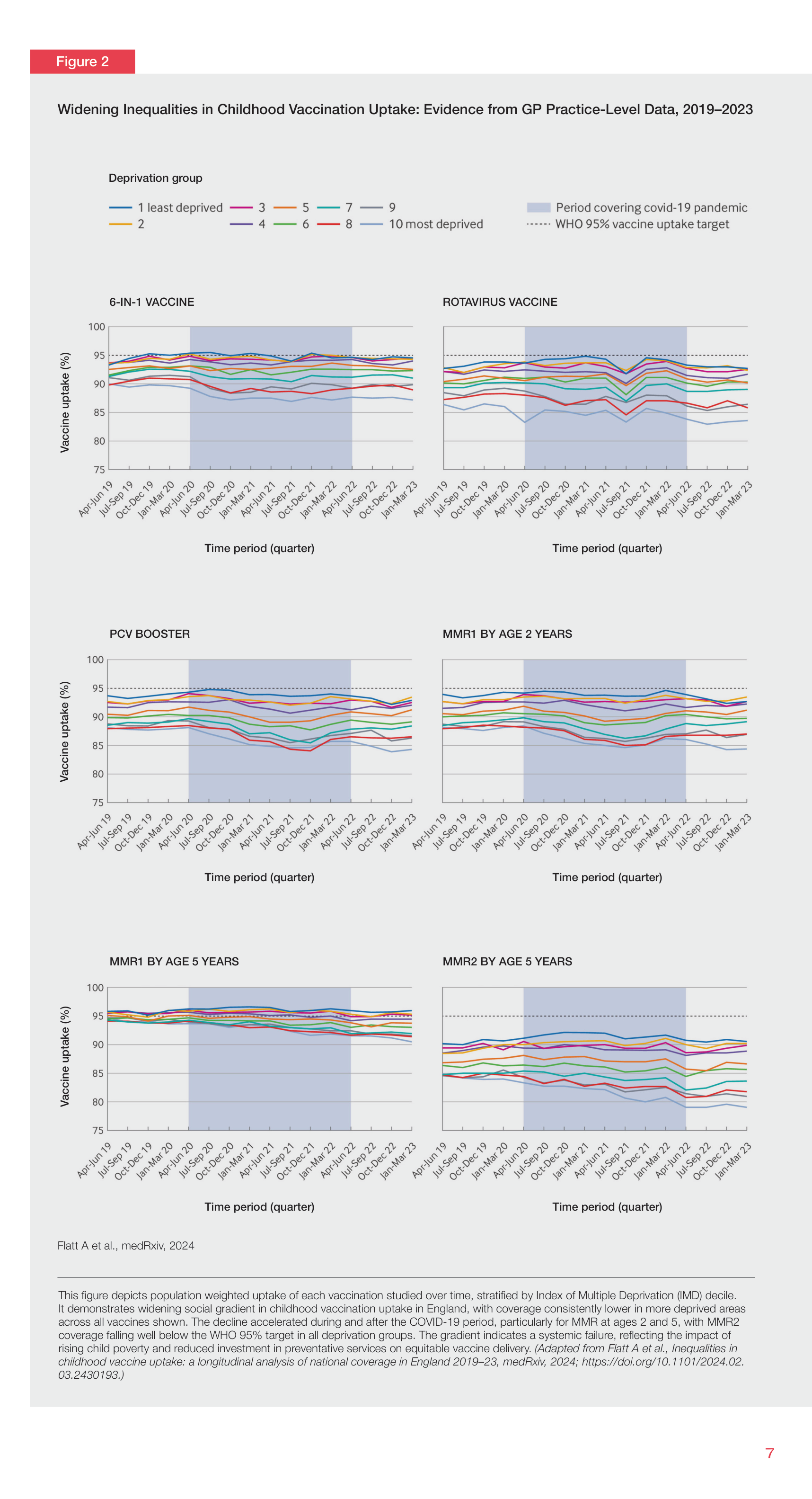
Figure 2

Widening Inequalities in Childhood Vaccination Uptake: Evidence from GP Practice-Level Data, 2019–2023

Six-panel line charts showing vaccine uptake by Index of Multiple Deprivation decile over time for six childhood vaccines

Flatt A et al., medRxiv, 2024

This figure depicts population weighted uptake of each vaccination studied over time, stratified by Index of Multiple Deprivation (IMD) decile. It demonstrates widening social gradient in childhood vaccination uptake in England, with coverage consistently lower in more deprived areas across all vaccines shown. The decline accelerated during and after the COVID-19 period, particularly for MMR at ages 2 and 5, with MMR2 coverage falling well below the WHO 95% target in all deprivation groups. The gradient indicates a systemic failure, reflecting the impact of rising child poverty and reduced investment in preventative services on equitable vaccine delivery. (Adapted from Flatt A et al., Inequalities in childhood vaccine uptake: a longitudinal analysis of national coverage in England 2019–23, medRxiv, 2024; https://doi.org/10.1101/2024.02.03.24302193.)

Insufficient Granularity to Identify System Gaps

Evidence presented during the session highlighted persistent limitations in the level of detail of routinely collected immunization data. [Fig.3] In many settings, data systems do not systematically capture information on:

  • Timeliness of vaccination
  • Completion rates and drop-out patterns
  • Intersectional determinants, including combined, overlapping disadvantages, for example poverty alongside migration status, housing insecurity, or other social risk factors

This lack of detail limits policymakers' and service planners' ability to identify where along the vaccination pathway exclusion occurs. Participants noted that without this level of insight, health systems are constrained in their ability to anticipate gaps. Inequities are often detected only after outbreaks or declines in uptake, rather than prevented through proactive system design.

Figure 3

Childhood Vaccination Completion Pathway by Ethnic Group
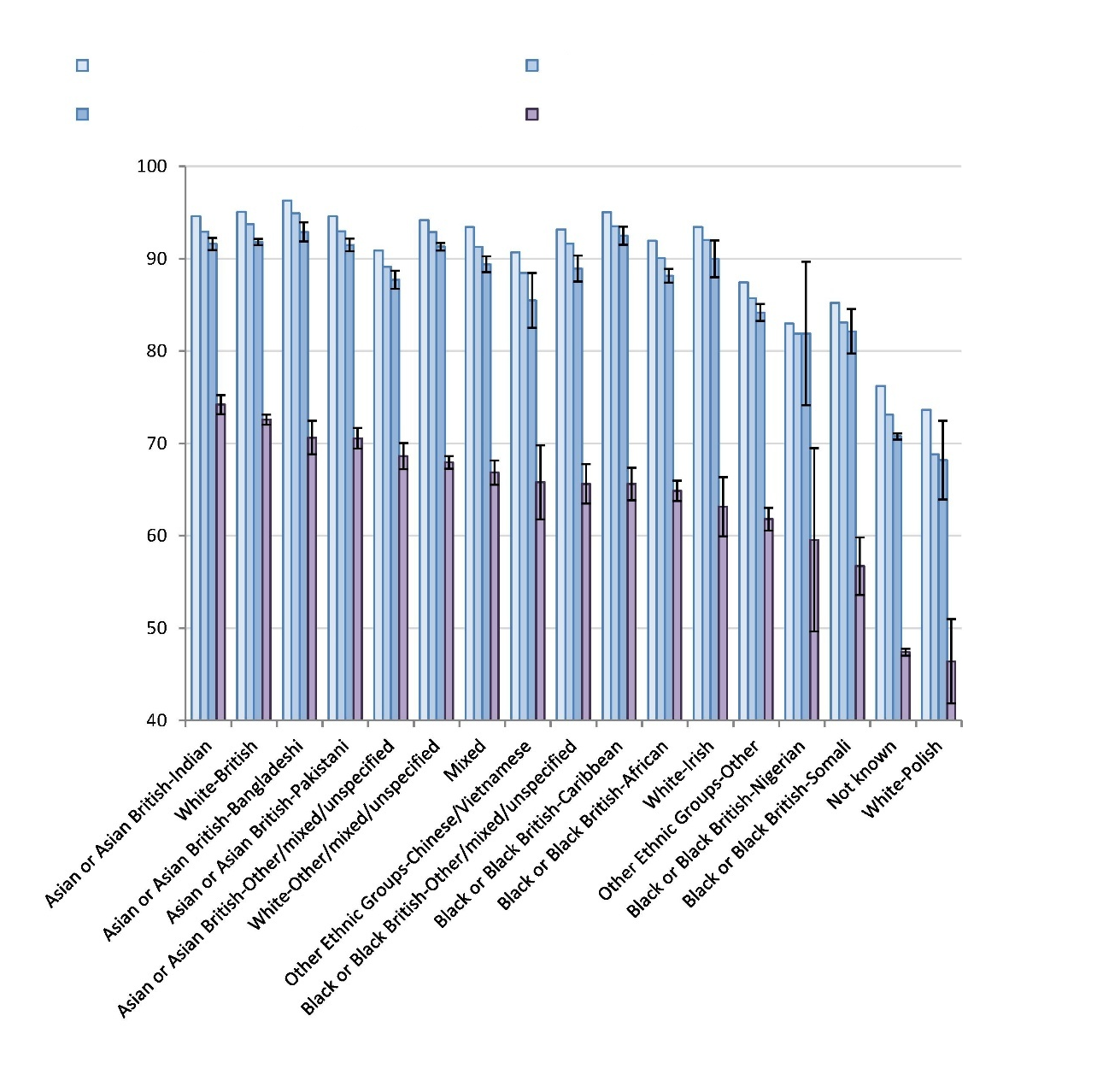
Grouped bar chart of vaccine coverage at five years of age by ethnic group, by number of doses completed

Tiley KS et al., Vaccine, 2018

This figure shows vaccination coverage of children at five years of age by ethnic group for children born April 2001 to March 2006, London. High initiation rates mask significant inequities in course completion, with drop-out increasing disparities across ethnic groups as vaccination schedules progress. (Adapted from Tiley KS et al., Vaccine, 2018;36(45):6726–6735.)

Data Choices Shape Policy Priorities

Speakers emphasized that what is measured — and what is not — directly influences policy decisions. By focusing primarily on overall uptake, health systems may:

  • Underestimate the scale of exclusion among marginalized groups
  • Fail to justify targeted or proportionate interventions
  • Reinforce a false narrative that inequities are driven by individual choice rather than system design

The discussion highlighted that data gaps are not neutral; they can unintentionally reinforce inequity by rendering some populations statistically invisible. This issue was also linked to broader decision-making frameworks, in which equity considerations are often treated as secondary to efficiency or cost-effectiveness, rather than as core performance criteria.

Implications for Equity-Focused Policy and Practice

The evidence presented demonstrates that improving vaccination equity requires reform of measurement and delivery systems. Participants underscored the need for:

  • Disaggregated data that reflects lived realities
  • Routine monitoring of timeliness and completion
  • Metrics that allow early identification of exclusion
  • Data systems capable of informing proportionate universalism

Without such reforms, inequities remain predictable yet insufficiently addressed, limiting the effectiveness of both policy interventions and community-level solutions.

Key Messages
Aggregate vaccination data can conceal substantial inequities
Lack of granularity limits the ability to intervene early
Measurement choices shape policy attention and accountability
Equity must be embedded in how vaccination success is defined

3.2 Structural and Socioeconomic Barriers to Access

Key question: Why do barriers to vaccine access persist?

Evidence presented during the meeting consistently demonstrated that barriers to vaccination access are rooted in structural and socioeconomic conditions, rather than individual reluctance or lack of awareness. Speakers emphasized that many families experience vaccination systems as inflexible, burdensome, and poorly aligned with their lived realities, particularly in contexts of poverty, social exclusion, and service fragmentation.

Poverty and Material Constraints as Primary Drivers

A recurring theme across the briefings was the role of poverty as a fundamental determinant of vaccination inequity. Evidence highlighted that families experiencing economic hardship face multiple, compounding barriers, including:

  • Costs associated with travel to vaccination sites
  • Inability to take time off work or manage childcare for appointments
  • Housing instability and frequent changes of address
  • Competing priorities linked to financial insecurity

These constraints disproportionately affect families living in deprived areas and contribute to delayed, interrupted, or missed vaccination, even in systems where vaccines themselves are provided free of charge. Speakers stressed that such barriers are often invisible in policy discussions that assume equal capacity to engage with services, reinforcing the misconception that access is universal when, in practice, it is not.

Administrative and Service Design Barriers

Beyond material constraints, the evidence showed that administrative processes and service design choices can themselves function as exclusionary mechanisms. Participants highlighted common barriers such as:

  • Complex appointment systems
  • Rigid scheduling and limited clinic hours
  • Registration requirements that disadvantage mobile or undocumented populations
  • Fragmentation between health, social, and community services

These features disproportionately affect families already under strain and can result in missed opportunities for vaccination, particularly when services fail to adapt to the realities of marginalized populations. Speakers noted that such barriers are often unintended but are nonetheless predictable outcomes of systems designed around institutional convenience rather than user need.

Austerity, Service Erosion, and Unequal Capacity to Compensate

Evidence also pointed to the impact of long-term underinvestment in preventive services, particularly in deprived areas. Speakers described how reductions in funding for public health, community outreach, and primary care capacity have:

  • Reduced flexibility in service delivery
  • Limited the ability to provide tailored or outreach-based vaccination
  • Increased pressure on front-line staff

As a result, families with greater resources are often better able to compensate for system shortcomings, while those facing socioeconomic disadvantage are left increasingly exposed to access gaps. This dynamic was described as a key mechanism through which inequality becomes entrenched, even without explicit exclusionary policies. [Fig.4]

Figure 4

'Sure Start'* Funding per Child by Area Deprivation (England, 2011–2018)
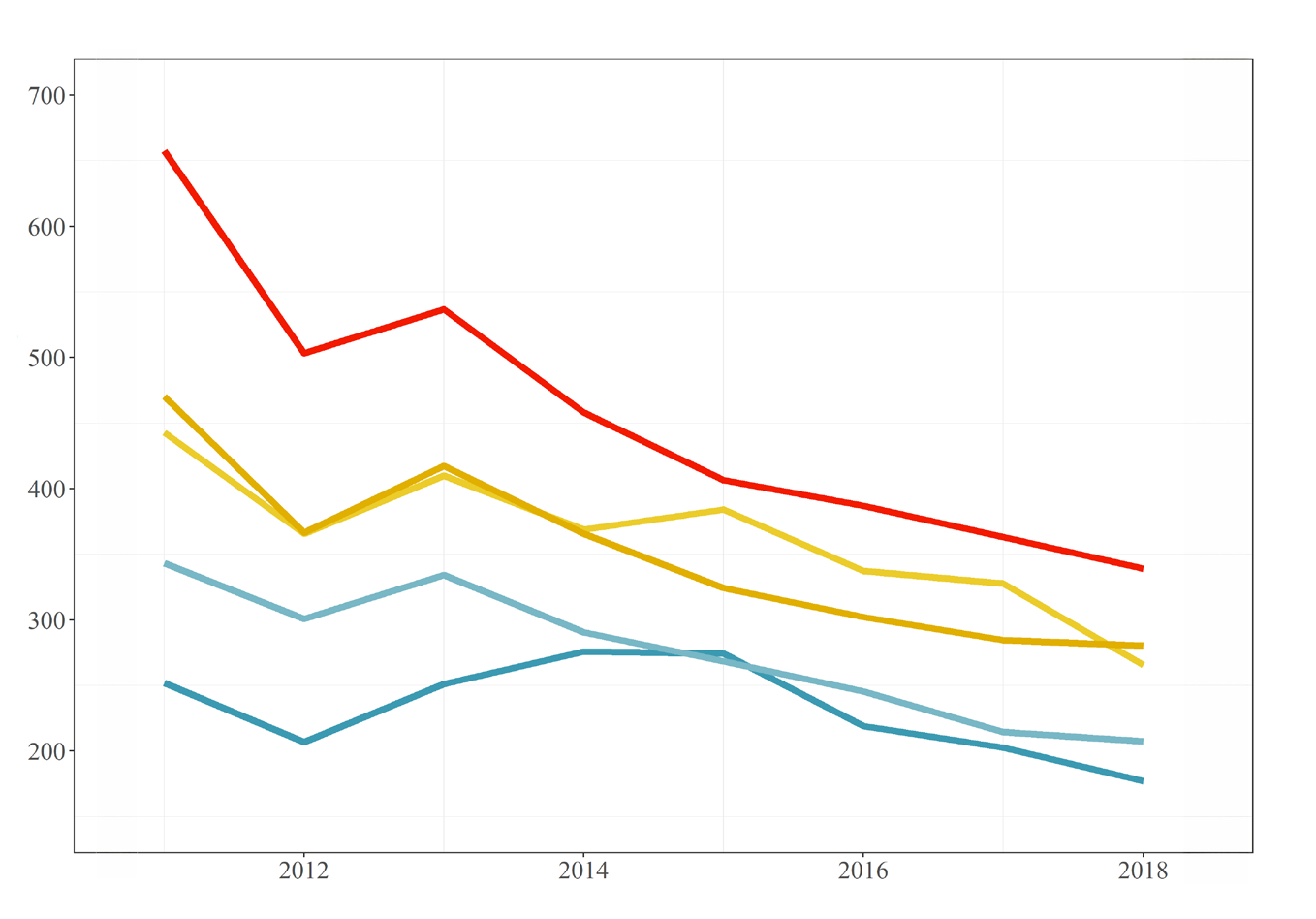
Line chart of Sure Start spend per eligible child by IMD quintile from 2011 to 2018

CPAG (2020), Fig. 15.1

This figure illustrates a reduction in early years preventive spending during the period of austerity, with the largest cuts occurring in the most disadvantaged areas. Funding for services such as 'Sure Start'* declined across all areas, with disproportionately greater reductions in more deprived communities, contributing to widening inequalities in early childhood support. (Adapted from Child Poverty Action Group (2020), Figure 15.1. Data from Place-based Longitudinal Data Resource (PLDR).
* 'Sure Start' is a UK government early years program providing integrated health, education, and family support services, particularly in disadvantaged areas (European Commission, 2006).

Lived Experience and the Accumulation of Barriers

Drawing on community-based and co-designed research, speakers emphasized that barriers rarely occur in isolation. Instead, families often face an accumulation of obstacles, with socioeconomic hardship, administrative complexity, and service inflexibility intersecting. Evidence from community engagement and third-sector interventions illustrated how:

  • Small barriers can have disproportionate effects
  • Missed appointments can lead to disengagement rather than re-engagement
  • Systems often lack mechanisms to recover those who fall behind

Importantly, speakers cautioned against interpreting disengagement as disinterest or refusal, noting that such interpretations risk misattributing system failure to individual behavior.

Implications for Equity-Oriented Access Design

The evidence presented in this section highlights that improving vaccination equity requires intentional redesign of access pathways, informed by an understanding of socioeconomic realities. Participants stressed that effective strategies must:

  • Reduce reliance on individual capacity to navigate complex systems
  • Increase flexibility in delivery models
  • Integrate vaccination with other services used by families
  • Recognize poverty and exclusion as core access determinants
Key Messages
Structural and socioeconomic factors are central drivers of access inequity
Free vaccines do not guarantee equitable access
Administrative complexity and service rigidity disproportionately exclude underserved populations
Poverty and service erosion interact to entrench inequities
Equity requires access pathways designed around lived realities

3.3 Trust, Mistrust, and Institutional Credibility

Key question: Where does mistrust come from?

Evidence presented during the meeting highlighted that trust in vaccination is inseparable from trust in institutions. Speakers consistently cautioned against framing vaccination challenges as issues of individual confidence or misinformation alone, emphasizing instead that mistrust often reflects historical experiences, structural inequities, and perceived institutional failures. In this context, trust is not simply a matter of persuasion, but an outcome shaped by how systems operate, communicate, and engage with communities over time.

Trust as a System Outcome, Not an Individual Attitude

A central insight from the briefings was that trust should be understood as a relational and systemic phenomenon, rather than a fixed attribute of individuals or communities. Speakers noted that trust is built—or eroded—through repeated interactions with public institutions, healthcare services, and government authorities. Where systems are experienced as inconsistent, inaccessible, or unresponsive, mistrust can become a rational response rather than a deviation from expected behavior. Importantly, speakers stressed that communities labeled as "hesitant" are often responding to broader institutional signals rather than rejecting vaccination per se.

Political Context, Institutional Legitimacy, and Spillover Effects

Evidence presented during the meeting demonstrated that confidence in vaccination does not exist in isolation from the political environment. Speakers highlighted how declining trust in governments, public authorities, and expert institutions can spill over into perceptions of vaccination programs, even when vaccines themselves are not the direct source of concern. This dynamic was described as particularly salient in contexts marked by:

  • Inconsistent public messaging
  • Rapidly changing policies
  • Politicization of public health decisions
  • Limited transparency in decision-making

Such conditions can undermine institutional credibility and weaken the social contract between communities and health systems, with vaccination becoming a visible proxy for wider discontent.

Moral Economies, Authority, and Community Decision-Making

Several speakers emphasized that vaccination decisions are embedded within moral economies that shape how information is interpreted and acted upon. Evidence from marginalized and religious communities illustrated that trust is often mediated through:

  • Local social networks
  • Gendered roles and responsibilities
  • Religious or community leadership
  • Collective rather than individual risk assessment

Crucially, speakers cautioned against assuming that religion or culture constitutes an inherent barrier to vaccination. Instead, mistrust may arise when institutional approaches fail to recognize community diversity, rely on stereotypes, or engage in tokenistic forms of "cultural sensitivity."

Healthcare Professionals as Trusted Intermediaries: Role and Limits

Evidence consistently showed that healthcare professionals remain among the most trusted actors in vaccination decision-making. However, speakers noted that this trust is increasingly strained by:

  • Time pressures and workforce shortages
  • Limited opportunities for meaningful dialogue
  • Inconsistent guidance or lack of institutional support

Participants stressed that trust in healthcare professionals cannot indefinitely compensate for systemic shortcomings. Without adequate support, training, and policy alignment, frontline professionals may be placed in an untenable position, expected to rebuild trust without the tools or authority to address underlying system failures.

Implications for Trust-Building Approaches

The evidence presented suggests that restoring and sustaining trust requires institutional change rather than intensified messaging. Speakers emphasized that effective trust-building strategies must:

  • Address structural inequities that shape lived experience
  • Ensure consistency and transparency in decision-making
  • Recognize and engage with community knowledge and authority
  • Support healthcare professionals as relational actors, not just information providers

Participants warned that communication strategies disconnected from these broader considerations risk reinforcing mistrust, particularly among communities that already feel marginalized or overlooked by public institutions.

Key Messages
Trust in vaccination reflects trust in institutions and systems
Mistrust is often a rational response to lived experience
Political context and institutional legitimacy shape vaccine confidence
Communities interpret vaccination through moral and social frameworks
Healthcare professionals are trusted, but cannot compensate for system failures
Trust-building requires structural and relational change, not messaging alone

3.4 Moral Economies, Religion, and Social Networks

Key question: What shapes vaccination decision-making in communities?

Evidence presented during the meeting highlighted that vaccination decision-making is shaped not only by access, trust, or information, but by moral economies—the shared values, norms, and social obligations that structure how communities understand responsibility, risk, and authority. Speakers emphasized that vaccination programs themselves operate within moral frameworks, but that these frameworks may conflict with community-based understandings of good parenting, protection, and collective responsibility, particularly in marginalized or tightly networked groups. Crucially, the evidence challenged the frequent tendency to frame religion or culture as intrinsic barriers to vaccination, instead locating under-vaccination within social organization, authority structures, and networked decision-making.

Moral Economies of Vaccination and Trust

The briefing demonstrated that vaccination is not perceived solely as a biomedical intervention, but as a moral and social act. Routine schedules, for example, implicitly communicate norms about responsible parenting, acceptable risk, and social obligation. Where these institutional norms align with community moral economies, vaccination is reinforced as routine. Where they diverge, trust may be weakened. Speakers highlighted that moral economies are not static. They are shaped by historical experience, political context, and circulating narratives—both formal and informal. In this sense, trust in vaccination reflects not only confidence in vaccines but also confidence in the moral legitimacy of the systems that promote them.

Religion and Vaccination: Moving Beyond Simplistic Explanations

Evidence presented during the meeting cautioned strongly against treating religion as a homogeneous or self-explanatory category in vaccination equity discussions. Speakers noted that public health literature and practice frequently cite "religious beliefs" as a cause of under-vaccination without clearly defining what those beliefs are or how they operate in practice. Importantly, the evidence established that no major religious doctrine explicitly forbids vaccination, and that religious identity alone does not predict vaccination behavior. Instead, mistrust is more often shaped by experiences of exclusion, coercive enforcement, or lack of meaningful engagement with institutions. Framing religion as a barrier was described as analytically limited and potentially counterproductive, as it risks obscuring the structural and relational drivers of inequity.

Authority, Gender Roles, and Networked Decision-Making

Vaccination decisions within marginalized or religious communities are often shaped more by gendered and family-based social networks than by formal religious authorities. Speakers emphasized the influential role of peers, siblings, and trusted community members in shaping vaccination norms, particularly among mothers. These findings challenge the assumption that engagement efforts should focus primarily on religious leaders. Instead, decisions are frequently negotiated within everyday social relationships, where shared experiences and perceived norms exert significant influence. Recognizing these dynamics is essential for designing engagement approaches that reflect how decisions are actually made, rather than how institutions assume they are made.

Key Messages
Vaccination is shaped by moral economies shaped by social norms and values
Religion is often framed wrongfully as a barrier, obscuring other structural drivers
Decisions are frequently shaped by gendered and social networks
"Culturally appropriate" approaches can unintentionally reinforce inequity
Sustained, well-resourced partnerships are essential for equitable engagement

3.5 Community Engagement and Co-Designed Approaches: Effective Models and Lessons

Key question: What interventions are effective?

Evidence presented during the meeting demonstrated that community engagement is not an optional component to vaccination programs, but a core delivery mechanism for achieving equity. Interventions are most effective when communities are engaged as partners in design and implementation, rather than as passive recipients of information or services. Across multiple examples, engagement approaches that were co-designed, locally embedded, and sustained over time were shown to be better at identifying barriers, rebuilding trust, and improving access among underserved populations.

Implications for Engagement and Equity

The discussion underscored that addressing inequities related to religion and social networks requires sustained, relationship-based engagement, rather than one-off messaging or symbolic consultation. Speakers emphasized the value of partnerships with faith-based and community organizations, the use of trusted communication channels, and shared responsibility for community health. However, it was stressed that such approaches require dedicated public health investment and cannot be delivered solely by primary care teams. Without institutional commitment and resourcing, effective engagement risks remaining fragmented and dependent on individual goodwill.

The Role of Trusted Intermediaries and Community Infrastructure

Evidence from community-based interventions underscored the importance of trusted intermediaries, including community-based organizations, community leaders, and locally embedded services. These actors often have:

  • Deep contextual knowledge
  • Established relationships of trust
  • The ability to engage populations that formal health systems struggle to reach

Speakers stressed that trust is rarely transferable from institutions to communities but is instead mediated through relationships that already exist. Interventions that worked effectively were those that strengthened, rather than bypassed, these existing networks.

Flexible, Multi-Channel, and Locally Adapted Delivery

Evidence showed that successful engagement approaches rely on flexibility and local adaptation, rather than standardized national templates. Effective strategies included:

  • Offering vaccination alongside other services used by families
  • Using multiple communication formats (e.g., in-person, audio, visual, community media)
  • Adjusting delivery in response to feedback and changing circumstances

Speakers cautioned that rigid program requirements and short funding cycles can undermine these approaches, limiting their scalability and sustainability.

Sustainability, Resourcing, and the Risk of Tokenism

A recurring concern across the evidence was the risk of tokenistic engagement, where communities are consulted without meaningful influence over decisions. Speakers noted that:

  • Short-term pilots often fail to build lasting trust
  • Engagement work is frequently under-resourced
  • Community partners may be expected to deliver outcomes without adequate support

Participants stressed that meaningful engagement requires long-term investment, stable funding, and institutional commitment. This is particularly true if it's to be integrated into routine vaccine delivery rather than remain project-based.

Moving Beyond Outreach to Co-Design

Speakers distinguished clearly between traditional outreach models and genuine co-design. While outreach often focuses on disseminating information or encouraging uptake, co-designed approaches involve communities in:

  • Identifying barriers and priorities
  • Shaping service delivery models
  • Determining appropriate communication channels
  • Adapting interventions in real time

Evidence presented highlighted that co-design shifts the focus from "how to reach communities" to how systems must change to meet community needs. Importantly, speakers noted that co-design requires a redistribution of power, with institutions accepting uncertainty, shared decision-making, and iterative learning.

Implications for Equity-Focused Program Design

The evidence presented reinforces the need for community engagement to be embedded from the outset of vaccination program design. Speakers emphasized that:

  • Engagement should inform how services are structured, not only how messages are framed
  • Co-design can surface barriers invisible to formal data systems
  • Community-led approaches can enhance both access and trust

Without embedding engagement into core systems and funding models, participants warned that successful local initiatives risk remaining isolated examples rather than drivers of systemic change.

Key Messages
Community engagement is essential to vaccine delivery, not an add-on
Co-design redistributes power and improves system responsiveness
Trusted intermediaries are essential for reaching underserved populations
Flexibility and local adaptation are critical to effectiveness
Sustainable impact requires long-term resourcing and institutional commitment

3.6 Cross-Cutting Evidence Synthesis

Taken together, the evidence presented across the expert briefings demonstrates that vaccination inequity is not the result of isolated failures but the predictable outcome of how systems are designed, measured, and experienced. While individual sections explored specific dimensions—data, access, trust, and community dynamics—several cross-cutting conclusions emerged consistently throughout the discussion.

1. Inequities Are Systemic, Patterned, and Preventable

Across all strands of evidence, speakers emphasized that vaccination gaps are not random. They follow clear and persistent social, economic, and geographic patterns that reflect broader inequalities in income, housing, service access, and political voice. Importantly, the evidence showed that because these gaps are patterned, they are also, in principle, preventable. Inequities persist not due to lack of knowledge, but due to repeated system choices that fail to prioritize equity in design, delivery, and monitoring.

2. What Is Measured Shapes What Is Acted Upon

A consistent theme was that measurement systems actively shape policy priorities. Aggregate coverage indicators, limited disaggregation, and lack of routine monitoring of timeliness and completion combine to obscure exclusion until it becomes visible through outbreaks or declining trust. This creates a feedback loop in which inequities are underestimated, under-prioritized, and insufficiently resourced. The evidence indicates that equity cannot be delivered without equity-sensitive metrics, embedded as core performance indicators rather than supplementary analyses.

3. Access Barriers and Trust Failures Are Interconnected

The evidence demonstrated that access and trust are not separate challenges, but mutually reinforcing ones. Structural barriers—such as rigid service design, administrative burden, and under-resourced preventive services—shape lived experience. These experiences, in turn, influence perceptions of institutional credibility and legitimacy. Where systems are experienced as unresponsive or exclusionary, mistrust emerges as a rational response rather than an attitudinal deficit. Efforts to rebuild trust that do not address access barriers were therefore shown to be inherently limited.

4. Trust Is Produced Through Systems, Not Messaging

Speakers consistently highlighted that trust is an outcome of system behavior, not simply the result of communication strategies. While information and dialogue remain important, the evidence shows that trust is built—or eroded—through:

  • Consistency and transparency in decision-making
  • Fairness and flexibility in service delivery
  • Recognition of community knowledge and authority

This challenges approaches that rely predominantly on correcting misinformation or changing individual attitudes, without addressing underlying institutional dynamics.

5. Communities Are Not Passive Recipients but Active Interpreters

Evidence from moral economies, social networks, and co-designed interventions demonstrated that communities actively interpret vaccination through shared norms, relationships, and responsibilities. Decisions are frequently negotiated within families and peer networks, shaped by local authority structures rather than formal institutional hierarchies. This underscores the limitations of one-size-fits-all approaches and reinforces the need for context-sensitive, relational, and co-produced strategies.

6. Engagement Works When It Is Embedded and Resourced

Across multiple examples, community engagement and co-design were shown to be effective when they are:

  • Embedded early in program design
  • Supported by trusted intermediaries
  • Flexible and locally adaptive
  • Sustained through long-term investment

Conversely, short-term or symbolic engagement was shown to have limited impact and, in some cases, to exacerbate mistrust. The evidence, therefore, positions engagement not as a discretionary activity, but as core public health infrastructure.

7. Equity Must Be Designed In, Not Added On

A unifying conclusion across all evidence streams was that equity cannot be retrofitted. Whether in data systems, service delivery, trust-building, or community engagement, equity must be deliberately designed into vaccination programs from the outset. This applies particularly to the introduction of new vaccines and delivery models, where early design decisions can either mitigate or perpetuate inequities for years to come.

Key Evidence
Vaccination inequities are systemic, predictable, and preventable
Measurement choices determine visibility and accountability
Structural access barriers and trust failures are inseparable
Trust is an outcome of system performance, not messaging alone
Communities shape vaccination decisions through moral and social frameworks
Engagement is most effective when embedded, relational, and sustained
Equity must be embedded into program design and policy decision-making

4.

Policy Interventions: Organizational Perspectives

Building on the evidence presented in Sections 3.1–3.4 and synthesized in Section 3.6, the policy interventions highlighted during the meeting focused on how institutions, professional bodies, civil society, and industry can act on systemic drivers of vaccination inequity. Contributors emphasized that effective policy responses must move beyond isolated initiatives and instead align governance, service delivery, data systems, and community engagement around a shared equity objective.

Strengthening Primary Care and the Frontline Workforce

Policy contributors consistently identified primary care and frontline health professionals as central to equitable vaccine delivery, while emphasizing that their effectiveness depends on adequate system support. Key policy messages included:

  • Recognizing primary care pediatricians, nurses, pharmacists, and general practitioners as core equity actors, not just delivery points
  • Ensuring workforce capacity, training, and protected time for engagement and follow-up
  • Reducing administrative burden so professionals can focus on relational care
  • Supporting multidisciplinary collaboration across services used by families

Contributors stressed that frontline trust cannot compensate indefinitely for system-level constraints, and that policy frameworks must enable professionals to act on inequity rather than merely absorb its consequences.

Embedding Equity in Health System Governance and Decision-Making

A recurring theme in the policy discussion was the need to embed equity explicitly into health system governance, rather than treating it as an aspirational add-on. Contributors highlighted that decision-making frameworks, including those governing vaccine introduction and evaluation, often prioritize efficiency and coverage without sufficient attention to distributional impact. Key policy directions included:

  • Integrating equity considerations into health technology assessment (HTA) and prioritization processes
  • Using disaggregated data to inform decisions about service design and resource allocation
  • Ensuring that equity is treated as a core performance criterion, not a secondary consideration

This approach was positioned as essential for preventing inequities from being "designed in" during the early stages of vaccine policy development.

Civil Society, Citizens, and Community Voice in Policy Design

Policy contributors emphasized that equitable vaccination systems require sustained engagement with civil society and citizens, particularly those representing underserved or marginalized populations. Rather than episodic consultation, contributors advocated for structured mechanisms that allow community perspectives to inform policy design, implementation, and evaluation. Key policy messages included:

  • Formalizing partnerships with civil society organizations as part of the vaccination infrastructure
  • Valuing lived experience as a source of policy-relevant evidence
  • Supporting advocacy and accountability mechanisms that amplify community voices

These approaches were presented as essential for rebuilding trust and ensuring that policies reflect real-world barriers and priorities.

Communication, Information Ecosystems, and Public Discourse

Policy interventions also addressed the role of communication and information environments in shaping vaccination equity. Contributors cautioned against over-reliance on deficit-based narratives focused on misinformation, noting that such approaches can stigmatize communities and divert attention from structural drivers. Key policy directions included:

  • Supporting evidence-based, non-stigmatizing public discourse on vaccination
  • Strengthening the role of trusted professional and independent information sources
  • Ensuring transparency and consistency in institutional communication strategies to align with system reform, rather than used as substitutes for it

Industry, Innovation, and Shared Responsibility for Equity

The policy discussion also highlighted the role of industry and innovation actors in supporting equitable vaccination outcomes. Contributors stressed that while industry does not control delivery systems, it has a responsibility to contribute to equity-oriented education, transparency, and collaboration. Key policy messages included:

  • Supporting healthcare professional education on new vaccines and delivery models
  • Engaging constructively with public health and civil society partners
  • Aligning innovation with real-world system capacity and equity goals

This perspective reinforced the idea that equity is a shared responsibility across the vaccination ecosystem, rather than the remit of any single actor.

Key Policy Themes
Across policy interventions, several common principles emerged:
Equity must be embedded proactively in governance, not addressed retrospectively
Frontline professionals require structural support to act on inequity
Civil society and community voices are essential to effective policy design
Communication must reinforce, not replace, system reform
Shared responsibility across sectors is critical for sustainable impact

These interventions set the foundation for the action-oriented discussion that followed, in which participants focused on translating evidence and policy principles into concrete actions, responsibilities, and timelines.

Summary of Organizational Contributions

European Confederation of Primary Care Pediatricians (ECPCP)

ECPCP emphasized the central role of primary care pediatricians in achieving equitable vaccination uptake, particularly through continuity of care and trusted relationships with families. Primary care is often the first point of contact for underserved populations, but that its potential is constrained by workforce shortages, administrative burden, and limited time for engagement. ECPCP called for policies that strengthen primary care capacity, recognize pediatricians as equity actors, and support integrated, family-centered delivery models.

Active Citizenship Network (ACN)

ACN stressed the importance of citizen and patient voices in vaccination policy, framing equity as an issue of democratic participation and rights. The organization highlighted the need for structured mechanisms that allow civil society to contribute meaningfully to policy design, implementation, and evaluation. ACN underscored that trust is built when communities feel heard and involved, and warned against tokenistic consultation that fails to influence decisions.

Health Technology Assessment International (HTAi)

HTAi focused on the role of health technology assessment and decision-making frameworks in shaping vaccination equity. The contribution highlighted that equity considerations are often insufficiently integrated into HTA processes, which tend to prioritize efficiency and average outcomes. HTAi advocated for more explicit inclusion of distributional impact, subgroup analysis, and equity-sensitive metrics in vaccine assessment and prioritization, particularly during new vaccine introduction.

World Federation of Public Health Associations (WFPHA)

WFPHA framed vaccination equity as a core public health and social justice issue, emphasizing the need for cross-sectoral approaches that address social determinants of health. The organization stressed the importance of strong public health infrastructure, sustained investment in prevention, and alignment between national policies and local implementation. WFPHA underscored that inequities in vaccination mirror broader health inequities and require system-wide responses.

International Federation of Pharmaceutical Manufacturers and Associations (IFPMA)

IFPMA emphasized the role of industry as a partner in supporting equitable vaccination through education, transparency, and collaboration. The organization underscored the importance of supporting healthcare professional training, sharing evidence on new vaccines, and engaging responsibly with public health and civil society stakeholders. IFPMA positioned equity as a shared responsibility across the vaccination ecosystem, while recognizing that delivery and access decisions rest with health systems.

Adult Immunization Board (AIB)

AIB highlighted the need to adopt a life-course approach to immunization, noting that inequities persist beyond childhood and are often compounded in adulthood. The importance of coherent policies across age groups, better integration of adult immunization into health systems, and improved awareness among healthcare professionals was stressed. AIB linked childhood vaccination equity to broader prevention strategies across the life course.

European Specialist Nurses Organization (ESNO)

ESNO emphasized the critical role of nurses as trusted, accessible healthcare professionals, particularly in community and outreach settings. The organization highlighted that nurses are often central to engagement with underserved populations but face constraints related to workforce capacity, recognition, and scope of practice. ESNO called for policies that empower nurses, support advanced roles, and integrate nursing expertise into vaccination planning and delivery.

Comité Permanent des Médecins Européens (CPME)

CPME focused on the importance of physician leadership and coordination in addressing vaccination inequities. The need for consistent guidance, adequate resourcing, and alignment across health system levels was highlighted to enable physicians to support equitable access. CPME stressed that trust in doctors remains high, but that this trust must be supported by coherent policies and well-functioning systems.

ReSViNET Foundation

ReSViNET highlighted inequities in the burden and prevention of respiratory infections, particularly RSV, and the implications for vaccination and immunization strategies. The organization stressed the need for improved surveillance, targeted prevention strategies, and better recognition of vulnerable populations. ReSViNET linked vaccination equity to broader respiratory health outcomes and the importance of protecting high-risk groups.

International Pharmaceutical Federation (FIP)

FIP emphasized the role of pharmacists as accessible vaccination providers, particularly for underserved populations. The potential of pharmacy-based vaccination to reduce access barriers, provided that regulatory frameworks, training, and integration with health systems are in place, was highlighted. FIP positioned pharmacists as key contributors to equitable delivery within multidisciplinary vaccination strategies.

5.

From Evidence to Action: Outcomes of the Action Plan Discussion

The final part of the meeting focused on translating the evidence presented in the briefings and the policy perspectives articulated by participating organizations into practical, system-level actions. The discussion emphasized that reducing vaccination inequities requires coordinated action across governance, service delivery, data systems, and community engagement, rather than isolated or short-term initiatives. Participants consistently highlighted that actions must be proportionate to need, grounded in lived experience, and embedded into routine systems in order to deliver sustainable impact.

Translating Evidence into Policy Levers to Reduce Vaccination Gaps

Drawing on the evidence of data blind spots, structural barriers, and patterned inequities, participants identified several priority actions to strengthen the ability of systems to detect, target, and reduce vaccination gaps. Priority actions identified include:

  • Reform vaccination monitoring systems to include:
    • Disaggregated data by socioeconomic status, geography, and relevant population groups
    • Routine monitoring of timeliness, completion, and drop-out
  • Embed equity-sensitive indicators into national and regional performance frameworks
  • Use data proactively, not retrospectively, to identify emerging gaps and trigger early intervention
  • Align resource allocation with need, ensuring that areas with higher deprivation receive proportionately greater support

Participants stressed that without changes to how success is defined and measured, inequities will continue to be underestimated and under-addressed.

Rebuilding Trust Where Systems Have Failed

Building on the evidence that mistrust is often a rational response to lived experience, the discussion focused on actions that move beyond messaging to address the institutional drivers of trust. Priority actions identified:

  • Improve consistency and transparency in vaccination policies and communication, particularly during periods of change
  • Support healthcare professionals with:
    • Clear guidance
    • Protected time for dialogue with families
    • Training that addresses equity, trust, and cultural humility
  • Shift from deficit-based narratives (e.g. "hesitancy") to system-focused explanations of under-vaccination
  • Create feedback mechanisms that allow communities to raise concerns and see how these are acted upon

Participants agreed that trust-building must be understood as an institutional responsibility, rather than a task delegated solely to frontline professionals.

Designing Equity into Vaccine Introduction and Delivery from the Outset

A key theme in the discussion was the importance of designing equity into new vaccination programs, rather than attempting to retrofit solutions after inequities emerge. Priority actions identified:

  • Apply an equity lens at every stage of vaccine introduction, including:
    • Policy prioritization
    • Delivery model selection
    • Workforce planning
  • Assess distributional impact early, using scenario planning to identify who may be missed under different delivery models
  • Avoid one-size-fits-all approaches, particularly where evidence indicates differential access or trust
  • Ensure alignment across the life course, recognizing that inequities accumulate over time

Participants highlighted that early design decisions can lock in inequities for years, making equity-by-design a critical principle for future programs.

Embedding Community Engagement as Core Infrastructure

Reflecting the strong evidence on co-designed and community-based approaches, the discussion emphasized that engagement must be embedded, resourced, and sustained. Priority actions identified:

  • Integrate community engagement into routine vaccination delivery, rather than treating it as a project-based add-on
  • Formalize partnerships with trusted intermediaries, including voluntary and faith-based organizations
  • Invest in long-term engagement capacity, moving beyond short funding cycles
  • Ensure community input influences decisions, not just messaging

Participants stressed that meaningful engagement improves access, trust, and system responsiveness, and should be recognized as a core component of vaccination infrastructure.

Clarifying Roles and Shared Responsibility Across the Systems

The discussion highlighted that addressing vaccination inequity requires shared responsibility across multiple actors, with clarity on roles and coordination mechanisms. Priority actions identified:

  • Strengthen coordination between public health authorities, primary care, civil society, and professional bodies
  • Align incentives and accountability so that equity objectives are reflected across sectors
  • Encourage responsible collaboration with industry and information providers to support education and transparency
  • Support multidisciplinary delivery models, recognizing the complementary roles of different professionals

Participants agreed that fragmented action risks diluting impact, while coordinated approaches can amplify effectiveness.

Towards a Living Action Plan

The discussion concluded with recognition that the actions identified should form the basis of a living action plan, capable of evolving as evidence, policy, and context change. Participants highlighted the importance of:

  • Maintaining dialogue across sectors
  • Monitoring progress against equity-focused indicators
  • Using future meetings and outputs to track implementation and impact

The meeting was therefore positioned not as a standalone event, but as a step in an ongoing process to operationalize vaccination equity across policy and practice.

Key Outcomes of the Action Plan Discussion
Agreement that vaccination inequity is a system problem requiring system solutions
Identification of concrete actions across data, trust, design, and engagement
Recognition of shared responsibility across the vaccination ecosystem
Commitment to embedding equity into future policy development and delivery

6.

Conclusions and Next Steps

The Vaccination Equity session of the 2025 LifeCourse Prevention Summit brought together evidence, policy perspectives, and practical experience to address one of the most persistent challenges in immunization: why inequities continue despite effective vaccines and longstanding commitments to universal access. The meeting moved beyond problem identification to outline concrete actions and shared responsibilities, positioning vaccination equity as a system-level priority requiring sustained and coordinated reform.

Value added by the Meeting

This meeting makes a distinct contribution by reframing vaccination inequity as a predictable and preventable outcome of system design, rather than a failure of individual behavior or awareness. By bringing together expertise from epidemiology, public health, social science, primary care, civil society, and policy organizations, the discussion integrated multiple perspectives that are often considered in isolation. Key added values include:

  • A shared analytical framework that connects data blind spots, structural access barriers, trust, and community dynamics as interdependent drivers of inequity
  • Clear evidence that measurement systems, service design, and governance choices actively shape who is reached and who is missed
  • Recognition that trust is an outcome of institutional performance, not a variable that can be corrected through communication alone
  • Validation of community engagement and co-designed approaches as core delivery mechanisms rather than supplementary activities

By linking evidence directly to policy levers and actions, the meeting strengthens the case for moving from aspiration to implementation in vaccination equity.

Priority Actions Identified

The priority actions emerging from the Action Plan Discussion are summarized in the Action Framework table, which consolidates recommendations across data, access, trust, design, engagement, and coordination. Together, these actions provide a practical roadmap for:

  • Making inequities visible and actionable
  • Aligning resources with need
  • Embedding equity into policy and program design
  • Supporting frontline professionals and community partners
  • Strengthening coordination across the vaccination ecosystem

The Action Framework is intended to function as a living tool, adaptable to different national and regional contexts and capable of guiding follow-up activities beyond the meeting itself.

Action Framework

Action AreaPriority ActionRationale (Evidence Base)Key ActorsTime Horizon
Measuring InequityReform vaccination monitoring to include disaggregated data (by deprivation, geography, population groups) and routine tracking of timeliness and completionAggregate coverage masks inequities; gaps are detected too latePublic health authorities, data agencies, HTA bodiesShort–Medium
Embed equity-sensitive indicators into performance and accountability frameworksWhat is measured determines what is acted uponMinistries of Health, HTA bodies, public health institutesMedium
Targeting Resources by NeedAlign funding and service capacity with levels of deprivation (proportionate universalism)Inequities are patterned and preventable; equal inputs produce unequal outcomesHealth system planners, regional authoritiesMedium
Rebuilding Institutional TrustImprove transparency and consistency in vaccination policy and communicationMistrust reflects system experience, not individual deficitMinistries, public health agencies, professional bodiesShort
Support healthcare professionals with protected time, guidance, and training for equity-focused dialogueFrontline trust is high but capacity is constrainedProfessional bodies, health systems, employersShort–Medium
Embedding Community EngagementIntegrate community engagement as a core component of routine vaccination deliveryEngagement improves access, trust, and responsivenessPublic health agencies, local authoritiesMedium
Formalize partnerships with trusted intermediaries (civil society, faith-based organizations)Trust is mediated through existing relationshipsCivil society organizations, health systemsMedium
Move beyond short-term pilots to sustained engagement fundingTokenistic engagement undermines trustFunders, governmentsMedium–Long
Coordinating Shared ResponsibilityStrengthen coordination across public health, primary care, civil society, and professional groupsFragmentation dilutes impactMinistries, professional bodies, civil societyMedium
Encourage responsible collaboration with industry and information providersEquity requires whole-system alignmentIndustry, media, public health actorsMedium
Maintaining a Living Action PlanMonitor progress against equity-focused indicators and review actions regularlyEquity is dynamic and context-dependentAll stakeholdersOngoing

Implications for Policy and Practice

The discussions and agreed actions have several important implications for policymakers, health systems, and partners involved in immunization.

First, equity must be treated as a core system objective, embedded in governance, monitoring, and accountability structures. Without explicit prioritization, inequities risk remaining visible only after harm has occurred.

Second, policy effectiveness depends on design choices made early, particularly during new vaccine introduction. Applying an equity lens at the outset can prevent structural gaps from becoming entrenched.

Third, frontline trust requires institutional commitment. Healthcare professionals, while highly trusted, cannot compensate indefinitely for under-resourced systems, fragmented services, or inconsistent policy signals.

Fourth, community engagement must be recognized as infrastructure, requiring sustained investment, formal partnerships, and genuine influence over decisions, rather than short-term projects or symbolic consultation.

Finally, vaccination equity is a shared responsibility. Progress depends on coordinated action across public health authorities, primary care, civil society, professional bodies, industry, and information providers.

Looking Ahead

Participants agreed that the outcomes of this meeting should inform:

  • Ongoing policy dialogue on vaccination equity
  • The design and evaluation of future immunization programs
  • Follow-up activities within the LifeCourse Prevention agenda

The meeting, therefore, represents not an endpoint but a foundation for continued action, with the Action Framework providing a basis for monitoring progress, refining strategies, and sustaining collective accountability.