
Excellence in Pediatrics is a non-profit association dedicated to advancing pediatric healthcare.
Rue des Vignerons 18, 1110 Morges 1 (VD), Switzerland
email: secretariat@ineip.org
tel. +41 43 21 55 937



This Issue
RSV facilitates pneumococcal invasion and shapes lung function trajectories that track into adulthood. The burden it leaves behind is the strongest case for early universal prevention.
Context
RSV is most often framed as bronchiolitis: an acute illness in infants that resolves over days. While accurate, this framing is incomplete, and it shapes how prevention is valued and planned for.
RSV leaves a broader clinical footprint. In the months following infection, infants have a higher risk of pneumonia, acute otitis media, and antibiotic use. This reflects a causal interaction between RSV and Streptococcus pneumoniae. When RSV circulates, pneumococcal disease rises in parallel. During the COVID-19 period, when RSV transmission was suppressed, pneumonia rates fell sharply and rose again when RSV returned.
The burden also extends over time. Infants hospitalized with RSV in their first year accumulate 16 additional hospitalizations per 100 patient-years by age five, driven mainly by respiratory disease. RSV is associated with recurrent wheezing and increased risk of asthma, and early-life infections are linked to poorer lung function trajectories into adulthood.
This is a life-course issue. Protecting infants from RSV is not only about preventing hospitalization today. It is an investment in long-term respiratory health.
The equity dimension is clear. While high-income countries are now achieving major reductions in RSV burden, 97% of RSV deaths in children still occur in low- and middle-income countries where these tools remain largely inaccessible. Without wider implementation of maternal vaccination programs, overall mortality is unlikely to change.
Featured Interview
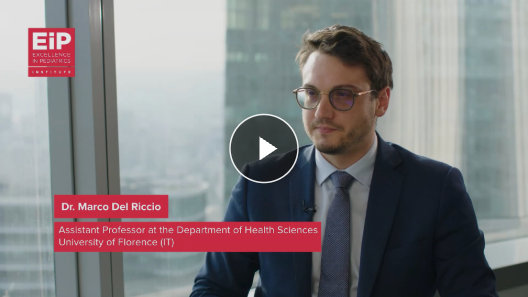
Featured Interview
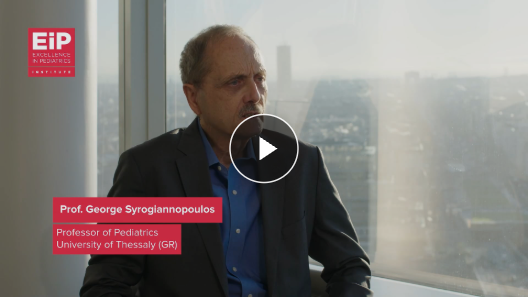
Key Points from the Interviews
Five things the Del Riccio and Syrogiannopoulos interviews reveal about the burden RSV leaves behind:
The true burden of RSV is underestimated
Standard metrics capture hospitalizations and deaths, but not cardiovascular events, neurological complications, or the long-term consequences of early infection. Emerging evidence consistently shows that the total burden extends well beyond the acute episode.
RSV actively facilitates pneumococcal disease
This interaction operates through multiple biological pathways and has clear clinical implications. Reducing RSV circulation reduces pneumococcal disease. This was evident during the COVID-19 period, when suppression of RSV led to a marked decline in pneumonia cases, and is now being observed in countries implementing RSV prevention programs.
RSV and pneumococcal prevention are complementary
Strong pneumococcal vaccination reduces RSV-associated pneumonia, while RSV prevention limits the conditions that enable pneumococcal invasion. As Prof. Syrogiannopoulos noted, “one plus one makes more than two” — these are mutually reinforcing interventions.
RSV prevention is a LifeCourse investment
Early-life respiratory infections shape long-term lung function trajectories, increasing the risk of chronic disease. Preventing RSV in infancy supports respiratory health into adulthood.
The barrier is no longer evidence — it is implementation
Effective tools now exist across the life course. The gap between what is possible and what is achieved reflects system investment, political commitment, and equitable access, not scientific uncertainty.
The Report
“When we modulated pneumococcus with the conjugate vaccine, we saw a decrease also for RSV. We want to decrease further down RSV, and I think this is going to change also the approach to vaccination.”
Prof. George Syrogiannopoulos — Protecting Every Infant, EiP 2025 RSV Policy Report
From the Summit Briefings
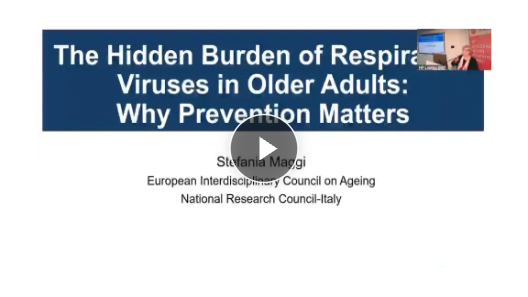
Key Points from the Briefing
Three insights from Prof. Maggi’s briefing on how early infections shape lifelong health:
Lung function trajectories established in childhood can determine chronic disease risk at middle age
A cohort of over 8,500 individuals identified seven lung function trajectories. Those on the lowest-performing path had a 46% prevalence of COPD at age 53, compared with less than 1% in the highest-performing group. Early respiratory infections are a modifiable risk factor, making RSV prevention in infancy a direct lever.
Socioeconomic disadvantage is not just a risk factor for infection – it is a biological accelerant
Adversity accelerates biological ageing and increases disease risk. In RSV, children in lower socioeconomic circumstances are more exposed and vulnerable. The case for universal prevention, therefore, is both social and biological.
The life-course approach to vaccination reflects the biology of risk
Timely vaccination strengthens immune function and ageing across the life course, providing a bridge between pediatric prevention and lifelong immune health. Protecting infants from RSV is the first step in a life-course immunization strategy.
About the Campaign
The EiP RSV Prevention Campaign presents the findings of the December 2025 LifeCourse Prevention Summit and the 17th Excellence in Pediatrics Conference, where experts reviewed the evidence on RSV burden and prevention. These discussions informed the policy report, “Protecting Every Infant,” which outlines practical recommendations for clinicians, health system leaders, and policymakers.

This campaign was developed in collaboration with Sanofi. The “Protecting Every Infant” policy report was produced by the Excellence in Pediatrics Institute, based on expert discussions at the 2025 LifeCourse Prevention Summit and the 17th Excellence in Pediatrics Conference (Paris, December 2025).
Rue des Vignerons 1B, 1110 Morges (VD), Switzerland
secretariat@ineip.org
