
Excellence in Pediatrics is a non-profit association dedicated to advancing pediatric healthcare.
Rue des Vignerons 18, 1110 Morges 1 (VD), Switzerland
email: secretariat@ineip.org
tel. +41 43 21 55 937



This Issue
The results of universal RSV prevention programs are now clear: the tools work. The question is whether health systems can implement them effectively, ensuring every infant is protected before their first RSV season.
Context
There is now a rare convergence between clinical trial data and real-world results in RSV prevention, with population-level outcomes matching, and in some settings, exceeding trial efficacy.
In Galicia, Spain, a universal program achieved 88.5% coverage for out-of-season births and 95.3% for in-season births, resulting in an 89.2% reduction in RSV hospitalizations overall. In Ireland, the Pathfinder program reported an 80–85% reduction in hospitalizations at approximately 90% coverage, alongside a 90% drop in critical care transport for infants with respiratory illness.
In Luxembourg, monoclonal antibodies alone achieved 81% coverage in season one, with substantial reductions in hospitalizations. In season two, adding maternal vaccination increased coverage to 92.5% and delivered a further 44.5 percentage-point reduction compared to monoclonal antibodies alone.
Maternal vaccination also shows strong protection. Data from Argentina showed a 78.6% reduction in hospitalizations for infants during their first three months of life. In the UK, a year-round maternal vaccination strategy demonstrated 72% protection in infants born at least 14 days after maternal vaccination, although coverage remains more variable, with uptake among some populations approximately 30 percentage points lower than the national average.
Coverage is the critical determinant of impact. For monoclonal antibodies, coverage above 70% is associated with reductions in hospitalizations exceeding 80%, while at 60% coverage, reductions fall to around 50%, and below 50% coverage, population-level effects become difficult to detect.
The conclusion is clear: all infants need protection. Combined strategies offer the greatest impact, while monoclonal antibodies provide the most reliable route to high coverage. Without adequate coverage, preventable hospitalizations and intensive care admissions will continue.
Featured Interview
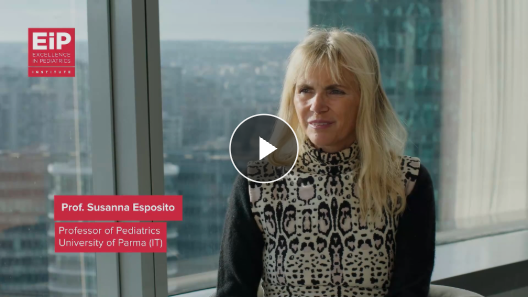
Key Points from the Interview
Five key insights from Prof. Esposito’s work and the multi-country evidence on RSV prevention strategy:
The central message is simple, even when the strategy is complex: all infants need protection
Regardless of the strategy – monoclonal antibodies, maternal vaccination, or coadministration – the goal is the same: every infant should be protected before their first RSV season.
Coverage drives impact: at 80% or above, population-level effects become visible
At 88.5% coverage in Galicia, hospitalizations fell by 81.6%; at 60% coverage, reductions dropped to 50%. The difference is not product efficacy, but coverage.
Maternal vaccination and monoclonal antibodies are complementary
Maternal vaccination can provide a first layer of protection, complemented by monoclonal antibodies to close remaining gaps. In Luxembourg, this combined approach achieved 92.5% coverage.
Parental acceptance depends on four things, and awareness of disease risk comes first
There are four key drivers of RSV prevention uptake: awareness of risk, confidence in efficacy, reassurance on safety, and trust in the pediatrician, and they are all interconnected.
The myth that RSV is just a cold causes real harm to coverage rates
When RSV is perceived as a mild illness, the motivation to seek prevention declines. This campaign addresses that misunderstanding: the risk RSV poses to otherwise healthy infants.
The Report
“Here we are in 2025, nearly sixteen years after my own son’s death, and many still have no concept of RSV or its devastating impact. How do we expect immunization programs to work if people do not understand what they are being protected against?”
Rachel Thomas, ReSViNET Foundation – Protecting Every Infant, EiP 2025 RSV Policy Report
From the Summit Briefings
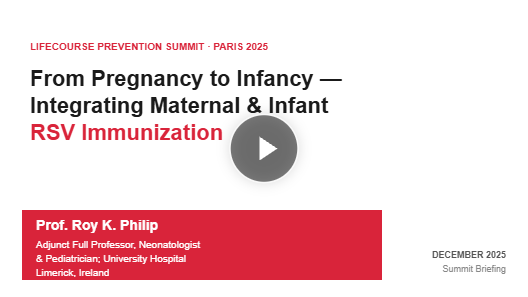
Key Points from the Briefing
Three insights from Prof. Philip’s briefing on integrating maternal and infant RSV prevention:
The gap between willingness and uptake is substantial and varies, making it a primary equity challenge
In a UK study, 89% of women were willing to accept a maternal RSV vaccine, but actual uptake was 57%, with rates among ethnic minority populations approximately 30% lower. This is not a product or efficacy issue, but a challenge of communication, outreach, and access.
The Irish model shows that implementation speed and system integration are as important as program design
The Pathfinder program reached 90% regional coverage in three months by integrating delivery into the midwife-led discharge pathway. The lesson is not just about the product, but about embedding delivery within systems that already reach every newborn.
The equity gap is widening in real time
As high-income countries achieve major reductions in RSV burden, 97% of child deaths still occur in low- and middle-income settings where monoclonal antibodies are out of reach. In India alone, with 25 million births annually, no national program is yet in place.
About the Campaign
The EiP RSV Prevention Campaign presents the findings of the December 2025 LifeCourse Prevention Summit and the 17th Excellence in Pediatrics Conference, where experts reviewed the evidence on RSV burden and prevention. These discussions informed the policy report, “Protecting Every Infant,” which outlines practical recommendations for clinicians, health system leaders, and policymakers.

This campaign was developed in collaboration with Sanofi. The “Protecting Every Infant” policy report was produced by the Excellence in Pediatrics Institute, based on expert discussions at the 2025 LifeCourse Prevention Summit and the 17th Excellence in Pediatrics Conference (Paris, December 2025).
Rue des Vignerons 1B, 1110 Morges (VD), Switzerland
secretariat@ineip.org
