
Excellence in Pediatrics is a non-profit association dedicated to advancing pediatric healthcare.
Rue des Vignerons 18, 1110 Morges 1 (VD), Switzerland
email: secretariat@ineip.org
tel. +41 43 21 55 937



This Issue
The evidence is clear: when communities are engaged as partners rather than as recipients, vaccination programs work better. So why is co-design still the exception, not the rule?
Context
“We’ve created health systems for ourselves, not for families. We expect people to join and fit into our system.” Prof. Monica Lakhanpaul describes a structural orientation and a system built around institutional convenience rather than the realities of the people it is supposed to serve.
Our previous newsletter examined how mistrust in vaccination services is shaped by the lived experiences of those services, and why messaging alone cannot rebuild it. Now we look at what works instead. The evidence from the December 2025 LifeCourse Prevention Summit shows that community engagement is one of the most effective tools for improving vaccination equity.
Prof. Angela Harden is clear: co-design changes the relationship between health systems and the people they are trying to reach because it involves communities in shaping services themselves.
Before launching its RSV awareness campaign, Barnardo’s, which now operates as an integrated health and social care charity, spoke to over 180 people from ethnic minority communities to understand concerns, language, and trusted sources. The result addressed real questions, reached people where they are, and worked because it was built with communities.
Featured Interview
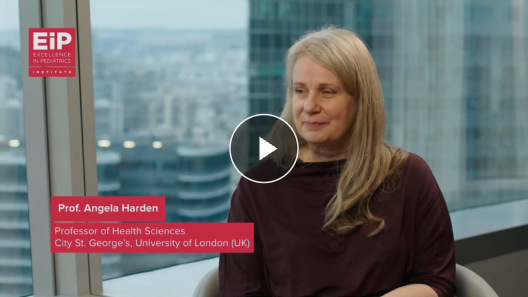
Key Points from the Interview
Five findings Prof. Harden’s research has shown about what community engagement actually requires:
The evidence for community engagement is rigorous
Public health interventions with community involvement are consistently more effective, including in large-scale trials.
There is no such thing as a ‘hard to reach’ community
Communities are not hard to engage with. Reaching people requires meeting them where they are and having conversations, not just campaigns.
Co-design flattens hierarchies in a way that outreach alone cannot
When communities and health professionals plan together, they reveal unmet needs and design interventions, making joint agenda-setting a powerful tool for effective action.
Community assets are as important as community needs
The ‘asset model’ focuses on community strengths and networks as assets for vaccination, if systems value them alongside clinical expertise.
The barrier is not method but will and funding
Community engagement remains peripheral, short-term, and underfunded, while new models will only succeed with sustained commitment.
The Report
“Trust happens at the speed of relationships.”
Ms. Rukshana Kapasi, Director of Health, Barnardo’s — 2025 LifeCourse Prevention Summit Meeting Report, p. 18
From the Summit Briefings
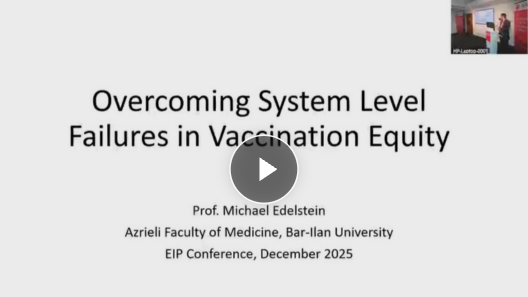
Key Points from the Briefing
Three insights Prof. Edelstein’s data showed about what we consistently fail to see in vaccination coverage:
A high coverage headline can conceal a deeply unequal system
Strong overall vaccination rates can mask chronically under-protected communities as those remaining unvaccinated are not randomly distributed.
Drop-out between doses is where the deepest inequities live
Families start vaccination, but system barriers prevent completion. Co-designed, community-embedded delivery is well placed to close this gap.
What we measure determines what we act on and what we ignore
Reporting aggregate coverage determines which inequities are visible and which remain hidden. Without embedding equity in measurement, it will remain secondary.
About the Campaign
The EiP Vaccination Equity Campaign shares the findings of the December 2025 LifeCourse Prevention Summit, which examined why vaccination inequities persist and what must change. The Summit produced shared commitments and an Action Framework for vaccination equity, which this campaign makes public, amplifies, and invites a wider community to act on.

This campaign was developed in collaboration with Pfizer. The 2025 LifeCourse Prevention Summit Meeting Report was produced through a partnership between the Excellence in Pediatrics Institute and Pfizer.
Rue des Vignerons 1B, 1110 Morges (VD), Switzerland
secretariat@ineip.org
