
Excellence in Pediatrics is a non-profit association dedicated to advancing pediatric healthcare.
Rue des Vignerons 18, 1110 Morges 1 (VD), Switzerland
email: secretariat@ineip.org
tel. +41 43 21 55 937



This Issue
Building on its work across Mucopolysaccharidosis (MPS), Metachromatic Leukodystrophy (MLD), and Alpha-Mannosidosis (AM), the Think Rare Program is now expanding its focus to Neuronal Ceroid Lipofuscinosis type 2 (CLN2 – Batten Disease), a rare and devastating neurodegenerative disease that affects young children.
Context
CLN2, also known as Batten disease¹, is a rare neurodegenerative disorder that primarily affects children. It typically presents between the ages of 2 and 4 with language regression, seizures, and progressive motor and cognitive decline. Early recognition is critical, yet diagnosis is frequently delayed².
The Excellence in Pediatrics Institute is expanding the Think Rare Program to CLN2, bringing together leading experts to support child healthcare professionals in recognizing early signs, navigating diagnosis, and understanding available management options. Three free live webinars will take place throughout the second semester of 2026, with on-demand access and an EiP Certificate of Attendance available for each session.
References: (1) CLN2Connection. CLN2 Disease. BioMarin Pharmaceutical Inc.; 2022. www.cln2connection.com/overview/cln2-disease/ (2) National Institute of Neurological Disorders and Stroke (NINDS). Batten Disease (Neuronal Ceroid Lipofuscinosis). National Institutes of Health.
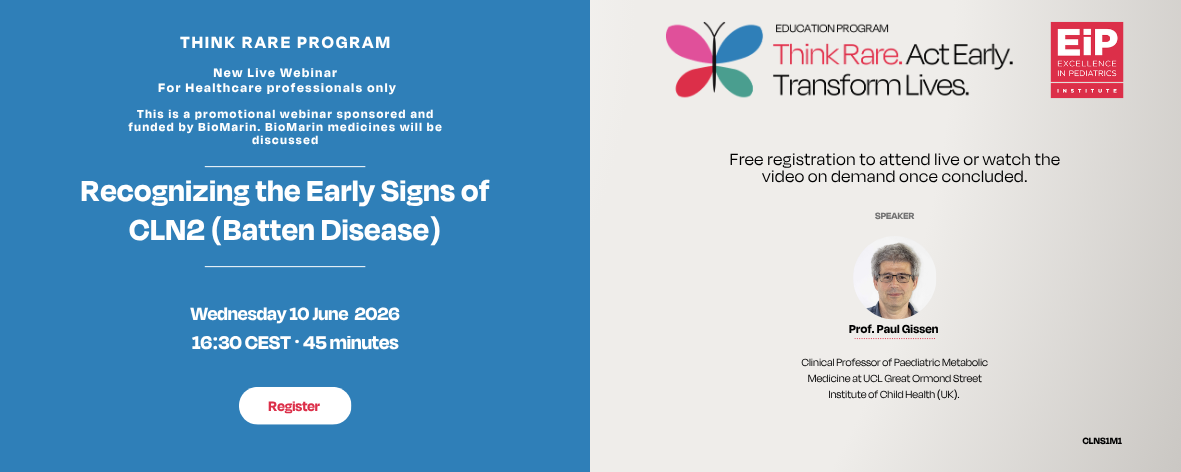
Upcoming Webinar 1 • Wednesday, 10 June
Key Learning Points from Webinar 1
At the end of the webinar, participants will be able to:
Describe CLN2 Within the NCLs Spectrum
Position CLN2 disease within the broader neuronal ceroid lipofuscinoses (NCLs) spectrum and its relevance to pediatric practice.
Identify Early Signs and Symptom Patterns
Recognize early clinical features and symptom patterns of CLN2 disease, including presentation differences across phenotypes.
Recognize Symptom Clustering and When to Escalate
Distinguish symptom progression and clustering cues that set CLN2 apart from other more common pediatric conditions. Triggers for escalation: timely referral and genetic testing when CLN2 is suspected.
References: (1) Nickel M et al. Lancet Child Adolesc Health 2018;2:582–90 (2) Mole SE et al. Orphanet J Rare Dis 2021;16:185 (3) Lourenço CM et al. J Paediatr Child Health 2021;57:519–25
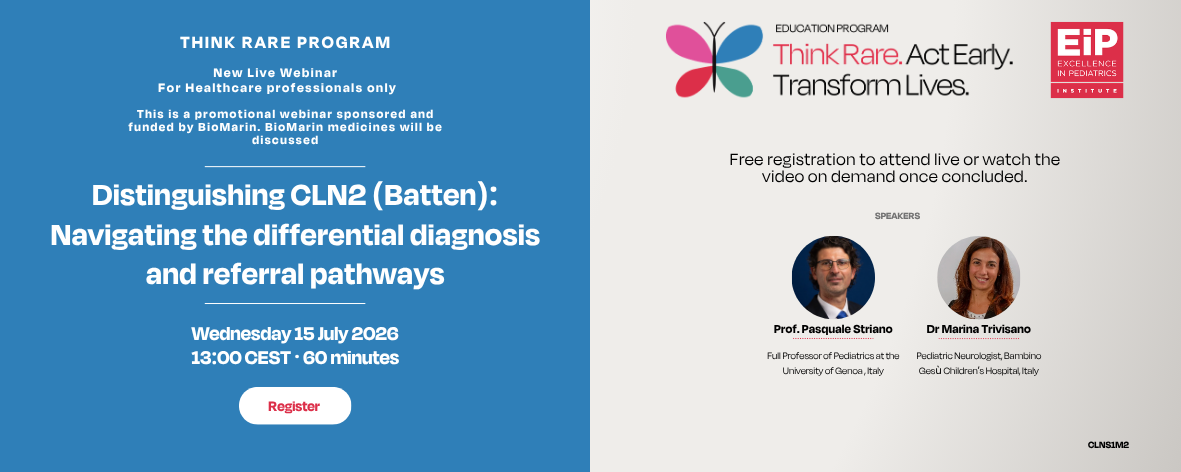
Upcoming Webinar 2 • Wednesday, 15 July
Key Learning Points from Webinar 2
At the end of the webinar, participants will be able to:
Diagnostic Pathways That Delay Recognition
Understand how common diagnostic pathways can delay recognition of CLN2 disease. Apply a structured differential diagnosis framework when CLN2 is a consideration.
Red Flags and Progression Patterns
Identify red-flag symptom combinations and progression patterns that justify escalation beyond common diagnoses.
When to Refer and When to Test
Initiate prompt referral and genetic testing in suspected CLN2, aligned with clinical suspicion and escalation triggers.
References: (1) Fietz M et al. Mol Genet Metab 2016;119:160–7 (expert recommendations) (2) Williams RE et al. Pediatr Neurol 2017;69:102–12 (3) Mole SE et al. Orphanet J Rare Dis 2021;16:185
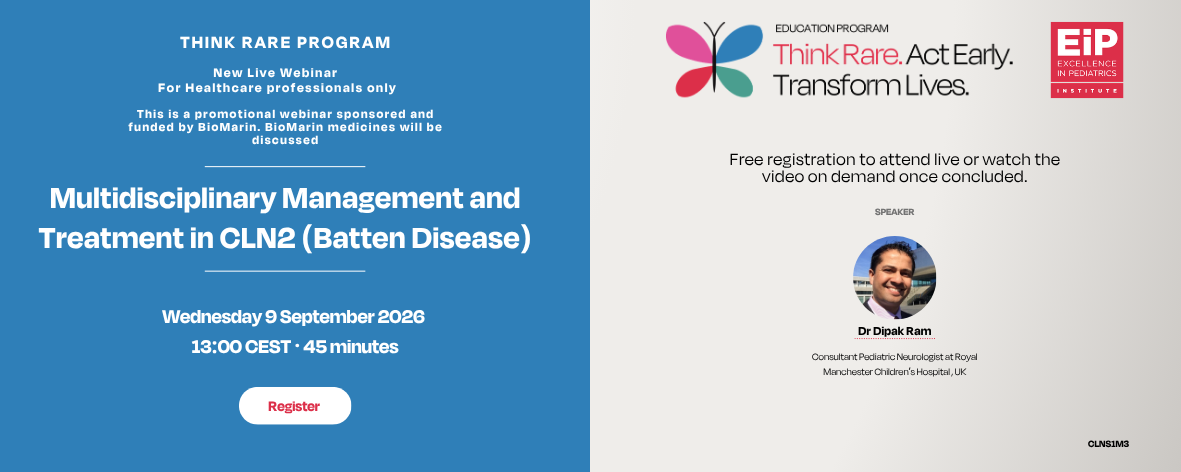
Upcoming Webinar 3 • Wednesday, 9 September
Key Learning Points from Webinar 3
At the end of the webinar, participants will be able to:
Treatment and Impact of Early Diagnosis
Outline the treatment approach for CLN2, including key therapeutic and supportive care, and recognize how early diagnosis can influence treatment options, care planning, and long-term management.
The Multidisciplinary Team
Understand the role of multidisciplinary teams in managing CLN2 disease across the disease course.
Coordinated, Family-Centered Care
Apply principles of coordinated, family-centered care within clinical pathways for children with CLN2 disease.
References: (1) Schulz A et al. N Engl J Med 2018;378:1898–1907 (2) Schulz A et al. Lancet Neurol 2024 (3) Mole SE et al. Orphanet J Rare Dis 2021;16:185 (4) Cerliponase alfa, Summary of Product Characteristics, BioMarin International Limited, 12 December 2023 (5) Cerliponase alfa, Prescribing Information, BioMarin Pharmaceutical Inc., 2024
Disclaimer
These webinars are intended for healthcare professionals only. These are promotional webinars sponsored and funded by BioMarin. BioMarin medicines will be discussed.
All adverse event(s) discussed will be notified to the Pharmacovigilance Department of BioMarin. BioMarin does not recommend the use of any product in any manner other than that described in the approved Prescribing Information. Prescribing information and adverse event reporting information can be found here. Regulatory status and approved indications of any product may vary between countries; please check the registration status of any product in your respective country. Please refer to your local Prescribing Information/SmPC before prescribing.
About the Program
The EiP Think Rare Program empowers pediatricians and general practitioners to identify rare and underdiagnosed conditions early. The program currently covers MPS, MLD, and AM, and is now expanding to CLN2 (Batten disease), forming a practical, centralized resource for recognizing rare diseases in clinical practice.
Explore the Learning Zones
Each Learning Zone focuses on a specific rare disease, equipping you with condition-specific knowledge, early signs to watch for, and up-to-date clinical resources. Explore all zones to build both depth in individual conditions and a broader understanding of how rare diseases present in practice.
Mucopolysaccharidosis (MPS)
Explore practical resources to help detect early signs, reduce misdiagnosis, and ensure timely referrals and intervention.
Visit Zone →Metachromatic Leukodystrophy (MLD)
Recognize early signs often mistaken for common conditions and take action sooner to change the course of a child’s life.
Visit Zone →Alpha-Mannosidosis (AM)
Recognize the early signs and transform outcomes with earlier, more accurate referral and patient care.
Visit Zone →Neuronal Ceroid Lipofuscinosis (CLN2)
A new Learning Zone dedicated to CLN2 disease is coming soon. Resources and clinical tools are in development.
Coming Soon
The THINK RARE program is independently developed and managed by EiP, including content, topics, and appointed speakers. BioMarin has sponsored and funded EiP’s webinars on CLN2.
COM-ET-2510
Rue des Vignerons 1B, 1110 Morges (VD), Switzerland
secretariat@ineip.org
