
Excellence in Pediatrics is a non-profit association dedicated to advancing pediatric healthcare.
Rue des Vignerons 18, 1110 Morges 1 (VD), Switzerland
email: secretariat@ineip.org
tel. +41 43 21 55 937



This Issue
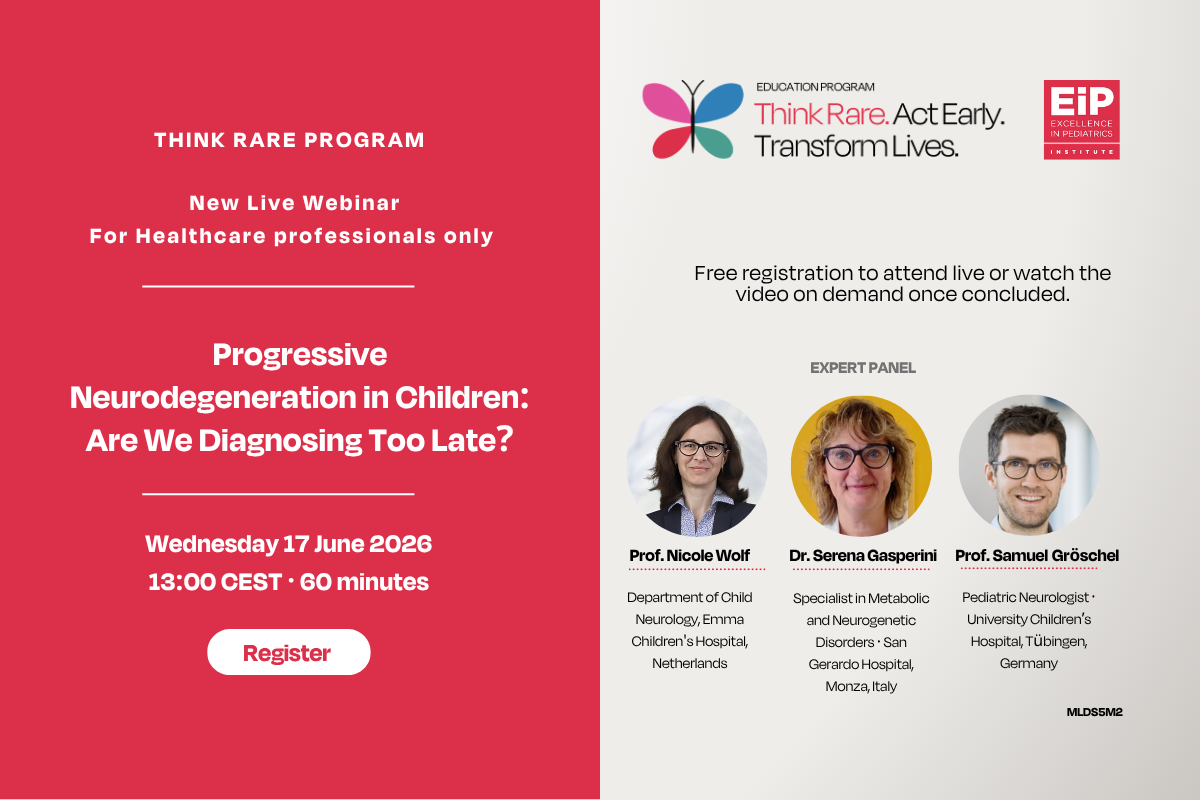
Progressive neurodegenerative disorders in children are individually rare but collectively under-recognized, and the consequences of late diagnosis are often irreversible. A new Think Rare webinar examines why earlier recognition matters and what clinicians can do differently.
Context
Progressive neurodegeneration in children encompasses a broad spectrum of conditions — including lysosomal storage disorders, leukodystrophies, and other neurometabolic diseases — that share a common and often overlooked challenge: their early features frequently resemble more familiar pediatric presentations. Developmental regression, behavioral change, sleep disturbance, and emerging motor difficulties can each, in isolation, point toward common diagnoses. It is the pattern of progression over time that shifts the clinical picture, and that pattern is too often recognized late.
As part of the Think Rare program, the Excellence in Pediatrics Institute is launching a new webinar dedicated to earlier recognition of progressive neurodegeneration across the pediatric spectrum. Drawing on expert perspectives and case-based discussion, the session will examine the shared red-flag clusters that should prompt reassessment, the diagnostic pitfalls that contribute to delay, and the structured approaches to investigation and referral that can reduce the time from first signs to appropriate care.
Upcoming Webinar • Wednesday, 17 June
Key Learning Points from the Webinar
At the end of the webinar, participants will be able to:
Understand the Spectrum of Progressive Neurodegeneration
Recognize progressive neurodegenerative conditions in children as a collectively significant clinical burden, understand their shared early features, and distinguish them from more common static or non-progressive presentations.
Identify Red Flags and Understand Why Diagnosis Is Delayed
Recognize the early clinical red flags and symptom patterns — including regression, behavioral change, and sleep disturbance — that should prompt reassessment, and understand how common misattributions contribute to diagnostic delay.
Apply a Structured Approach to Investigation and Referral
Apply a practical Recognize–Investigate–Refer framework to escalate earlier, initiate appropriate investigations in parallel, and understand how timely diagnosis directly affects treatment access and long-term outcomes.
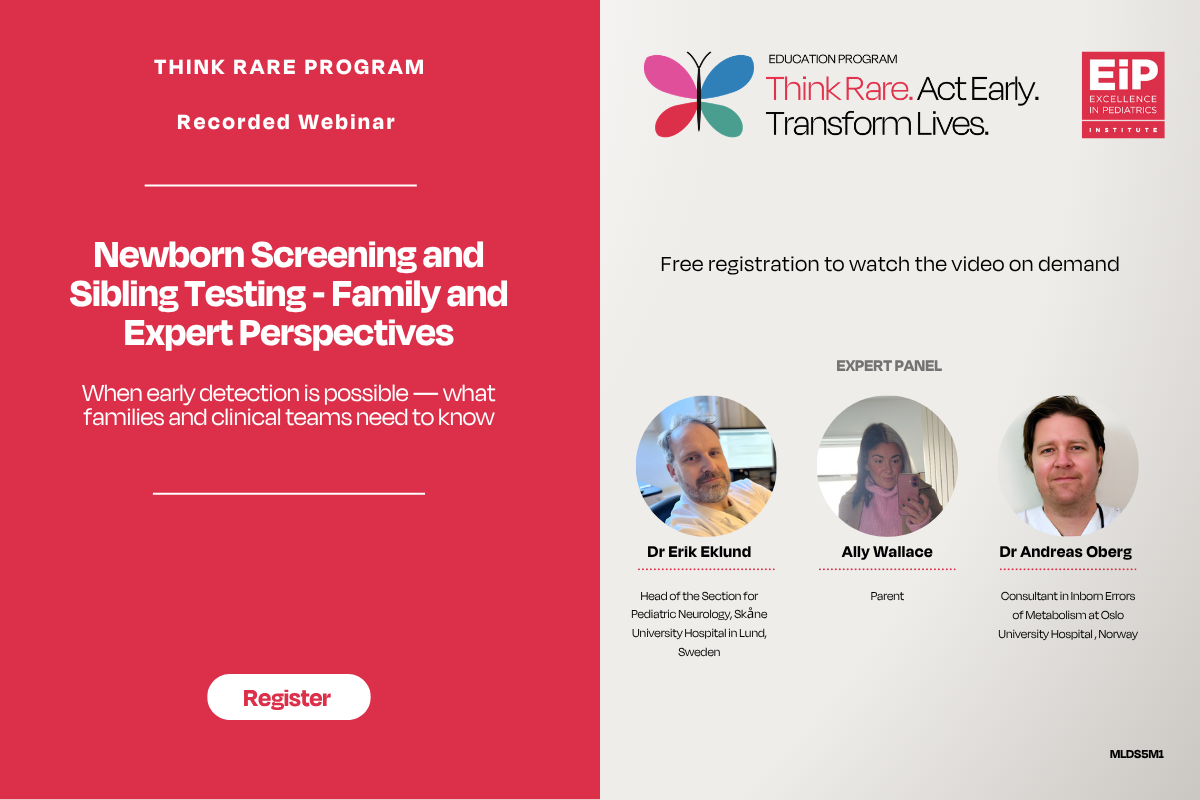
Watch a Previous Webinar in the Series
About the Program
The EiP Think Rare Program empowers pediatricians and general practitioners to identify rare and underdiagnosed conditions early. Each Learning Zone focuses on a specific rare disease, equipping clinicians with condition-specific knowledge, early signs to watch for, and up-to-date resources, forming a practical, centralized resource for recognizing rare diseases in clinical practice.
Explore the Learning Zones
Each Learning Zone focuses on a specific rare disease, equipping you with condition-specific knowledge, early signs to watch for, and up-to-date clinical resources. Explore all zones and share them with colleagues.
MPS
Mucopolysaccharidosis
Practical tools to help detect early signs, reduce misdiagnosis, and ensure timely referrals and intervention.
Visit Zone →MLD
Metachromatic Leukodystrophy
Recognize early signs, often mistaken for common conditions, and take action to change the course of a child’s life.
Visit Zone →AM
Alpha-mannosidosis
Recognise the early signs and transform outcomes with earlier, more accurate referral and patient care.
Visit Zone →CLN2
Neuronal Ceroid Lipofuscinosis
A new Learning Zone dedicated to CLN2 disease is coming soon. Resources and clinical tools are in development.
Coming Soon
The THINK RARE program is independently developed and managed by EiP with respect to content, topics, and appointed speakers. Unrestricted grants are sought to support EiP’s activities; Orchard Therapeutics has provided an unrestricted grant to partially support EiP’s work on the early diagnosis of metabolic disorders.
Rue des Vignerons 1B, 1110 Morges (VD), Switzerland
secretariat@ineip.org
